

How to Generate Photorealistic AI Images
The landscape of speech synthesis has shifted from robotic monologues to indistinguishable human replicas. Whether you are looking to narrate a documentary, automate customer service, or clone your own voice for a podcast, the tools available in 2026 offer unprecedented emotional depth and clarity.
What is AI Voices
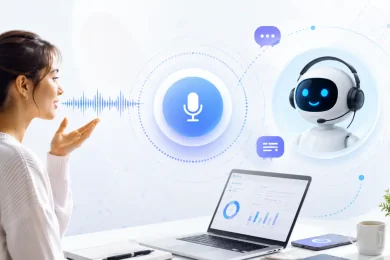
AI Voices, technically known as speech synthesis or generative audio, are artificial recreations of human speech produced by machine learning models. Unlike the robotic, choppy text-to-speech (TTS) systems of the past, modern AI voices in 2026 use deep neural networks to replicate the subtle nuances of human communication—including breath, rhythm, emotional inflection, and even regional accents.
At its core, an AI voice is a mathematical model trained on thousands of hours of high-quality human speech. By analyzing the relationship between written text and the corresponding acoustic patterns, the AI learns to "perform" a script rather than just read it.
The Evolution: From Phonemes to Neural Waves
The journey to realistic AI voices has moved through three distinct technological eras:
Concatenative Synthesis: The "old way." This involved stitching together tiny fragments of recorded speech. It was functional but lacked emotion and sounded "mechanical."
Parametric Synthesis: These systems used mathematical parameters to generate sound. They were smoother but often sounded "buzzy" or unnatural.
Neural TTS (The Current Standard): Using deep learning, these models predict the precise "spectrogram" (a visual map of sound) and then use a "vocoder" to turn that map into the crisp, human-like audio we hear today.
Key Capabilities of Modern AI Voices
In 2026, AI voices are defined by four primary capabilities that make them indistinguishable from real humans:
Emotional Range: The ability to shift from a "whisper" to "shouting" or to sound "happy," "sad," or "authoritative" based on the context of the text.
Zero-Shot Voice Cloning: The capacity to create a digital "voice print" of a person from a very short audio sample (often less than 30 seconds).
Cross-Lingual Synthesis: Taking a person's unique vocal identity and making them speak a language they don't actually know, while keeping their original tone intact.
Prosody Control: Mastering the "music" of language—the ups and downs in pitch that signal a question, a joke, or a serious point.
Why Businesses are Adopting AI Voices
From independent creators to global enterprises, the shift toward synthetic media is driven by three factors: Scale, Speed, and Personalization.
Content Localization: Translating and dubbing an entire video series into 20 languages in minutes rather than months.
24/7 Virtual Assistants: Powering autonomous AI Agents that can handle complex customer queries with a friendly, branded voice.
Accessibility: Providing high-quality audio narration for visually impaired users across all digital platforms.
Choose Your Method: Text-to-Speech vs. Voice Cloning
Before generating audio, you must decide between using a pre-made "stock" voice or creating a digital twin of a specific person.
Standard Text-to-Speech (TTS): Ideal for quick projects. Modern libraries like ElevenLabs or Murf.ai offer thousands of "high-fidelity" voices categorized by age, accent, and "vibe" (e.g., "authoritative," "whisper," or "excited").
Voice Cloning: This involves uploading a sample of a real human voice. Advanced models can now achieve voice cloning with as little as 15 to 30 seconds of clean audio, capturing unique micro-fluctuations in tone and breathing patterns.
Formatting the "Digital Script"
AI reads exactly what is on the page, but "writing for the ear" is different from writing for the eye. To get a natural performance:
Phonetic Spelling: If the AI mispronounces a brand name or technical term, spell it out phonetically. Instead of "Vegavid," you might type "Vega-vid."
Punctuation as Direction: In 2026, AI interprets punctuation as stage directions.
Ellipses (...) create a thoughtful hesitation.
Exclamation points (!) add energy and upward inflection.
En-dashes (–) signal a natural mid-sentence shift in thought.
Fine-Tuning the "Performance"
Generating the audio is only the first step. To move beyond the "AI feel," use these professional adjustment layers:
The Stability & Clarity Balance
Most platforms provide sliders to control how "experimental" the voice sounds.
High Stability: Results in a consistent, professional delivery (best for tutorials).
Low Stability: Allows for more emotional range and "random" human-like pitch shifts (best for storytelling).
Multi-Voice Interaction
For dialogues, avoid generating both parts in one go. Generate each character’s lines separately and layer them in an editor. This prevents the AI from "blending" the vocal characteristics of two different people.
Optimize Your Audio Workflow with Vegavid
Deploying Voice Ai at scale requires more than just a subscription; it requires a robust technical architecture. Vegavid Technology helps you build custom API integrations that connect your content management systems directly to world-class voice synthesis engines.
Whether you are automating a global call center or creating a localized marketing campaign, our engineers ensure your audio is crisp, compliant, and cost-effective.
Scale your sound today. Consult with Vegavid Tech Experts
Ethical & Technical Standards
In 2026, the industry has moved toward strict ethical guidelines. When using generative artificial intelligence for voice:
Watermarking: Most professional tools now embed "inaudible watermarks" (like Google’s SynthID) to identify the audio as AI-generated.
Consent: Leading platforms require "Voice Captcha" or live recording verification to ensure you have the right to clone a specific voice.
To make the article more comprehensive for a professional audience, you can add these technical and strategic sections:
Advanced Speech Synthesis Markup Language (SSML)
For developers and power users, SSML is the secret to granular control. By using small code tags, you can instruct the AI to change its behavior at specific timestamps.
<break time="500ms"/>: Forces a precise pause for dramatic effect.
<emphasis level="strong">: Increases the volume and slows the rate for key technical terms.
<prosody pitch="+5%">: Slightly raises the pitch to make the voice sound more energetic or youthful.
The "Clean Audio" Golden Rule
The quality of an AI voice clone is 90% dependent on the input data. To get a studio-quality result:
Eliminate Reverb: Record in a room with soft furnishings (carpets, curtains) to prevent "echo," which the AI might mistake for a vocal trait.
Leveling: Ensure your recording is at a consistent volume (usually around -6dB to -3dB) to avoid digital clipping.
Remove Mouth Noises: Use a "de-esser" or a pop filter to ensure "S" and "P" sounds don't distort the model's training.
Scalable Audio Solutions with Vegavid
At Vegavid Technology, we understand that artificial intelligence future legal work benefits is the backbone of modern content scaling. We help enterprises integrate advanced AI Voice Synthesis and Custom Voice Cloning into their digital ecosystems—ensuring your brand sounds as professional as it looks.
Whether you're looking to localize content into 30+ languages or build an autonomous AI agent with a unique vocal identity, our team provides the technical framework to make it happen.
Give your brand a voice. Partner with Vegavid Technology
Frequently Asked Questions (FAQs)
To achieve realism, use technical photography terms rather than generic descriptors. Key modifiers include specific camera models (e.g., Sony A7R IV), focal lengths (85mm, 50mm), and lighting styles (Rembrandt lighting, Golden Hour). Using these "high-signal" words helps the AI understand the physical properties of a real photo.
AI models often default to a "perfected" aesthetic that looks synthetic. To fix this, you must prompt for imperfections. Adding keywords like film grain, skin pores, natural skin texture, and chromatic aberration breaks the digital smoothness and mimics the organic flaws of traditional photography.
Absolutely. While many models can generate art, certain engines are better optimized for realism. Models like Midjourney v6/v7, Stable Diffusion XL, and Flux are currently leaders in handling light physics and anatomical accuracy. Always check if your model supports "RAW" or "Photoreal" modes.

Yash Singh is the Chief Marketing Officer at Vegavid Technology, a leading AI-driven technology company specializing in AI agents, Generative AI, Blockchain, and intelligent automation solutions. With over a decade of experience in digital transformation and emerging technologies, Yash has played a key role in helping businesses adopt advanced AI solutions that enhance operational efficiency, automate workflows, and deliver personalized customer experiences across industries including fintech, healthcare, gaming, ecommerce, and enterprise technology. An alumnus of Indian Institute of Technology Bombay, Yash combines strong technical expertise with strategic marketing leadership to drive innovation in AI-powered applications, autonomous AI agents, Retrieval-Augmented Generation (RAG), Natural Language Processing (NLP), Large Language Models (LLMs), machine learning systems, conversational AI, and enterprise automation platforms. His expertise spans AI model integration, intelligent workflow automation, prompt engineering, smart data processing, and scalable AI infrastructure development, enabling organizations to accelerate digital transformation and business growth. Passionate about the future of intelligent systems, Yash actively shares insights on AI agents, Generative AI, LLM-powered applications, blockchain ecosystems, and next-generation digital strategies. He is committed to helping businesses embrace AI-first transformation while guiding teams to build impactful, industry-specific solutions that shape the future of innovation and intelligent technology.






Leave a Reply