

How AI Is Transforming Predictive Analytics in Healthcare: Use Cases and Benefits Explained
Introduction
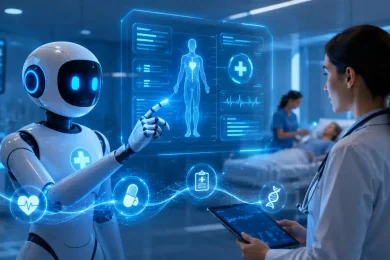
Healthcare is undergoing a significant transformation driven by data and advanced technologies. Among these, Artificial Intelligence is playing a pivotal role in improving patient outcomes, optimizing operations, and enabling proactive decision-making. One of the most impactful areas where this transformation is evident is predictive analytics. AI in Healthcare Predictive Analytics is enabling medical professionals to anticipate diseases, personalize treatments, and improve overall healthcare delivery.
Traditionally, healthcare systems relied on historical data and clinical expertise to make decisions. While effective to a certain extent, these approaches often lacked the ability to process large datasets and identify subtle patterns. Artificial intelligence addresses this limitation by leveraging machine learning algorithms and data analytics to generate actionable insights.
Understanding how AI is transforming predictive analytics in healthcare is essential for organizations aiming to enhance efficiency and patient care. AI-driven predictive analytics allows healthcare providers to move from reactive treatment to proactive prevention, significantly improving outcomes.
As healthcare institutions increasingly collaborate with an AI Development Company, the adoption of AI-powered predictive solutions continues to grow. This article explores the use cases, benefits, and future potential of AI in healthcare predictive analytics, providing a comprehensive perspective on this evolving field.
Understanding Predictive Analytics in Healthcare
Predictive analytics in healthcare involves analyzing historical and real-time data to forecast future outcomes. This includes predicting disease progression, patient readmissions, and treatment effectiveness. By leveraging data, healthcare providers can make informed decisions that improve patient care and operational efficiency.
Predictive analytics in healthcare using AI enhances this process by incorporating advanced algorithms capable of identifying patterns and trends that are not easily visible through traditional methods. These systems analyze large volumes of data, including electronic health records, medical imaging, and patient demographics.
The integration of AI into predictive analytics enables healthcare providers to anticipate potential health issues and take preventive measures. This proactive approach reduces the burden on healthcare systems and improves patient outcomes.
Organizations like Vegavid are leveraging AI to develop predictive analytics solutions tailored to healthcare needs. Their work demonstrates how AI can transform data into actionable insights.
Understanding predictive analytics is essential for appreciating the role of AI in modern healthcare.
How AI Enhances Predictive Analytics in Healthcare
Artificial intelligence enhances predictive analytics by enabling more accurate and efficient data analysis. AI systems use machine learning algorithms to process large datasets and identify patterns that inform predictions.
Data Integration and Processing
AI integrates data from multiple sources, including electronic health records, wearable devices, and diagnostic tools. This comprehensive approach ensures a holistic view of patient health.
Pattern Recognition
Machine learning algorithms analyze data to identify patterns associated with diseases and health conditions. These patterns help predict future outcomes.
Real-Time Insights
AI systems provide real-time insights, enabling healthcare providers to make timely decisions.
Continuous Learning
AI models continuously learn and improve as they process new data, enhancing prediction accuracy over time.
Businesses that Hire AI Developers are increasingly focusing on building advanced healthcare solutions that leverage these capabilities.
Key Use Cases of AI in Healthcare Predictive Analytics
AI is transforming healthcare through various use cases that demonstrate its potential to improve patient care and operational efficiency.
Disease Prediction and Prevention
AI analyzes patient data to predict the likelihood of diseases such as diabetes, heart disease, and cancer. Early detection enables preventive measures and improves outcomes.
Patient Readmission Prediction
AI identifies patients at risk of readmission, allowing healthcare providers to implement targeted interventions.
Personalized Treatment Plans
AI enables personalized treatment by analyzing patient data and recommending tailored therapies.
Medical Diagnosis Support
AI in medical diagnosis prediction helps healthcare professionals identify diseases accurately and quickly, improving diagnostic efficiency.
Organizations like Vegavid are developing solutions that leverage these use cases to enhance healthcare delivery.
AI Healthcare Prediction Examples
AI healthcare prediction examples highlight the practical applications of AI in improving patient outcomes and operational efficiency.
Predicting Chronic Diseases
AI models analyze patient data to predict chronic conditions, enabling early intervention.
Monitoring Patient Health
Wearable devices integrated with AI provide continuous monitoring and predictive insights.
Emergency Response Optimization
AI predicts emergencies such as cardiac events, enabling faster response times.
Drug Development
AI accelerates drug discovery by predicting the effectiveness of compounds.
These examples demonstrate the transformative impact of AI in healthcare.
Benefits of AI in Healthcare Analytics
AI offers numerous benefits that make it a valuable tool for healthcare analytics.
Improved Patient Outcomes
AI enables early detection and personalized treatment, improving patient outcomes.
Operational Efficiency
AI optimizes workflows, reducing costs and improving efficiency.
Data-Driven Decision Making
AI provides insights that support informed decision-making.
Scalability
AI system can handle large volumes of data, making them suitable for large healthcare organizations.
Understanding the benefits of AI in healthcare analytics helps organizations leverage its full potential.
Challenges in AI-Based Healthcare Predictive Analytics
Despite its advantages, AI-based Predictive analytics in healthcare presents several challenges.
Data Privacy and Security
Protecting patient data is a critical concern in healthcare.
Data Quality
Accurate predictions require high-quality data.
Integration Complexity
Integrating AI systems with existing healthcare infrastructure can be challenging.
Ethical Considerations
Ensuring fairness and transparency in AI systems is essential.
Organizations like Vegavid address these challenges through innovative solutions and best practices.
Role of AI Development Companies in Healthcare
AI development companies play a crucial role in implementing advanced AI solutions within the healthcare ecosystem, enabling organizations to improve efficiency, accuracy, and patient outcomes.
Custom Solution Development
AI development companies design and build tailored solutions that address specific healthcare challenges, such as disease prediction, patient monitoring, and workflow optimization. These customized systems ensure that healthcare providers can meet their unique operational and clinical requirements effectively.
Integration and Deployment
They ensure seamless integration of AI solutions with existing healthcare systems, including electronic health records and diagnostic tools. This smooth deployment allows organizations to adopt AI without disrupting their current processes or compromising data integrity.
Ongoing Support
AI systems require continuous monitoring, updates, and optimization to maintain performance. Development companies provide ongoing support and maintenance, ensuring that healthcare solutions remain efficient, secure, and up to date with evolving needs.
Innovation and Research
AI development companies actively contribute to innovation by researching new algorithms, improving models, and exploring advanced applications. Their efforts help push the boundaries of what AI can achieve in healthcare.
Organizations like Vegavid are at the forefront of these efforts, helping healthcare providers adopt reliable and scalable AI solutions.
Future of AI in Healthcare Predictive Analytics
The future of AI in healthcare predictive analytics is highly promising, driven by continuous technological advancements and increasing adoption across the industry.
Integration with Emerging Technologies
AI will increasingly integrate with emerging technologies such as IoT and blockchain, enabling more connected and secure healthcare systems. This integration will enhance data collection, sharing, and analysis, leading to better predictive capabilities.
Improved Algorithms
Advancements in Machine Learning algorithms will significantly improve the accuracy and reliability of predictive models. These improvements will enable healthcare providers to make more precise and timely decisions.
Real-Time Monitoring
AI systems will provide real-time monitoring of patient health through wearable devices and connected systems. This capability will allow for early detection of health issues and immediate intervention, improving patient outcomes.
Global Adoption
The adoption of AI-driven predictive analytics will continue to grow globally as healthcare organizations recognize its value. This widespread adoption will drive innovation, improve accessibility, and enhance the overall quality of healthcare services.
Businesses that Hire AI Developers are preparing for these advancements.
Conclusion
AI in Healthcare Predictive Analytics is transforming how healthcare providers deliver care and make decisions. By leveraging advanced algorithms and data analysis, AI enables proactive and personalized healthcare solutions.
From disease prediction to operational efficiency, AI offers significant benefits that improve patient outcomes and reduce costs. While challenges exist, the potential of AI in healthcare is immense.
Organizations like Vegavid are helping healthcare providers harness the power of AI to build smarter and more efficient systems.
Are you ready to explore how AI can transform your healthcare solutions and drive better outcomes for patients and organizations?
FAQs
AI is transforming predictive analytics in healthcare by enabling faster data analysis, identifying patterns in patient data, and providing accurate predictions. This helps healthcare providers make proactive decisions and improve patient outcomes.
AI is used for predicting diseases, patient readmissions, treatment outcomes, and emergencies such as cardiac events. It also supports drug discovery and personalized medicine.
It works by collecting and analyzing data from multiple sources such as medical records and devices. AI models then identify patterns and generate predictions to support clinical decisions.
Benefits include improved patient outcomes, early disease detection, operational efficiency, cost reduction, and better decision-making through data-driven insights.
Yes, AI improves medical diagnosis prediction by analyzing large datasets and identifying patterns that may not be visible to human doctors, leading to faster and more accurate diagnoses.

Yash Singh is the Chief Marketing Officer at Vegavid Technology, a leading AI-driven technology company specializing in AI agents, Generative AI, Blockchain, and intelligent automation solutions. With over a decade of experience in digital transformation and emerging technologies, Yash has played a key role in helping businesses adopt advanced AI solutions that enhance operational efficiency, automate workflows, and deliver personalized customer experiences across industries including fintech, healthcare, gaming, ecommerce, and enterprise technology. An alumnus of Indian Institute of Technology Bombay, Yash combines strong technical expertise with strategic marketing leadership to drive innovation in AI-powered applications, autonomous AI agents, Retrieval-Augmented Generation (RAG), Natural Language Processing (NLP), Large Language Models (LLMs), machine learning systems, conversational AI, and enterprise automation platforms. His expertise spans AI model integration, intelligent workflow automation, prompt engineering, smart data processing, and scalable AI infrastructure development, enabling organizations to accelerate digital transformation and business growth. Passionate about the future of intelligent systems, Yash actively shares insights on AI agents, Generative AI, LLM-powered applications, blockchain ecosystems, and next-generation digital strategies. He is committed to helping businesses embrace AI-first transformation while guiding teams to build impactful, industry-specific solutions that shape the future of innovation and intelligent technology.




Leave a Reply