
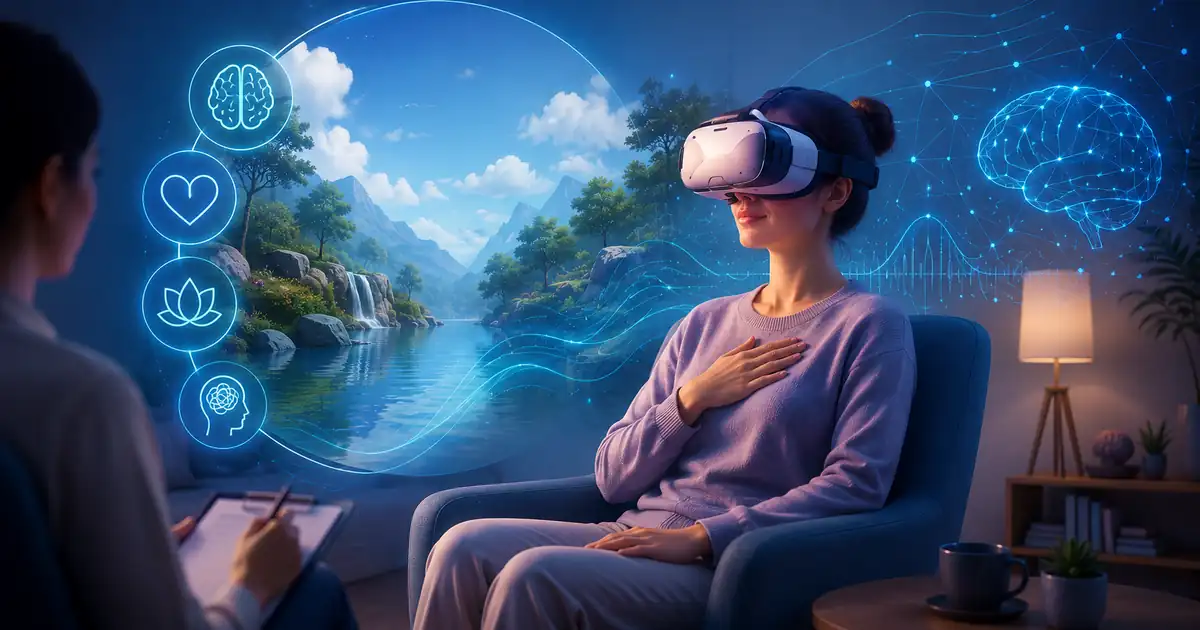
VR in Mental Health Treatment: Benefits, Applications & Future Trends
Mental health care is undergoing a digital transformation, and Virtual Reality (VR) is emerging as one of the most promising technologies in modern therapy. Once associated primarily with gaming and entertainment, VR is now helping psychologists, psychiatrists, and healthcare providers treat anxiety, PTSD, phobias, depression, chronic pain, and many other mental health conditions.
By creating immersive, computer-generated environments, VR enables patients to experience realistic situations in a safe and controlled setting. Therapists can guide patients through customized treatment programs while monitoring their progress, making therapy more engaging and effective. This approach builds on the same immersive principles explored in the metaverse mind exploring virtual worlds for mental wellness.
In this article, we'll explore what VR in mental health treatment is, how it works, its benefits, applications, challenges, and future trends.
What is VR in Mental Health Treatment?
VR in mental health treatment refers to the use of immersive digital environments to support psychological assessment, therapy, rehabilitation, stress reduction, and emotional well-being. Patients wear VR headsets that simulate realistic environments where they can interact with objects, people, or scenarios designed specifically for therapeutic purposes. These experiences allow therapists to expose patients to controlled situations, teach coping strategies, and monitor emotional responses in support of overall mental health.
VR therapy combines several technologies, including:
Virtual Reality headsets
Motion tracking
3D environments
Artificial Intelligence (AI)
Biofeedback sensors
Cognitive Behavioral Therapy (CBT) techniques
The goal is to create personalized, engaging, and evidence-based treatment experiences, much like the broader shift covered in metaverse vs virtual reality.
Why Use VR for Mental Health?
Traditional therapy is highly effective, but VR bridges the gap in situations that are difficult to recreate in a clinical setting by allowing therapists to simulate real-life experiences without exposing patients to actual risks.
Some reasons healthcare providers are adopting VR include:
Controlled therapeutic environments
Improved patient engagement
Safe exposure therapy
Personalized treatment plans
Better treatment adherence
Real-time progress monitoring
Reduced therapy barriers
Enhanced emotional learning
VR enables patients to practice coping skills repeatedly until they become comfortable facing real-world situations, an approach increasingly discussed as VR therapy for anxiety and stress management.
How VR Therapy Works
A typical VR therapy session follows a structured, therapist-guided process that moves from assessment to measurable progress tracking, although treatment varies depending on the condition.
1. Initial Psychological Assessment
The therapist evaluates the patient's condition, symptoms, and treatment goals.
2. Customized VR Program
A virtual environment is selected or created based on therapeutic needs.
3. Immersive Therapy Session
The patient wears a VR headset and enters the simulated environment while the therapist provides guidance.
4. Controlled Exposure
Patients gradually confront anxiety-inducing situations at a pace suited to their comfort level.
5. Skill Development
Therapists teach relaxation, mindfulness, breathing techniques, or Cognitive Behavioral Therapy strategies during the experience.
6. Progress Tracking
Therapy outcomes are measured over multiple sessions to refine treatment plans.
Benefits of VR in Mental Health Treatment
Virtual Reality offers numerous advantages for both patients and healthcare professionals, ranging from stronger engagement to safer exposure-based care.
Improved Patient Engagement
Interactive environments often make therapy sessions more engaging, increasing motivation and treatment adherence.
Safe Exposure Therapy
Patients can face fears in a controlled environment without encountering real-world dangers, a technique closely related to exposure therapy.
Personalized Treatment
Virtual environments can be customized to match individual symptoms, triggers, and therapy goals.
Better Emotional Regulation
Patients learn coping strategies while experiencing realistic emotional situations.
Reduced Anxiety During Therapy
Gradual exposure helps minimize overwhelming feelings while building confidence.
Consistent Therapy Experience
Unlike real-world scenarios, VR environments can be repeated consistently for better therapeutic outcomes.
Enhanced Remote Therapy
Some VR platforms support remote mental health services, improving access for patients in underserved areas, complementing solutions like a telehealth platform.
Data-Driven Treatment
Modern VR systems collect behavioral data that helps clinicians monitor improvement and adjust treatment strategies.
Applications of VR in Mental Health
VR is being used across various areas of mental healthcare, from anxiety and PTSD to addiction recovery and chronic pain management.
Anxiety Disorders
Patients practice managing an anxiety disorder in virtual social situations, workplaces, or public environments.
Post-Traumatic Stress Disorder (PTSD)
Controlled exposure to trauma-related scenarios can help patients process traumatic memories under professional supervision, addressing symptoms of post-traumatic stress disorder.
Phobia Treatment
VR is widely used to treat a phobia such as:
Fear of flying
Fear of heights
Fear of public speaking
Fear of spiders
Fear of driving
Fear of enclosed spaces
Depression
Immersive mindfulness exercises, relaxation experiences, and behavioral activation activities can complement traditional treatment for major depressive disorder.
Social Anxiety Disorder
Patients can rehearse conversations, presentations, interviews, and social interactions before facing real-life situations.
Obsessive-Compulsive Disorder (OCD)
VR enables exposure and response prevention exercises for obsessive–compulsive disorder in controlled virtual settings.
Autism Spectrum Disorder
Children and adults on the autism spectrum can practice communication, emotional recognition, and social interactions in safe virtual environments.
Stress Management
Virtual meditation, breathing exercises, and calming natural environments help reduce stress levels.
Chronic Pain Management
VR can distract patients from pain while promoting relaxation and reducing stress-related symptoms.
Addiction Recovery
Patients practice avoiding triggers, managing cravings, and developing healthier coping mechanisms within virtual environments.
Industries Using VR Mental Health Solutions
The adoption of VR-based mental health treatment is expanding across many sectors, from hospitals and schools to corporate wellness and defense.
Healthcare
Hospitals, mental health clinics, and rehabilitation centers use VR therapy to improve patient outcomes, an approach detailed in augmented reality virtual reality use cases in healthcare.
Corporate Wellness
Organizations provide VR wellness programs to reduce workplace stress and improve employee well-being.
Education
Schools and universities use VR to support student mental health and build resilience.
Military and Defense
VR assists veterans and active-duty personnel in treating PTSD, anxiety, and trauma-related conditions.
Insurance
Some insurers are beginning to explore coverage for evidence-based VR therapy programs.
Research Institutions
Universities and medical researchers use VR to study human behavior and evaluate new treatment methods.
Elder Care
Senior care facilities incorporate VR experiences to reduce loneliness, stimulate cognition, and improve emotional health.
Technologies Powering VR Mental Health Treatment
Several advanced technologies work together to create immersive therapeutic experiences, enabling more personalized and adaptive therapy sessions.
Virtual Reality headsets
Artificial Intelligence
Machine Learning
Biofeedback sensors
Eye tracking
Motion tracking
Cloud computing
Digital twins for therapy environments
Wearable health devices
Speech recognition
Haptic feedback systems
Data analytics
These technologies enable more personalized and adaptive therapy sessions, similar to the systems highlighted in voice assistants in healthcare benefits and use cases.
Challenges of VR in Mental Health Treatment
While VR offers significant advantages, several challenges remain around cost, accessibility, and clinical validation.
High Equipment Costs
Professional VR hardware and software can require substantial investment.
Limited Accessibility
Not all patients have access to VR devices or specialized treatment centers.
Motion Sickness
Some users experience dizziness, nausea, or discomfort during VR sessions.
Clinical Validation
Although research is growing, some therapeutic applications require further long-term studies.
Privacy and Data Security
VR systems collect sensitive behavioral and health data that must be securely protected.
Therapist Training
Mental health professionals need specialized training to effectively integrate VR into treatment plans.
Technology Adoption
Healthcare organizations may face integration and implementation challenges, which is why many turn to specialists when hiring a VR app development company for business.
Best Practices for Implementing VR Therapy
Organizations adopting VR for mental health should follow a set of best practices that keep treatment personalized, secure, and evidence-based.
Conduct comprehensive patient assessments before beginning VR therapy.
Combine VR with evidence-based therapeutic approaches such as CBT.
Personalize virtual environments to meet individual treatment goals.
Monitor patient responses throughout each session.
Protect patient data with strong privacy and cybersecurity measures.
Train therapists in both clinical and technical aspects of VR.
Regularly evaluate treatment outcomes and adjust programs as needed.
Ensure VR sessions are accessible and inclusive for diverse patient populations.
Future Trends in VR Mental Health Treatment
The future of VR in mental healthcare is promising as technology continues to evolve toward more affordable, AI-driven, and connected experiences.
Some emerging trends include:
AI-powered adaptive therapy sessions
More affordable and lightweight VR headsets
Integration with wearable health monitoring devices
Real-time biofeedback for personalized interventions
Remote VR therapy through telehealth platforms
Multi-user virtual support groups
Mixed Reality (MR) and Augmented Reality (AR) integration
Digital therapeutics approved by healthcare regulators
Emotion recognition powered by AI
Greater use of cloud-based VR therapy platforms
These innovations are expected to improve accessibility, personalization, and clinical effectiveness, building on advances outlined in role of AI in telemedicine app development transforming care and AI in healthcare transforming patient care diagnosis operations.
Conclusion
Virtual Reality is transforming mental health treatment by creating immersive, safe, and personalized therapeutic experiences. From treating anxiety, PTSD, and phobias to supporting stress management, addiction recovery, and social skills training, VR is expanding the possibilities of modern mental healthcare, an evolution also explored in metaverse in mental health industry everything you need to know.
While challenges such as cost, accessibility, and clinical validation remain, continuous advancements in VR hardware, artificial intelligence, and digital therapeutics are making immersive therapy more practical and effective. As research continues and adoption grows, VR is likely to become an increasingly valuable complement to traditional mental health care, helping patients achieve better outcomes through innovative, technology-driven treatment. Organizations exploring this space can also learn more through metaverse healthcare development.
Frequently Asked Questions
VR therapy places patients in computer-generated environments through a VR headset, where therapists guide exposure exercises, cognitive behavioral therapy (CBT), mindfulness, and coping strategies while monitoring progress.
Key benefits include improved patient engagement, safe exposure therapy, personalized treatment plans, better emotional regulation, remote therapy options, consistent therapy sessions, and data-driven treatment monitoring.
Yes. VR exposure therapy has shown promising results in helping individuals gradually confront anxiety-provoking situations and traumatic memories within a safe, controlled environment under therapist guidance.
Tags

Yash Singh is the Chief Marketing Officer at Vegavid Technology, a leading AI-driven technology company specializing in AI agents, Generative AI, Blockchain, and intelligent automation solutions. With over a decade of experience in digital transformation and emerging technologies, Yash has played a key role in helping businesses adopt advanced AI solutions that enhance operational efficiency, automate workflows, and deliver personalized customer experiences across industries including fintech, healthcare, gaming, ecommerce, and enterprise technology. An alumnus of Indian Institute of Technology Bombay, Yash combines strong technical expertise with strategic marketing leadership to drive innovation in AI-powered applications, autonomous AI agents, Retrieval-Augmented Generation (RAG), Natural Language Processing (NLP), Large Language Models (LLMs), machine learning systems, conversational AI, and enterprise automation platforms. His expertise spans AI model integration, intelligent workflow automation, prompt engineering, smart data processing, and scalable AI infrastructure development, enabling organizations to accelerate digital transformation and business growth. Passionate about the future of intelligent systems, Yash actively shares insights on AI agents, Generative AI, LLM-powered applications, blockchain ecosystems, and next-generation digital strategies. He is committed to helping businesses embrace AI-first transformation while guiding teams to build impactful, industry-specific solutions that shape the future of innovation and intelligent technology.





Leave a Reply