

hat Is API Gateway? Complete Guide, Benefits & Use Cases
Modern applications rarely operate as a single, isolated system. Mobile apps, web platforms, cloud applications, microservices, AI agents, and enterprise software continuously communicate through APIs.
As the number of APIs and backend services increases, managing this communication becomes more complex.
How should client requests be routed to the correct service? How can APIs be secured? How do businesses control API traffic and prevent backend systems from being overloaded?
This is where an API gateway becomes important.
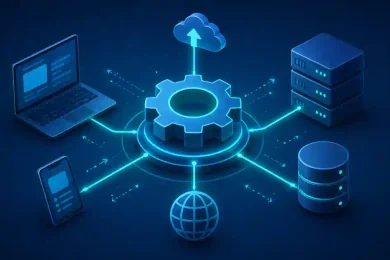
An API gateway provides a centralized entry point for API requests. It manages communication between clients and backend services while handling important functions such as request routing, authentication, rate limiting, monitoring, and API security.
In this complete guide, we explain what an API gateway is, how API gateways work, their architecture, benefits, key features, use cases, and how businesses can implement an API gateway strategy.
What Is an API Gateway?
An API gateway is a software layer that acts as a single entry point between client applications and backend services or APIs.
Instead of a client communicating directly with multiple backend services, requests are sent to the API gateway. The gateway analyzes each request and routes it to the appropriate service.
The client may be:
A web application
A mobile application
An IoT device
An AI application
A third-party platform
Another enterprise system
The backend may consist of microservices, databases, serverless functions, legacy applications, or external APIs.
For example, consider an e-commerce application with separate services for users, products, orders, payments, and shipping.
Without an API gateway, the client may need to communicate separately with each service.
With an API gateway, the application sends requests to a single API endpoint. The gateway then routes each request to the appropriate microservice.
This centralized architecture can simplify API communication, improve security, and provide greater control over API traffic.
Why Do Modern Applications Need an API Gateway?
Traditional monolithic applications often contain business functions within a single application.
Modern software architectures are different.
Organizations increasingly use:
Microservices
Cloud-native applications
Serverless computing
Containerized applications
AI agents
SaaS platforms
Internet of Things devices
A single enterprise application may use dozens or even hundreds of services.
Each service may expose its own API.
If client applications communicate directly with every service, several problems can occur.
Clients need to know the location of every service. Authentication may be implemented differently across APIs. Monitoring API traffic becomes difficult. Backend services may also become exposed directly to external networks.
An API gateway provides a centralized API management layer.
It can manage incoming API requests before those requests reach backend services.
How Does an API Gateway Work?
An API gateway sits between clients and backend services.
The basic API request flow is:
Client → API Gateway → Backend Service → API Gateway → Client
When a client sends an API request, the API gateway processes the request through several stages.
1. Client Sends an API Request
A client application sends an HTTP or API request to the API gateway.
For example:
GET /api/products/123
The request may include authentication credentials, headers, query parameters, and other information.
2. API Gateway Receives the Request
The API gateway acts as the public API endpoint.
Instead of exposing backend services directly, the gateway receives incoming requests.
The gateway analyzes information such as:
API endpoint
HTTP method
Request headers
Authentication token
IP address
Request parameters
Based on this information, the gateway determines how the request should be processed.
3. Authentication and Authorization
The API gateway may verify the identity of the client.
Authentication mechanisms may include:
API keys
OAuth 2.0
JSON Web Tokens (JWT)
OpenID Connect
Mutual TLS
Identity provider integrations
After authentication, the gateway may verify whether the user or application has permission to access the requested API.
4. API Rate Limiting
The gateway checks API usage limits.
For example, an API policy may allow:
1,000 API requests per minute
If the client exceeds the configured limit, the API gateway may reject additional requests.
Rate limiting helps protect backend infrastructure from excessive API traffic.
5. Request Routing
The API gateway determines which backend service should receive the request.
For example:
/users → User Service
/products → Product Service
/orders → Order Service
/payments → Payment Service
The gateway routes the request to the appropriate backend service.
6. Request Transformation
In some architectures, the gateway may modify the API request before forwarding it.
Request transformation may include:
Changing request headers
Converting data formats
Modifying URL structures
Adding authentication information
Translating API protocols
This can help different applications and services communicate more effectively.
7. Backend Service Processes the Request
The backend service receives the request and performs the required business operation.
For example, the product service may retrieve product information from a database.
The service then sends a response to the API gateway.
8. API Gateway Returns the Response
The gateway receives the backend response.
It may perform response transformation, logging, or security checks.
The API gateway then sends the final response to the client application.
This entire process usually happens within milliseconds.
API Gateway Architecture
API gateway architecture typically includes several components that work together to manage API traffic.
Client Layer
The client layer includes applications that consume APIs.
Examples include mobile apps, web applications, IoT devices, AI systems, and third-party platforms.
API Gateway Layer
The API gateway provides the centralized API entry point.
It handles request routing, authentication, rate limiting, traffic management, and API policies.
Service Layer
The service layer contains backend services.
These may include:
Microservices
Serverless functions
Legacy applications
Internal APIs
External APIs
Data Layer
Backend services may interact with databases, caches, data warehouses, or storage systems.
The API gateway generally does not directly access the database. Instead, it routes requests to services responsible for managing data operations.
Monitoring and Observability Layer
API gateway platforms often integrate with monitoring and logging systems.
Organizations can track:
API request volume
Response times
API errors
Authentication failures
Traffic patterns
Service availability
These metrics help engineering teams identify API performance and reliability issues.
Key Features of an API Gateway
Modern API gateways provide several capabilities for managing APIs.
API Request Routing
Request routing directs API requests to the appropriate backend service.
Routing rules can be configured based on API paths, HTTP methods, headers, or other request information.
Authentication and Authorization
API gateways can integrate with identity management systems to authenticate API users and applications.
Centralized authentication reduces the need to implement authentication logic separately in every microservice.
Rate Limiting
Rate limiting controls the number of API requests a client can make during a specific time period.
This helps prevent API abuse and protects backend services.
Load Balancing
Some API gateways distribute requests across multiple service instances.
Load balancing can improve application scalability and availability.
API Monitoring
API gateways collect operational data about API requests.
Development and DevOps teams can analyze API traffic and performance.
Request and Response Transformation
API gateways can transform requests and responses between different formats.
For example, a gateway may modify HTTP headers or convert API response structures.
API Caching
Frequently requested API responses may be cached.
Caching reduces the number of requests sent to backend services and can improve API response times.
API Version Management
Organizations may operate multiple API versions.
For example:
/api/v1/products
/api/v2/products
An API gateway can route requests to different backend services based on the API version.
Logging and Analytics
API gateways can record API request data.
Logs can help organizations investigate errors, analyze API usage, and identify unusual traffic patterns.
Benefits of Using an API Gateway
Implementing an API gateway can provide several technical and operational benefits.
1. Centralized API Management
An API gateway provides a central location for managing API traffic and policies.
Organizations can configure authentication, rate limits, and routing rules from a centralized layer.
2. Improved API Security
Backend services do not need to be directly exposed to clients.
The API gateway can act as a security layer between external applications and internal services.
Security controls can include authentication, authorization, traffic filtering, and API access policies.
3. Simplified Microservices Communication
Microservices architectures may contain many independent services.
An API gateway provides a single API endpoint for client applications.
Clients do not need to understand the internal service architecture.
4. Better Application Performance
API caching, request aggregation, and traffic management can improve API performance.
The gateway can reduce unnecessary backend requests.
5. API Traffic Control
Rate limiting and throttling help organizations control API usage.
This can protect infrastructure from sudden traffic spikes or abusive API requests.
6. Improved API Observability
Centralized logging and monitoring provide greater visibility into API activity.
Engineering teams can identify slow APIs, error rates, and unusual request patterns.
7. Easier API Versioning
API gateways simplify the management of multiple API versions.
Organizations can gradually migrate users from older APIs to newer versions.
8. Reduced Backend Complexity
Common API functions can be managed by the gateway instead of being implemented separately in every service.
This allows backend developers to focus on business logic.
API Gateway Use Cases
API gateways are used across many modern application architectures.
API Gateway for Microservices
Microservices are one of the most common API gateway use cases.
A microservices application may contain services for users, billing, notifications, products, and analytics.
The API gateway provides a single entry point for client applications and routes requests to individual microservices.
API Gateway for Cloud Applications
Cloud applications often use distributed services across cloud infrastructure.
An API gateway can manage communication between clients and cloud services.
It can also integrate with cloud monitoring, identity, and serverless platforms.
API Gateway for Serverless Applications
Serverless applications use functions that execute in response to events or API requests.
An API gateway can receive HTTP requests and trigger the appropriate serverless function.
For example:
Client → API Gateway → Serverless Function
This architecture is commonly used for lightweight APIs and event-driven applications.
API Gateway for Mobile Applications
Mobile applications often communicate with multiple backend systems.
An API gateway provides a unified API interface for mobile clients.
The gateway can also optimize API responses for mobile devices.
API Gateway for SaaS Platforms
SaaS applications often serve multiple customers and integrations.
API gateways can manage API authentication, tenant-level access, rate limits, and API usage policies.
API Gateway for AI Agents
AI agents increasingly interact with external tools, enterprise systems, and APIs.
An API gateway can provide a controlled access layer between AI agents and backend systems.
For example:
AI Agent → API Gateway → CRM / ERP / Database API
The gateway can enforce authentication, API permissions, rate limits, and monitoring policies.
This is particularly useful when organizations deploy multiple autonomous AI agents.
API Gateway for IoT Systems
IoT platforms may receive API requests or data from thousands of connected devices.
An API gateway can help manage device communication and API traffic.
API Gateway for Third-Party Integrations
Businesses often expose APIs to partners and developers.
API gateways can manage API keys, access policies, traffic limits, and analytics for external API consumers.
API Gateway vs Load Balancer
API gateways and load balancers both manage network traffic, but they serve different purposes.
API Gateway | Load Balancer |
|---|---|
Manages API requests | Distributes network traffic |
Handles authentication | Primarily manages traffic distribution |
Supports rate limiting | Balances requests across servers |
Provides API routing | Routes traffic to server instances |
Supports API transformation | Usually does not transform API requests |
Provides API analytics | Focuses on infrastructure availability |
In some architectures, API gateways and load balancers are used together.
The API gateway manages API policies while the load balancer distributes requests across service instances.
API Gateway vs Reverse Proxy
A reverse proxy sits between clients and servers and forwards network requests.
An API gateway provides similar routing functionality but usually includes additional API management features.
API gateways may provide:
API authentication
Rate limiting
API analytics
API versioning
Developer access management
Request transformation
A reverse proxy primarily focuses on traffic routing and server protection.
API Gateway vs Service Mesh
An API gateway manages communication between external clients and backend services.
A service mesh primarily manages communication between internal services.
For example:
API Gateway: North-South Traffic
Client → Application Services
Service Mesh: East-West Traffic
Service A → Service B
Organizations using complex microservices architectures may use both an API gateway and a service mesh.
Popular API Gateway Solutions
Several cloud and open-source platforms provide API gateway capabilities.
Amazon API Gateway
Amazon API Gateway is a managed service for creating, publishing, monitoring, and securing APIs.
It integrates with cloud services and serverless functions.
Azure API Management
Azure API Management provides API management capabilities for applications running across cloud and hybrid environments.
Google Cloud API Gateway
Google Cloud API Gateway provides managed API gateway capabilities for applications hosted on Google Cloud.
Kong Gateway
Kong is an API gateway platform commonly used in cloud-native and microservices environments.
NGINX
NGINX can operate as a reverse proxy, load balancer, and API gateway in distributed application architectures.
Apigee
Apigee is an API management platform designed for enterprise API ecosystems.
The right API gateway solution depends on application architecture, cloud infrastructure, API traffic, and security requirements.
API Gateway Security Best Practices
API gateways are important components of application security architecture.
Organizations should follow several API gateway security practices:
Implement strong authentication mechanisms.
Use OAuth 2.0 or secure token-based authentication.
Apply API rate limiting.
Encrypt API traffic using HTTPS and TLS.
Validate incoming API requests.
Implement role-based API access.
Rotate API keys regularly.
Monitor unusual API traffic.
Maintain detailed API logs.
Use Web Application Firewall protection where required.
Restrict backend services from direct public access.
Regularly update API gateway configurations.
API security should be implemented across the complete API lifecycle.
How to Choose the Right API Gateway
Organizations should evaluate several factors when selecting an API gateway.
Application Architecture
Determine whether the application uses microservices, serverless architecture, or traditional backend systems.
API Traffic Volume
High-traffic applications may require highly scalable API gateway infrastructure.
Security Requirements
Evaluate authentication, authorization, encryption, and API security capabilities.
Cloud Environment
Organizations using AWS, Azure, or Google Cloud may choose gateway services integrated with their existing cloud infrastructure.
API Monitoring
The gateway should provide API logs, metrics, and observability capabilities.
Developer Experience
API configuration and management should integrate with existing development and DevOps workflows.
Cost
API gateway pricing may depend on API request volume, data transfer, or infrastructure resources.
Organizations should estimate API usage before selecting a solution.
API Gateway Best Practices
Following API gateway best practices can improve API reliability and security.
Use the API gateway as a centralized API entry point.
Implement API authentication and authorization.
Configure rate limiting and throttling.
Monitor API performance and errors.
Use caching for frequently requested data.
Maintain API versioning policies.
Automate API gateway configuration using Infrastructure as Code.
Avoid placing unnecessary business logic in the gateway.
Implement API request validation.
Maintain detailed API documentation.
Test gateway performance under high traffic.
The API gateway should remain focused on API management and traffic control rather than core application business logic.
Why Choose Vegavid for API and Cloud Development?
Modern applications require secure and scalable API infrastructure.
Vegavid Technology helps businesses design and develop API-driven cloud applications, microservices architectures, AI systems, and enterprise software platforms.
Our API and cloud development capabilities include:
API architecture design
API gateway implementation
Custom API development
Microservices development
Cloud-native application development
AWS cloud consulting
Serverless application development
AI agent API integration
DevOps and CI/CD implementation
API security consulting
Application modernization
Our development teams design API architectures based on application performance, scalability, security, and business requirements.
Whether you are building a SaaS platform, enterprise application, AI agent ecosystem, or cloud-native system, Vegavid can help you develop a scalable API infrastructure.
Looking to build secure and scalable API infrastructure? Contact Vegavid Technology to discuss your API, cloud, and microservices development requirements.
Conclusion
API Gateways have become a foundational component of modern software architecture, enabling scalable, secure, and efficient communication between services. As organizations continue to adopt microservices and cloud-native approaches, the role of API Gateways will only grow in importance.
If you are planning to build or optimize your API ecosystem, exploring advanced strategies and expert guidance can make a significant difference. Discover more insights and solutions on Vegavid’s technology blog.
Looking to build smarter search solutions?
FAQ's
A load balancer distributes traffic across servers to ensure availability, while an API Gateway provides advanced features such as request routing, authentication, caching, and analytics at the application level.
While not mandatory, it is highly recommended. API Gateways simplify communication, enhance security, and provide centralized control in microservices environments.
Tags

Yash Singh is the Chief Marketing Officer at Vegavid Technology, a leading AI-driven technology company specializing in AI agents, Generative AI, Blockchain, and intelligent automation solutions. With over a decade of experience in digital transformation and emerging technologies, Yash has played a key role in helping businesses adopt advanced AI solutions that enhance operational efficiency, automate workflows, and deliver personalized customer experiences across industries including fintech, healthcare, gaming, ecommerce, and enterprise technology. An alumnus of Indian Institute of Technology Bombay, Yash combines strong technical expertise with strategic marketing leadership to drive innovation in AI-powered applications, autonomous AI agents, Retrieval-Augmented Generation (RAG), Natural Language Processing (NLP), Large Language Models (LLMs), machine learning systems, conversational AI, and enterprise automation platforms. His expertise spans AI model integration, intelligent workflow automation, prompt engineering, smart data processing, and scalable AI infrastructure development, enabling organizations to accelerate digital transformation and business growth. Passionate about the future of intelligent systems, Yash actively shares insights on AI agents, Generative AI, LLM-powered applications, blockchain ecosystems, and next-generation digital strategies. He is committed to helping businesses embrace AI-first transformation while guiding teams to build impactful, industry-specific solutions that shape the future of innovation and intelligent technology.





Leave a Reply