

What is Edge Computing? Complete Guide to Architecture & Use Cases
Over the past decade, computing has undergone a significant transformation driven by the rise of cloud computing, artificial intelligence, and distributed systems. Traditional centralized architectures are no longer sufficient to meet the growing demands of real-time data processing, especially in industries where milliseconds matter.
Organizations today generate massive volumes of data from connected devices, applications, and users. This shift has led to the emergence of new computing paradigms such as edge computing, which brings computation closer to the data source.
What is Edge Computing?
Edge computing is a distributed computing model where data processing occurs near the source of data generation rather than relying solely on centralized cloud data centers. Instead of sending all data to the cloud, edge devices process critical information locally, reducing latency and improving performance.
This approach is particularly relevant in systems powered by Internet of Things devices, where real-time decision-making is essential. Edge computing enables faster insights, improved responsiveness, and reduced bandwidth usage.
Edge Computing is a distributed computing model where data is processed closer to the source of data generation (the "edge") instead of sending all data to a centralized cloud or data center.
By processing data locally on edge devices or nearby edge servers, organizations can reduce latency, save bandwidth, improve reliability, and enable real-time decision-making.
Why Edge Computing is Important
Edge computing addresses the limitations of centralized cloud models, especially in latency-sensitive applications. Industries such as autonomous driving, healthcare monitoring, and smart manufacturing require instant data processing, which cloud-only models cannot always deliver.
Evolution from Centralized Cloud to Edge Computing
The evolution of computing has moved from mainframes to cloud computing and now toward distributed edge environments. Initially, centralized systems dominated due to cost and simplicity. However, as data volumes grew exponentially, latency and bandwidth challenges became evident.
How Edge Computing Works?
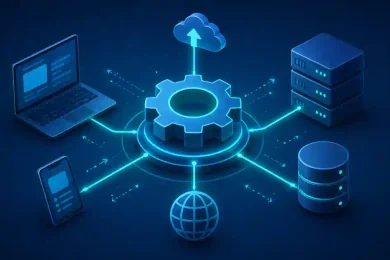
Edge computing operates by deploying computational resources closer to data sources such as sensors, mobile devices, and local servers. These edge nodes process data locally, filter relevant information, and send only necessary data to centralized systems.
This architecture reduces dependency on cloud infrastructure and enables faster response times. It also integrates seamlessly with distributed computing models, enhancing scalability and resilience.
Step | Process | Description |
|---|---|---|
1 | Data Generation | IoT devices, sensors, cameras, or machines generate data. |
2 | Local Processing | An edge device or edge server analyzes and processes the data nearby. |
3 | Instant Decision | Immediate actions are taken based on the processed data (e.g., trigger an alert or stop a machine). |
4 | Cloud Synchronization | Important or summarized data is sent to the cloud for storage, analytics, or long-term processing. |
5 | Continuous Monitoring | The edge continuously collects, processes, and responds to new data in real time. |
Edge Computing Workflow
IoT Devices / Sensors
         ↓
Generate Data
         ↓
Edge Device / Edge Server
(Process Data Locally)
         ↓
Immediate Decision
         ↓
Send Important Data
         ↓
Cloud Storage & Analytics
Core Components of Edge Computing Architecture
Edge computing architecture consists of several key components, including edge devices, gateways, local processing units, and centralized cloud systems. Edge devices generate data, while gateways manage communication and data filtering.
Processing units perform analytics and decision-making locally, ensuring minimal latency. These components work together to create a hybrid architecture that balances performance and scalability.
Edge Computing architecture consists of several interconnected components that work together to process data closer to where it is generated.
Component | Description | Example |
|---|---|---|
1. Edge Devices | Devices that generate data at the network edge. | IoT sensors, cameras, smartphones, robots, wearables |
2. Edge Gateway | Collects, filters, secures, and routes data between edge devices and edge servers or the cloud. | IoT Gateway, Industrial Gateway |
3. Edge Servers | Perform local computing, AI inference, analytics, and data processing near the source. | Local servers, Micro Data Centers |
4. Network Connectivity | Enables secure communication between devices, gateways, edge servers, and cloud platforms. | Wi-Fi, 5G, Ethernet, LTE, Fiber |
5. Cloud/Data Center | Stores historical data, performs large-scale analytics, machine learning training, and centralized management. | Public, Private, or Hybrid Cloud |
6. Security Layer | Protects devices, data, and communications through encryption, authentication, and access control. | Firewalls, VPNs, Zero Trust, IAM |
7. Edge Management Platform | Monitors, updates, manages, and orchestrates edge devices and applications remotely. | Device Management, Remote Monitoring |
8. Applications & AI Services | Business applications that use processed data for automation and decision-making. | Predictive Maintenance, Smart Surveillance, Autonomous Systems |
Edge Computing Architecture Flow
IoT Devices / Sensors
        │
        ▼
Edge Gateway
(Data Collection & Filtering)
        │
        ▼
Edge Server
(Local Processing & AI Analytics)
        │
   ┌────┴────┐
   │         │
   ▼         ▼
Real-Time    Cloud
Actions       Storage & Analytics
        │
        ▼
Management & Monitoring Dashboard
Layered Edge Computing Architecture
Layer | Purpose |
|---|---|
Device Layer | Generates real-time data from sensors and connected devices. |
Connectivity Layer | Securely transmits data across networks. |
Edge Layer | Performs local processing, AI inference, and analytics. |
Cloud Layer | Provides centralized storage, model training, and enterprise analytics. |
Application Layer | Delivers business intelligence, dashboards, automation, and user interfaces. |
Edge Computing vs Cloud Computing vs Fog Computing
While cloud computing centralizes data processing, edge computing decentralizes it. Cloud systems excel in large-scale analytics and storage, whereas edge computing focuses on real-time processing.
Organizations often adopt a hybrid approach, leveraging both models to optimize performance. Understanding the differences is crucial for designing efficient systems, especially in data-intensive environments.
Fog computing acts as an intermediary layer between edge devices and cloud systems. While edge computing processes data directly at the source, fog computing distributes processing across intermediate nodes.
Both models aim to reduce latency and improve efficiency, but edge computing offers more localized processing, making it ideal for real-time applications.
Feature | Edge Computing | Cloud Computing | Fog Computing |
|---|---|---|---|
Definition | Data is processed directly on or near the source device. | Data is sent to centralized cloud data centers for processing. | Data is processed on intermediate nodes between edge devices and the cloud. |
Processing Location | Edge devices or local edge servers | Centralized cloud servers | Fog nodes, gateways, routers, or local servers |
Latency | ⭐ Very Low (milliseconds) | Higher due to internet transmission | Low |
Response Time | Real-time | Moderate to High | Near Real-time |
Bandwidth Usage | Lowest | Highest | Moderate |
Internet Dependency | Minimal | High | Moderate |
Scalability | Moderate | Very High | High |
Data Storage | Limited local storage | Massive cloud storage | Temporary or regional storage |
Security & Privacy | High (data stays local) | Depends on cloud security | High (local processing with cloud support) |
Best For | AI inference, autonomous systems, IoT, robotics | Big data analytics, backups, enterprise applications | Smart cities, industrial IoT, connected infrastructure |
Examples | Smart cameras, self-driving cars, factory robots | Cloud storage, SaaS, AI model training | Smart traffic systems, industrial gateways, healthcare monitoring |
Use Cases Across Industries
Edge computing is transforming multiple industries, including healthcare, manufacturing, retail, and transportation. In healthcare, it enables real-time patient monitoring and predictive analytics.
In manufacturing, edge computing supports smart factories by optimizing operations and reducing downtime. Retail businesses use edge solutions for personalized customer experiences and inventory management.
Edge Computing is transforming industries by enabling real-time data processing, low-latency decision-making, and reduced bandwidth usage. Here are some of the most common industry use cases.
Industry | Edge Computing Use Cases | Key Benefits |
|---|---|---|
Manufacturing | Predictive maintenance, robotics, quality inspection, production monitoring | Reduced downtime, improved productivity, real-time automation |
Healthcare | Remote patient monitoring, wearable devices, medical imaging, smart hospitals | Faster diagnosis, improved patient care, secure data processing |
Automotive | Autonomous vehicles, driver assistance (ADAS), fleet management | Real-time navigation, enhanced safety, low-latency decisions |
Retail & E-commerce | Smart shelves, cashier-less checkout, inventory tracking, customer analytics | Better customer experience, reduced stock-outs, faster transactions |
Smart Cities | Traffic management, smart lighting, public safety, waste management | Efficient city operations, lower energy costs, improved public services |
Agriculture | Precision farming, crop monitoring, automated irrigation, livestock tracking | Higher crop yield, optimized resource usage, real-time field insights |
Energy & Utilities | Smart grids, power monitoring, renewable energy management | Reliable energy distribution, predictive maintenance, reduced outages |
Logistics & Supply Chain | Fleet tracking, warehouse automation, cold chain monitoring | Faster deliveries, asset visibility, reduced operational costs |
Security & Surveillance | AI-powered video analytics, facial recognition, intrusion detection | Real-time threat detection, enhanced security, reduced bandwidth |
Banking & Financial Services | ATM monitoring, fraud detection, branch security, edge AI | Faster transaction processing, enhanced security, improved compliance |
Telecommunications | 5G edge services, network optimization, content delivery | Lower latency, improved network performance, better user experience |
Education | Smart classrooms, virtual labs, campus security | Interactive learning, efficient campus management, improved connectivity |
Benefits of Edge Computing
Edge computing delivers significant advantages by processing data closer to where it is generated, enabling organizations to make faster, smarter, and more secure decisions. Instead of transmitting all data to centralized cloud servers, edge devices and local gateways analyze information in real time, reducing delays and improving operational efficiency.
Key Benefits
Low Latency: Process data instantly for real-time applications such as autonomous vehicles, industrial automation, and healthcare monitoring.
Improved Performance: Reduce response times by eliminating the need to send every data request to the cloud.
Lower Bandwidth Costs: Only critical or summarized data is transmitted to cloud platforms, minimizing network traffic and reducing operational expenses.
Enhanced Security and Privacy: Sensitive information can remain on local devices, reducing exposure during data transmission.
Greater Reliability: Edge systems continue operating even during intermittent or unavailable internet connectivity.
Scalability: Distributed processing allows organizations to support thousands of connected devices without overloading centralized infrastructure.
Better Decision-Making: Real-time analytics enable businesses to respond immediately to operational events and customer needs.
Challenges and Limitations of Edge Computing
Although edge computing offers numerous benefits, organizations must address several implementation challenges.
Common Challenges
Managing large numbers of distributed edge devices.
Higher infrastructure deployment and maintenance costs.
Ensuring compatibility between devices from different vendors.
Maintaining consistent data across edge and cloud environments.
Monitoring and updating remote devices efficiently.
Limited computing power and storage on some edge devices.
Increased operational complexity compared to centralized cloud architectures.
Careful planning, automation, and centralized management tools help overcome these challenges while maximizing the value of edge deployments.
Security and Privacy Considerations
Because edge computing distributes processing across many locations, security becomes a critical design requirement. Every connected device, gateway, and edge server can become a potential attack surface if not properly secured.
Security Best Practices
Encrypt data both at rest and in transit.
Implement strong authentication and Multi-Factor Authentication (MFA).
Apply Zero Trust security principles.
Use role-based access control (RBAC) to restrict permissions.
Regularly patch and update edge devices.
Monitor endpoints continuously using AI-powered threat detection.
Secure APIs and communication channels between edge and cloud environments.
A comprehensive security strategy protects sensitive information while ensuring regulatory compliance and business continuity.
Integration with Cloud and Hybrid Architectures
Edge computing is most effective when combined with cloud computing in a hybrid architecture. The edge handles time-sensitive processing, while the cloud provides centralized storage, advanced analytics, AI model training, and long-term data management.
Hybrid Architecture Benefits
Real-time decision-making at the edge.
Centralized reporting and analytics in the cloud.
Reduced bandwidth consumption.
Flexible workload distribution.
Improved disaster recovery and backup capabilities.
Easier scaling as business requirements evolve.
This hybrid approach enables organizations to balance performance, scalability, and operational efficiency.
Tools and Platforms for Edge Computing
Modern edge computing deployments rely on cloud-native technologies and IoT platforms to simplify application deployment and infrastructure management.
Popular Edge Computing Technologies
Tool/Platform | Primary Purpose |
|---|---|
Kubernetes | Container orchestration and workload management |
Docker | Containerized application deployment |
KubeEdge | Extends Kubernetes capabilities to edge environments |
Azure IoT Edge | Microsoft platform for deploying cloud intelligence to edge devices |
AWS IoT Greengrass | Local compute, messaging, and machine learning for IoT devices |
Red Hat OpenShift | Enterprise Kubernetes platform for hybrid and edge deployments |
EdgeX Foundry | Open-source edge computing framework for IoT applications |
These platforms help organizations deploy, monitor, update, and manage distributed edge applications at scale.
Best Practices for Edge Computing Implementation
Successful edge computing projects require strategic planning and continuous optimization.
Recommended Best Practices
Identify workloads that require real-time processing.
Design scalable and modular architectures.
Secure every edge device using Zero Trust principles.
Standardize communication protocols and APIs.
Implement centralized monitoring and device management.
Automate software updates and security patching.
Continuously monitor system performance and resource utilization.
Integrate edge infrastructure with cloud services for centralized analytics.
Following these practices improves system reliability, simplifies maintenance, and maximizes return on investment.
Scalability and Performance Considerations
As organizations deploy more connected devices, scalability becomes essential. Edge architectures should support increasing workloads while maintaining consistent performance.
Strategies for High Scalability
Deploy microservices for modular applications.
Use containerized workloads for portability.
Implement load balancing across edge nodes.
Utilize AI-driven resource optimization.
Adopt event-driven architectures for efficient processing.
Monitor infrastructure performance continuously.
These approaches enable organizations to expand their edge environments without sacrificing speed or reliability.
Future Trends in Edge Computing
Edge computing is evolving rapidly alongside advances in artificial intelligence, high-speed networking, and distributed systems.
Emerging Trends
AI-powered edge intelligence and autonomous decision-making.
Wider adoption of 5G-enabled edge applications.
Expansion of Industrial IoT (IIoT) and smart manufacturing.
Growth of autonomous vehicles and intelligent transportation systems.
Increased use of digital twins for real-time simulation and monitoring.
Serverless edge computing for lightweight application deployment.
Enhanced cybersecurity using AI-driven threat detection.
Sustainable and energy-efficient edge infrastructure.
As these technologies mature, edge computing will become a foundational component of digital transformation initiatives across industries.
Real-World Examples for Edge Computing
Organizations across multiple industries are already leveraging edge computing to improve efficiency and innovation.
Manufacturing
Predictive maintenance systems analyze equipment data locally to identify failures before they occur, reducing downtime and maintenance costs.
Healthcare
Wearable devices and remote monitoring systems process patient data in real time, enabling faster diagnosis and emergency response.
Smart Cities
Traffic management systems optimize signal timing using live traffic data, reducing congestion and improving road safety.
Retail
Cashier-less stores use computer vision and edge AI to automate checkout while delivering personalized shopping experiences.
Logistics
Fleet management systems monitor vehicle performance, shipment conditions, and delivery routes in real time.
Energy
Smart grids process electricity demand locally to optimize power distribution and improve grid reliability.
Conclusion
Edge computing has become a critical technology for organizations seeking faster decision-making, improved operational efficiency, and enhanced customer experiences. By processing data closer to where it is generated, businesses can reduce latency, lower bandwidth costs, strengthen security, and support real-time AI applications.
When integrated with cloud platforms through a hybrid architecture, edge computing delivers the best of both worlds—real-time local intelligence combined with centralized analytics and scalable cloud infrastructure. As AI, 5G, IoT, and automation continue to evolve, edge computing will play an increasingly important role in enabling intelligent, resilient, and future-ready digital ecosystems.
As businesses explore advanced digital strategies, integrating edge computing with technologies like AI and IoT will be essential for staying competitive. To dive deeper into related innovations, visit the Vegavid blog and explore cutting-edge insights shaping the future of technology. Now is the time to evaluate how edge computing can transform your enterprise architecture and unlock new opportunities for growth.
Looking to build smarter search solutions?
FAQ's
Cloud computing processes data in centralized data centers, while edge computing processes data locally near devices, making it faster and more efficient for real-time applications.
Edge computing enables IoT devices to process data instantly without relying on the cloud, improving speed, reliability, and reducing bandwidth usage.
Common use cases include autonomous vehicles, smart cities, industrial automation, healthcare monitoring, retail analytics, and real-time video processing.
Edge computing can be secure if proper measures like encryption, device authentication, and network security protocols are implemented, although distributed environments require stronger security management.
Tags

Yash Singh is the Chief Marketing Officer at Vegavid Technology, a leading AI-driven technology company specializing in AI agents, Generative AI, Blockchain, and intelligent automation solutions. With over a decade of experience in digital transformation and emerging technologies, Yash has played a key role in helping businesses adopt advanced AI solutions that enhance operational efficiency, automate workflows, and deliver personalized customer experiences across industries including fintech, healthcare, gaming, ecommerce, and enterprise technology. An alumnus of Indian Institute of Technology Bombay, Yash combines strong technical expertise with strategic marketing leadership to drive innovation in AI-powered applications, autonomous AI agents, Retrieval-Augmented Generation (RAG), Natural Language Processing (NLP), Large Language Models (LLMs), machine learning systems, conversational AI, and enterprise automation platforms. His expertise spans AI model integration, intelligent workflow automation, prompt engineering, smart data processing, and scalable AI infrastructure development, enabling organizations to accelerate digital transformation and business growth. Passionate about the future of intelligent systems, Yash actively shares insights on AI agents, Generative AI, LLM-powered applications, blockchain ecosystems, and next-generation digital strategies. He is committed to helping businesses embrace AI-first transformation while guiding teams to build impactful, industry-specific solutions that shape the future of innovation and intelligent technology.




Leave a Reply