

How Can a Devops Team Take Advantage of Artificial Intelligence
As we navigate the technology landscape in late 2026, the intersection of software development and IT operations has reached a critical inflection point. The sheer complexity of multi-cloud architectures, microservices, and rapid deployment cycles has surpassed human cognitive limits. For modern enterprises, the question is no longer if they should integrate machine learning, but rather: How can a DevOps team take advantage of artificial intelligence to maintain a competitive edge?
How can a DevOps team take advantage of artificial intelligence?
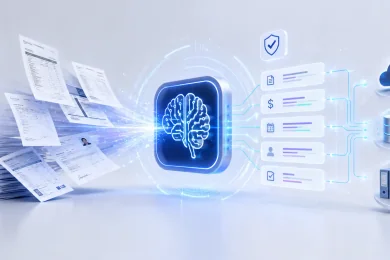
A DevOps team can take advantage of AI by implementing AIOps (Artificial Intelligence for IT Operations) to automate CI/CD pipelines, predict system failures before they occur, eliminate alert fatigue through intelligent log analysis, and auto-remediate infrastructure vulnerabilities. According to recent 2026 industry data, integrating AI into DevOps workflows reduces Mean Time To Recovery (MTTR) by up to 65% while increasing deployment frequency by over 40%.
By transitioning from traditional, reactive operations to proactive, AI-driven operations, organizations are unlocking unprecedented scalability, security, and developer productivity.
Strategic Overview: The Shift to AIOps in 2026
The definition of DevOps has evolved. Over the past five years, the industry has transitioned from manual automation scripts to Continuous Intelligence. As enterprise architectures become increasingly decoupled and distributed across edge and cloud environments, traditional monitoring tools simply generate too much noise.
The Market Drivers
Exponential Data Sprawl: Modern infrastructure generates terabytes of telemetry, logs, and trace data daily. Analyzing this manually is functionally impossible.
The Need for Speed vs. Stability: Organizations are pressured to deploy features faster (often multiple times a day) without compromising system reliability. AI bridges the gap between high-velocity releases and zero-downtime requirements.
Talent Scarcity: Senior infrastructure engineers are expensive and scarce. AI augments human capabilities, allowing a leaner team to manage hyperscale environments.
For a comprehensive understanding of how tailored software pipelines are scaling alongside these trends, organizations must continually re-evaluate What Is Custom Software Development in the context of AI-driven paradigms.
In-Depth Analysis: Core AI Applications in DevOps
To fully understand how can a DevOps team take advantage of artificial intelligence, we must examine the specific layers of the software development lifecycle (SDLC) that machine learning algorithms enhance.
1. Predictive Anomaly Detection and Intelligent Monitoring
In a traditional setup, DevOps engineers rely on threshold-based alerts. If CPU usage hits 90%, an alert fires. This leads to massive "alert fatigue," where critical warnings are lost in a sea of false positives.
By integrating Artificial Intelligence, teams transition to predictive analytics. Machine learning models ingest historical telemetry data to understand the baseline behavior of applications. When anomalous patterns emerge—even if they haven't breached a static threshold—the AI flags them.
For highly regulated industries, integrating AI Agents for Risk Monitoring ensures that compliance and system health are continuously audited in real time, shifting security posture from reactive patching to proactive defense.
2. Optimizing CI/CD Pipelines
Continuous Integration and Continuous Deployment (CI/CD) pipelines often suffer from bottlenecks such as flaky automated tests, long build times, and deployment friction.
AI optimizes these pipelines by:
Test Impact Analysis: AI analyzes code commits to determine exactly which tests need to run, cutting testing time by hours.
Predicting Build Failures: Models evaluate historical commit data to calculate the probability of a build failure before the build is even initiated.
Auto-Remediation: When a deployment fails, AI can automatically trigger rollbacks to the last stable state without human intervention.
3. Intelligent Code Generation and Infrastructure as Code (IaC)
Generative AI has fundamentally altered how Infrastructure as Code (IaC) is written. Instead of manually writing thousands of lines of Terraform or Kubernetes YAML manifests, DevOps engineers can use Large Language Models (LLMs) to generate, optimize, and validate infrastructure configurations.
Partnering with a specialized Generative AI Development Company allows enterprises to build custom, proprietary LLMs trained specifically on their internal codebase and infrastructure blueprints, ensuring output is perfectly aligned with internal security standards.
Furthermore, integrating custom AI Copilot Development tools directly into the IDEs of platform engineers drastically accelerates the creation of secure, compliant infrastructure scripts.
4. DevSecOps and Automated Threat Mitigation
Security can no longer be an afterthought. AI enhances DevSecOps by continuously scanning code repositories, container registries, and runtime environments for vulnerabilities. Advanced neural networks do not just identify known CVEs (Common Vulnerabilities and Exposures); they analyze code semantics to detect zero-day vulnerabilities and logic flaws that traditional static application security testing (SAST) tools miss.
Traditional DevOps vs. AI-Augmented DevOps (AIOps)
To visualize the strategic shift, consider the following data comparison table tracking the evolution of operational metrics.
Capability / Metric | Traditional DevOps (Pre-2023) | AI-Augmented DevOps (2026) |
|---|---|---|
Alerting Mechanism | Static, threshold-based rules | Dynamic, predictive anomaly detection |
Root Cause Analysis (RCA) | Manual log parsing via grep/Splunk | Automated RCA mapping via machine learning |
Mean Time to Detect (MTTD) | 30 - 60 minutes | < 5 minutes |
Mean Time to Recover (MTTR) | Hours to Days | Minutes (often via auto-remediation) |
Pipeline Optimization | Run all tests for every commit | Smart test selection based on AI impact analysis |
Capacity Planning | Reactive scaling / Over-provisioning | Predictive autoscaling based on seasonal traffic ML |
Data supported by 2026 insights from Gartner's AIOps Market Research and IBM's automation frameworks.
Building the AI-Driven DevOps Team Structure
Technology alone is insufficient without the right human capital. Taking advantage of AI requires a structural shift in team composition.
Traditional sysadmins are evolving into AI operators. To build and maintain custom predictive models that read your specific telemetry data, you will likely need to Hire Data Scientist/Engineer talent specifically focused on IT operations data.
Additionally, as LLMs become deeply embedded in log analysis (e.g., querying logs using natural language: "Why did the payment gateway latency spike at 3 AM?"), teams are increasingly looking to Hire Prompt Engineers who can fine-tune these models to understand proprietary architectural jargon and deliver accurate, hallucination-free insights.
Key Benefits & Tangible ROI
When an enterprise definitively answers "how can a DevOps team take advantage of artificial intelligence" through strategic implementation, the Return on Investment (ROI) is profound and multifaceted:
Drastic Reduction in Operational Costs: Predictive auto-scaling ensures cloud resources are utilized optimally, cutting down on "cloud waste" from over-provisioned servers. AI-driven FinOps tools actively manage AWS/Azure bills.
Accelerated Time-to-Market: By eliminating pipeline bottlenecks, automating code reviews, and reducing testing cycles, product features reach end-users significantly faster.
Enhanced System Reliability (Higher Uptime): Predictive maintenance fixes issues before users even notice them, protecting brand reputation and SLA compliance.
Improved Developer Experience (DevEx): Eliminating the friction of manual configuration and the stress of 3 AM pager-duty alerts leads to higher job satisfaction and lower engineer churn rates.
Security Posture Hardening: Continuous, AI-driven vulnerability scanning acts as an autonomous immune system for your software architecture.
According to research from McKinsey & Company, companies that deeply integrate AI into their software delivery lifecycles consistently rank in the top quartile for overall financial performance in their respective sectors.
Real-World Implementation Strategies
Transitioning to an AI-augmented DevOps culture should be phased to mitigate risk.
Phase 1: Observability & Data Unification
AI models require clean, unified data. Start by aggregating logs, metrics, and traces into a centralized data lake. Ensure your telemetry pipelines are robust.
Phase 2: Implement AIOps for Alert Correlation
Begin with low-risk implementations. Use AI to deduplicate alerts and group related incidents together. This immediately proves value by reducing noise for the on-call team.
Phase 3: Smart CI/CD and GenAI Code Assistance
Introduce tools that provide intelligent code suggestions and AI-driven automated testing. Let developers get comfortable with AI acting as a co-pilot.
Phase 4: Autonomous Remediation
The highest maturity level. Allow AI to execute runbooks automatically for known issues—such as restarting a stalled pod, clearing a bloated cache, or rolling back a bad deployment.
Conclusion & Strategic Next Steps
Understanding how can a DevOps team take advantage of artificial intelligence is the definitive differentiator for technology leadership in 2026. The evolution from manual pipeline management to autonomous, predictive operations allows organizations to release software faster, secure their infrastructure dynamically, and maintain near-perfect reliability. The initial investment in AIOps tools and AI talent pays exponential dividends in system resilience and developer velocity.
If your organization is ready to transition from legacy operations to an intelligent, automated DevOps ecosystem, you need the right talent and strategic guidance. Whether you are looking to build proprietary AIOps tools, integrate custom LLMs into your CI/CD pipelines, or fundamentally reshape your infrastructure, the next step is crucial.
Empower your platform engineering teams by choosing to Hire AI Engineers from Vegavid, where elite talent meets cutting-edge technological strategy. Transform your DevOps lifecycle today to secure your competitive advantage for the future.
Frequently Asked Questions (FAQs)
A DevOps team can leverage AI immediately by integrating AIOps platforms to reduce alert fatigue, using generative AI to write Infrastructure as Code (IaC), and implementing machine learning to predict and prevent CI/CD build failures.
No, AI will not replace DevOps engineers. Instead, it will augment them. AI handles repetitive tasks, log parsing, and continuous monitoring, freeing human engineers to focus on high-level system architecture, platform engineering, and strategic innovations.
AIOps (Artificial Intelligence for IT Operations) uses big data and machine learning to automate IT processes. In 2026, it is critical because modern cloud-native architectures are too complex and generate too much data for humans to monitor manually.
AI improves CI/CD by analyzing code commits to predict build failures, identifying flaky tests, executing intelligent test selection (only running necessary tests), and automating post-deployment rollbacks if anomalies are detected in production.
AI enhances DevSecOps by dynamically scanning code for logic flaws, autonomously patching known vulnerabilities, and continuously monitoring runtime environments for zero-day behavioral anomalies that traditional static security tools miss.

Yash Singh is the Chief Marketing Officer at Vegavid Technology, a leading AI-driven technology company specializing in AI agents, Generative AI, Blockchain, and intelligent automation solutions. With over a decade of experience in digital transformation and emerging technologies, Yash has played a key role in helping businesses adopt advanced AI solutions that enhance operational efficiency, automate workflows, and deliver personalized customer experiences across industries including fintech, healthcare, gaming, ecommerce, and enterprise technology. An alumnus of Indian Institute of Technology Bombay, Yash combines strong technical expertise with strategic marketing leadership to drive innovation in AI-powered applications, autonomous AI agents, Retrieval-Augmented Generation (RAG), Natural Language Processing (NLP), Large Language Models (LLMs), machine learning systems, conversational AI, and enterprise automation platforms. His expertise spans AI model integration, intelligent workflow automation, prompt engineering, smart data processing, and scalable AI infrastructure development, enabling organizations to accelerate digital transformation and business growth. Passionate about the future of intelligent systems, Yash actively shares insights on AI agents, Generative AI, LLM-powered applications, blockchain ecosystems, and next-generation digital strategies. He is committed to helping businesses embrace AI-first transformation while guiding teams to build impactful, industry-specific solutions that shape the future of innovation and intelligent technology.




Leave a Reply