

How Hospitals Use AI for Diagnostics & Automation: Technologies, Benefits, and Real-World Use Cases
Introduction
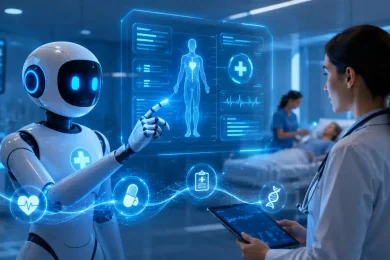
The healthcare industry is undergoing a profound transformation driven by advancements in artificial intelligence. Hospitals, once heavily reliant on manual processes and traditional diagnostic methods, are now embracing intelligent technologies to enhance patient care, improve operational efficiency, and reduce costs. This shift is not just about adopting new tools but about fundamentally rethinking how care is delivered in a data-driven world.
The integration of AI in Healthcare is enabling hospitals to move beyond reactive treatment models toward proactive and predictive care. From analyzing medical images to automating administrative workflows, AI is helping healthcare providers make faster, more accurate decisions while improving patient outcomes. These advancements are particularly important in an era where healthcare systems are under increasing pressure to manage growing patient volumes and complex medical conditions.
Organizations like Vegavid are supporting this transformation by helping healthcare providers implement scalable AI solutions tailored to their needs. As hospitals continue to adopt these technologies, understanding how AI is used in diagnostics and automation becomes essential for both healthcare professionals and technology stakeholders.
In this article, we will explore how hospitals use AI, the technologies behind it, its benefits, and real-world use cases that demonstrate its impact on modern healthcare systems.
Understanding AI in Hospitals
The Role of AI in Modern Healthcare
Artificial Intelligence is becoming a core component of hospital operations, influencing everything from diagnostics to patient management. AI systems can process vast amounts of medical data, identify patterns, and provide insights that support clinical decision-making. This capability allows healthcare professionals to diagnose conditions earlier and more accurately.
In addition to clinical applications, AI is also transforming administrative processes, enabling hospitals to operate more efficiently. By automating routine tasks, healthcare providers can focus more on patient care.
Evolution of AI Adoption in Hospitals
The adoption of AI in hospitals has evolved significantly over the past decade. Initially used for basic data analysis, AI is now integrated into advanced diagnostic tools, robotic surgery systems, and predictive analytics platforms.
This evolution reflects the growing importance of data in healthcare and the need for technologies that can manage and interpret it effectively.
Key Drivers of AI Adoption
Several factors are driving the adoption of AI in hospitals, including the need for improved patient outcomes, cost reduction, and operational efficiency. Additionally, advancements in computing power and data availability have made AI more accessible.
How Hospitals Use AI in Diagnostics
Medical Imaging Analysis
AI is revolutionizing medical imaging by enabling faster and more accurate analysis of scans such as X-rays, MRIs, and CT scans. AI algorithms can detect abnormalities that may be missed by the human eye, improving diagnostic accuracy.
This capability is particularly valuable in detecting conditions such as cancer, where early diagnosis can significantly impact outcomes.
Disease Prediction and Early Detection
AI systems analyze patient data to predict the likelihood of diseases and identify early warning signs. This allows healthcare providers to intervene before conditions become severe.
Predictive analytics is being used for conditions such as heart disease and diabetes, improving preventive care.
Clinical Decision Support Systems
AI-powered decision support systems assist healthcare professionals by providing evidence-based recommendations. These systems analyze patient data and medical literature to suggest treatment options.
AI in Diagnostics: Enhancing Accuracy and Speed
Reducing Diagnostic Errors
AI reduces the likelihood of diagnostic errors by providing consistent and data-driven analysis. This improves patient safety and outcomes.
Accelerating Diagnosis
AI enables faster diagnosis by processing data quickly, allowing healthcare providers to make timely decisions.
Supporting Complex Cases
AI is particularly useful in complex cases where multiple factors must be considered. It provides insights that support comprehensive decision-making.
Healthcare AI Automation in Hospitals
Administrative Workflow Automation
AI automates administrative tasks such as scheduling, billing, and patient record management. This reduces workload and improves efficiency.
Resource Management
AI helps hospitals optimize resource allocation, including staff scheduling and equipment usage.
Patient Monitoring Systems
AI-powered monitoring systems track patient conditions in real time, enabling timely interventions.
AI Medical Use Cases Across Departments
Emergency Care
AI is used in emergency departments to prioritize patients and predict critical conditions.
Radiology
AI assists radiologists in analyzing imaging data and identifying abnormalities.
Oncology
AI supports cancer diagnosis and treatment planning by analyzing patient data and medical research.
Cardiology
AI is used to detect heart conditions and predict risks, improving patient outcomes.
AI in Hospitals: Improving Patient Care
Personalized Treatment Plans
Artificial intelligence is enabling hospitals to move toward highly personalized treatment approaches by analyzing extensive patient data, including medical history, genetic information, lifestyle factors, and real-time health metrics. AI systems can identify patterns and correlations that help clinicians tailor treatments to individual needs rather than relying on generalized protocols. This level of personalization improves treatment effectiveness, reduces adverse reactions, and enhances patient satisfaction. By supporting precision medicine, AI allows healthcare providers to deliver care that is more targeted, efficient, and aligned with each patient’s unique condition.
Enhancing Patient Engagement
AI-powered tools are transforming how hospitals engage with patients by providing continuous communication, support, and guidance. Virtual assistants, chatbots, and mobile health applications enable patients to access information, schedule appointments, and receive reminders for medications or follow-ups. These tools also help answer common queries, reducing the burden on healthcare staff while improving responsiveness. Enhanced engagement encourages patients to take a more active role in their health, leading to better adherence to treatment plans and improved outcomes. By fostering stronger connections between patients and providers, AI contributes to a more patient-centric healthcare experience.
Reducing Hospital Readmissions
Reducing hospital readmissions is a critical goal for healthcare providers, and AI is playing a key role in achieving this objective. By analyzing patient data and identifying risk factors, AI systems can predict which patients are more likely to be readmitted after discharge. This enables healthcare teams to implement preventive measures, such as personalized follow-up care, medication management, and remote monitoring. Early intervention helps address potential issues before they escalate, improving patient outcomes and reducing healthcare costs. AI-driven insights allow hospitals to deliver more proactive and effective care, minimizing unnecessary readmissions.
Technologies Powering AI in Healthcare
Machine Learning and Deep Learning
Machine learning and deep learning are at the core of AI systems in healthcare, enabling them to learn from data and improve over time. These technologies allow AI models to analyze complex datasets, identify patterns, and make predictions with high accuracy. In healthcare, they are used for tasks such as disease detection, treatment recommendation, and patient risk assessment. Deep learning, in particular, is highly effective in processing medical images and unstructured data, making it a powerful tool for advanced diagnostics and research.
Natural Language Processing
Natural Language Processing (NLP) enables AI systems to understand and interpret human language, making it possible to process medical records, clinical notes, and patient interactions. This capability allows healthcare providers to extract valuable insights from unstructured data, improving decision-making and efficiency. NLP also supports applications such as voice-assisted documentation and automated report generation, reducing administrative workload. By bridging the gap between human communication and machine understanding, NLP enhances the usability and effectiveness of AI in healthcare environments.
Computer Vision
Computer vision is a key technology in healthcare AI, particularly in the field of medical imaging and diagnostics. It enables AI systems to analyze visual data such as X-rays, CT scans, and MRIs with high precision. By detecting patterns and abnormalities in images, computer vision helps clinicians identify diseases at earlier stages and make more accurate diagnoses. This technology is especially valuable in areas such as radiology, oncology, and pathology, where visual analysis is critical. By augmenting human expertise, computer vision improves diagnostic accuracy and supports better patient care.
Benefits of AI in Healthcare
Improved Patient Outcomes
Artificial intelligence is significantly improving patient outcomes by enabling faster, more accurate diagnoses and personalized treatment plans. AI systems can analyze vast amounts of medical data, including imaging, lab results, and patient history, to identify patterns that may not be immediately visible to clinicians. This allows healthcare providers to detect diseases earlier, choose more effective treatments, and monitor patient progress more closely. By supporting clinical decision-making with data-driven insights, AI helps reduce errors and improve the overall quality of care, ultimately leading to better health outcomes for patients.
Increased Efficiency
AI-driven automation is enhancing operational efficiency within hospitals by streamlining both clinical and administrative processes. Tasks such as patient scheduling, record management, and billing can be automated, reducing the workload on healthcare staff and minimizing delays. In clinical settings, AI assists with diagnostics and patient monitoring, enabling faster and more informed decision-making. This improved efficiency allows healthcare professionals to focus more on patient care rather than routine administrative tasks, resulting in a more effective and responsive healthcare system.
Cost Reduction
AI is helping hospitals reduce costs by optimizing processes and minimizing inefficiencies. Automation reduces the need for manual labor in repetitive tasks, while predictive analytics helps prevent costly complications by identifying potential health issues early. AI also improves resource allocation, ensuring that staff, equipment, and facilities are used effectively. By reducing errors, improving workflows, and enabling proactive care, AI contributes to significant cost savings over time, making healthcare more sustainable and accessible.
Role of AI Development Companies
Expertise in Healthcare Solutions
An experienced AI Development Company plays a vital role in implementing AI solutions tailored to the unique needs of the healthcare sector. These companies bring specialized knowledge in areas such as medical data analysis, system integration, and regulatory compliance. Their expertise ensures that AI systems are designed to meet both clinical and operational requirements, enabling hospitals to adopt technology effectively and safely. By leveraging professional guidance, healthcare providers can accelerate their AI initiatives and achieve better outcomes.
Hiring Skilled Professionals
Hospitals often choose to Hire AI Developers who possess the technical expertise required to build and manage advanced healthcare AI systems. These professionals are responsible for tasks such as developing algorithms, integrating systems, and ensuring data security. Their skills are essential for creating reliable and scalable solutions that can handle the complexities of healthcare environments. Investing in skilled talent ensures that AI systems are implemented successfully and continue to perform effectively over time.
Customized Solutions
AI development companies provide customized solutions that address the specific challenges and requirements of healthcare providers. These tailored approaches consider factors such as patient demographics, clinical workflows, and existing infrastructure. Companies like Vegavid focus on delivering flexible and scalable AI solutions that align with hospital objectives while maintaining efficiency and compliance. By offering customized strategies, they help healthcare organizations maximize the value of AI and improve both operational performance and patient care.
Challenges in Implementing AI in Hospitals
Data Privacy and Security
Protecting patient data is one of the most critical challenges when implementing AI in hospital environments. Healthcare systems handle highly sensitive information, including medical histories, diagnostic reports, and personal identifiers, making them prime targets for cyber threats. Organizations must implement robust security measures such as encryption, access controls, and continuous monitoring to safeguard this data. Additionally, maintaining patient trust requires transparency in how data is collected, stored, and used. Any breach or misuse of data can have serious legal and reputational consequences, making data privacy and security a top priority for healthcare providers adopting AI technologies.
Integration with Existing Systems
Integrating AI solutions with existing hospital infrastructure can be complex, particularly when dealing with legacy systems that were not designed to support modern technologies. Many hospitals rely on outdated electronic health record (EHR) systems and fragmented data sources, which can create compatibility challenges. Successful integration requires careful planning, system upgrades, and collaboration between technical and clinical teams. Without a seamless integration strategy, AI systems may fail to deliver their full potential, leading to inefficiencies and operational disruptions.
Regulatory Compliance
Hospitals must navigate a complex regulatory landscape when implementing AI technologies. Compliance with healthcare regulations and data protection laws is essential to ensure that AI systems are used responsibly and ethically. This includes adhering to standards related to patient privacy, data security, and clinical safety. Regulatory requirements can vary by region, adding another layer of complexity for healthcare providers. Ensuring compliance often involves rigorous testing, documentation, and ongoing monitoring, making it a significant challenge in AI adoption.
Best Practices for AI Implementation
Define Clear Objectives
Hospitals must begin their AI journey by defining clear and measurable objectives that align with their operational and clinical goals. Identifying specific use cases, such as improving diagnostics or automating administrative tasks, helps ensure that AI initiatives deliver tangible value. Clear objectives also guide resource allocation and provide a framework for evaluating success. By establishing a strategic direction from the outset, hospitals can avoid fragmented implementations and focus on solutions that address their most pressing challenges.
Invest in Data Quality
High-quality data is essential for the success of AI systems in healthcare. Accurate, consistent, and well-structured data enables AI models to generate reliable insights and support effective decision-making. Hospitals must implement strong data governance practices, including data cleaning, validation, and standardization, to maintain data integrity. Poor data quality can lead to incorrect diagnoses, inefficiencies, and reduced trust in AI systems. By prioritizing data quality, healthcare providers can maximize the effectiveness of their AI initiatives and improve patient outcomes.
Continuous Monitoring
AI systems in hospitals require continuous monitoring and regular updates to ensure they remain accurate and effective over time. Changes in patient data, medical practices, and system environments can impact AI performance, making ongoing evaluation essential. Monitoring tools help detect anomalies, identify performance issues, and ensure compliance with regulatory standards. Regular updates and optimization ensure that AI systems adapt to evolving conditions and continue to deliver value. A proactive approach to monitoring helps maintain system reliability and supports long-term success.
Collaborate with Experts
Collaborating with experienced professionals and specialized organizations can significantly enhance the success of AI implementation in hospitals. Experts bring valuable knowledge of healthcare technologies, regulatory requirements, and best practices, helping organizations navigate complex challenges. Partnering with companies like Vegavid allows hospitals to access tailored solutions that align with their specific needs and goals. This collaboration accelerates implementation, reduces risks, and ensures that AI systems are designed for scalability and efficiency, ultimately supporting better patient care and operational performance.
Future Trends in AI in Healthcare
Increased Adoption of AI
The adoption of artificial intelligence in hospitals is expected to accelerate significantly as healthcare systems continue to prioritize efficiency, accuracy, and patient-centered care. As AI technologies become more accessible and cost-effective, hospitals of all sizes will integrate intelligent solutions into their operations. This widespread adoption will extend beyond large institutions to smaller healthcare providers, enabling them to benefit from advanced diagnostics, predictive analytics, and automation. The growing trust in AI-driven systems, combined with proven outcomes, will further drive this expansion, making AI a standard component of modern healthcare delivery.
Integration with Emerging Technologies
AI in healthcare will increasingly integrate with emerging technologies such as the Internet of Things (IoT), wearable devices, and remote monitoring systems. This convergence will enable continuous data collection and real-time analysis, allowing healthcare providers to monitor patients beyond hospital settings. Wearable devices can track vital signs, while AI systems analyze this data to detect anomalies and predict potential health issues. This integration supports proactive care models, reduces hospital visits, and improves overall patient outcomes. By combining AI with connected technologies, healthcare systems can create more comprehensive and responsive care environments.
Advancements in AI Technologies
Ongoing advancements in AI technologies are expected to further enhance their capabilities in healthcare. Improvements in machine learning algorithms, natural language processing, and computer vision will enable more accurate diagnostics, better patient interaction, and deeper insights into complex medical data. These advancements will also support the development of more sophisticated tools for personalized medicine and treatment planning. As AI continues to evolve, hospitals will gain access to more powerful and efficient solutions that can address a wider range of healthcare challenges and improve overall system performance.
Real-World Examples of AI in Hospitals
Case Study: Early Cancer Detection
Hospitals are increasingly using AI to detect cancer at its earliest stages, significantly improving patient survival rates. AI-powered imaging systems can analyze medical scans with high precision, identifying subtle patterns and abnormalities that may be difficult for human clinicians to detect. Early detection allows for timely intervention and more effective treatment, reducing the severity of the disease. This application demonstrates how AI can enhance diagnostic accuracy and play a critical role in saving lives.
Case Study: Automated Patient Monitoring
AI-driven patient monitoring systems are transforming how hospitals track and manage patient health. These systems continuously analyze data from medical devices and sensors, providing real-time insights into a patient’s condition. When abnormalities are detected, alerts are sent to healthcare providers, enabling immediate action. This proactive approach helps prevent complications, reduces the need for intensive care, and improves overall patient safety. Automated monitoring also reduces the workload on medical staff, allowing them to focus on critical tasks.
Case Study: Workflow Automation
Hospitals are leveraging AI to automate administrative workflows, improving efficiency and reducing operational burdens. Tasks such as appointment scheduling, billing, and patient record management can be handled by AI systems, minimizing manual effort and errors. Workflow automation streamlines hospital operations, reduces wait times, and enhances the overall patient experience. By optimizing these processes, healthcare providers can allocate more time and resources to patient care, ultimately improving service quality and operational effectiveness.
Conclusion
The integration of artificial intelligence into hospital systems represents a significant advancement in modern healthcare. From improving diagnostic accuracy to automating complex workflows, AI is enabling hospitals to deliver more efficient, personalized, and effective care. These technologies are not only enhancing patient outcomes but also transforming how healthcare organizations operate in an increasingly data-driven environment.
By adopting AI in Healthcare, hospitals can address critical challenges such as rising patient demand, limited resources, and the need for faster decision-making. Organizations like Vegavid are playing a key role in supporting this transformation by providing scalable and tailored AI solutions that align with healthcare needs.
As AI continues to evolve, its impact on diagnostics and automation will only grow, creating new opportunities for innovation and improved care delivery. Hospitals that embrace these advancements will be better positioned to meet the demands of the future and provide high-quality care to their patients.
Are you ready to explore how AI can transform healthcare operations and improve patient outcomes?
FAQs
Hospitals use AI in diagnostics by analyzing medical data such as imaging scans, lab results, and patient history to detect diseases and identify patterns. AI systems can assist doctors in diagnosing conditions more accurately and at earlier stages, improving treatment outcomes and reducing the likelihood of errors.
The main benefits of AI in hospitals include improved patient outcomes, increased operational efficiency, and cost reduction. AI helps automate routine tasks, enhances diagnostic accuracy, and enables personalized treatment, allowing healthcare providers to deliver better care while optimizing resources.
Key technologies powering AI in healthcare include machine learning, deep learning, natural language processing, and computer vision. These technologies enable AI systems to analyze data, understand medical records, and interpret imaging results, supporting both clinical and administrative functions.
Hospitals face challenges such as data privacy and security concerns, integration with existing legacy systems, and compliance with strict healthcare regulations. Additionally, ensuring data quality and managing the cost of implementation can be difficult but are essential for successful AI adoption.
AI is not designed to replace doctors but to support them by providing data-driven insights and automating routine tasks. It enhances the capabilities of healthcare professionals, allowing them to focus more on patient care and complex decision-making rather than administrative work.

Yash Singh is the Chief Marketing Officer at Vegavid Technology, a leading AI-driven technology company specializing in AI agents, Generative AI, Blockchain, and intelligent automation solutions. With over a decade of experience in digital transformation and emerging technologies, Yash has played a key role in helping businesses adopt advanced AI solutions that enhance operational efficiency, automate workflows, and deliver personalized customer experiences across industries including fintech, healthcare, gaming, ecommerce, and enterprise technology. An alumnus of Indian Institute of Technology Bombay, Yash combines strong technical expertise with strategic marketing leadership to drive innovation in AI-powered applications, autonomous AI agents, Retrieval-Augmented Generation (RAG), Natural Language Processing (NLP), Large Language Models (LLMs), machine learning systems, conversational AI, and enterprise automation platforms. His expertise spans AI model integration, intelligent workflow automation, prompt engineering, smart data processing, and scalable AI infrastructure development, enabling organizations to accelerate digital transformation and business growth. Passionate about the future of intelligent systems, Yash actively shares insights on AI agents, Generative AI, LLM-powered applications, blockchain ecosystems, and next-generation digital strategies. He is committed to helping businesses embrace AI-first transformation while guiding teams to build impactful, industry-specific solutions that shape the future of innovation and intelligent technology.






Leave a Reply