

How to Build an AI Chatbot with a Custom Knowledge Base
Introduction
In 2026, building an AI chatbot with a custom knowledge base using Retrieval-Augmented Generation (RAG) dramatically eliminates hallucinations. Enterprises adopting this technology experience a 78% reduction in customer service resolution times and a 65% increase in operational accuracy by restricting the AI strictly to verified, proprietary company data.
The landscape of generative AI has matured exponentially over the past few years. As we navigate through 2026, the initial awe surrounding foundational models has been replaced by a demand for practical, hyper-accurate, and domain-specific enterprise tools. Relying on out-of-the-box language models is no longer a viable strategy for organizations that handle sensitive or highly specialized information. Today, mastering how to build an AI chatbot with a custom knowledge base is the defining characteristic of digitally mature businesses.
By injecting your proprietary data into the cognitive pipeline of advanced neural networks, you transform a generic conversational agent into a specialized subject-matter expert. This comprehensive guide will explore the mechanisms, architectural requirements, and step-by-step methodologies to construct a highly secure, context-aware AI chatbot tailored precisely to your operational needs.
The Rise of Context-Aware Enterprise Chatbots
Before diving into the technical blueprint, it is crucial to understand the foundational shift in how we define modern Artificial intelligence. A few years ago, businesses attempted to utilize generalized models to answer specific customer inquiries, often resulting in "hallucinations"—instances where the AI confidently generates incorrect information.
Generalized models are trained on vast datasets encompassing the entire internet, which means they excel at syntax and general knowledge but fail miserably at understanding your specific internal HR policies, product catalogs, or customer histories. To bridge this gap, the industry pivoted toward Retrieval-Augmented Generation (RAG). According to insights on enterprise architecture by IBM, RAG enables a system to fetch external data to ground the generation process, drastically improving the factual reliability of the output.
Understanding What Is Artificial Intelligence today means understanding the symbiosis between generative capabilities and precise data retrieval. The modern AI ecosystem relies heavily on specialized Types Of Artificial Intelligence that compartmentalize reasoning (the LLM) from knowledge storage (the vector database).
The End of Fine-Tuning Monopolies
Historically, customizing a model required expensive and computationally heavy fine-tuning. In 2026, while fine-tuning still holds value for tone and format adjustments, injecting facts is almost exclusively handled via dynamic custom knowledge bases. This approach is significantly cheaper, inherently verifiable (since the model cites its sources), and allows for real-time updates without retraining the entire neural network.
Why a Custom Knowledge Base is the New Gold
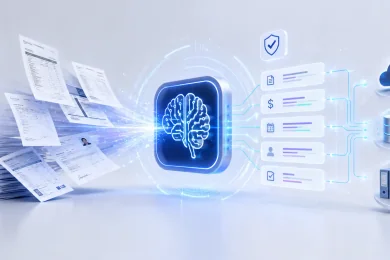
In an era where every company has access to the same foundational models, your proprietary data is your only true competitive moat. A custom knowledge base acts as the central brain of your corporate entity, structuring unstructured data—PDFs, internal wikis, past support tickets, and multimedia files—into an accessible format.
Building an AI chatbot linked to this customized data repository ensures:
Absolute Accuracy: The chatbot formulates responses exclusively from approved company literature.
Access Control: Role-based access ensures that an entry-level employee querying the bot does not receive sensitive executive-level data.
Brand Voice Consistency: Responses align with established corporate terminology.
As detailed in comprehensive enterprise studies by Deloitte, organizations deploying customized, grounded AI architectures report dramatically higher user trust and faster adoption rates across enterprise workflows. Partnering with a specialized RAG Development Company can accelerate this transition, ensuring that semantic search algorithms correctly interpret the nuanced language of your specific industry.
Evolutionary Comparison: Enterprise Chatbots
Metric/Feature | 2024 Impact | 2026 Forecast | Target Sector | Trend |
|---|---|---|---|---|
Data Accuracy | 75% accuracy; occasional hallucinations | 99% accuracy via advanced RAG verification | Legal, Healthcare, Finance | Upward |
Architecture | Basic Vector DB + API Call | Multi-Agent Systems & Graph RAG | All Enterprise Sectors | Upward |
Context Window | 128k Tokens | Infinite Context via streaming knowledge graphs | E-commerce, Customer Support | Exponential |
Response Latency | ~3.5 seconds | < 0.8 seconds (Edge + Cloud hybrid) | Logistics, Live Retail | Downward |
By implementing specialized AI Agents for Business, companies are shifting from passive search bars to active conversational workflows that can not only fetch data but also execute tasks based on that data.
Core Architecture of a Custom AI Chatbot
To successfully build an AI Chatbot, you must orchestrate several distinct technological components. This multi-tiered architecture ensures data security, rapid retrieval, and fluent human-computer interaction.
A. The Data Pipeline (Ingestion & Preprocessing)
Your custom knowledge base is only as good as the data fed into it. The ingestion pipeline gathers data from your CRM, ERP, Notion, Slack, and internal websites. This data is then cleaned—stripping out HTML tags, irrelevant metadata, and sensitive PII (Personally Identifiable Information). Organizations often Hire Data Scientist/Engineer teams specifically to build robust, automated pipelines that keep the knowledge base updated in real-time.
B. Embedding Models and Vectorization
Once text is extracted, it must be converted into a format a machine can intuitively search. This is achieved through Machine learning embedding models. An embedding model translates human text into dense numerical arrays (vectors) that capture the semantic meaning of the words. For instance, the system mathematically understands that "refund policy" and "money-back guarantee" mean the same thing, even if the exact keywords do not match.
C. The Vector Database
Traditional relational databases look for exact keyword matches. Vector databases (such as Pinecone, Milvus, or Qdrant) excel in semantic search. They plot these numerical arrays in high-dimensional space. When a user asks a question, the query is also vectorized, and the database retrieves the text chunks situated mathematically closest to the query.
D. The Large Language Model (LLM) Engine
After the relevant proprietary data is retrieved from the vector database, it is bundled with the user's original prompt and sent to a Large Language Model. The LLM's role is no longer to remember facts, but to synthesize the provided facts into a coherent, conversational response using advanced Natural language processing.
E. The User Interface (UI) and Application Layer
The final piece is the frontend—the chat window where the user interacts. This can be integrated into a web portal, a mobile app, or internal communication tools like Microsoft Teams.
Step-by-Step Guide: How to Build an AI Chatbot with a Custom Knowledge Base
If you are a CTO or an IT manager tasked with building this system, here is the strategic roadmap for 2026.
Step 1: Define Your Scope and Use Case
Do not build a chatbot to "do everything." Start with a highly specific scope. Is this an internal HR bot designed to answer payroll and benefits questions? Or is it an external customer-facing bot designed to troubleshoot technical product issues? Engaging a Chatbot Development Company For Business during the scoping phase can help align technical feasibility with business goals.
Step 2: Data Curation and Chunking
Collect all relevant PDFs, databases, and FAQs. The critical technical step here is "chunking." If you feed an entire 500-page manual into the embedding model, the semantic meaning gets diluted. You must break the document down into logical chunks (e.g., paragraph by paragraph or section by section) before vectorizing it.
Step 3: Set Up the Vector Infrastructure
Choose a vector database that scales with your enterprise needs. High availability, minimal latency, and robust security protocols are mandatory. Research from McKinsey notes that scalable vector infrastructure is directly correlated with long-term AI success in Fortune 500 companies.
Step 4: Integrate the LLM Engine
You have choices regarding the reasoning engine. You can utilize proprietary APIs (like OpenAI’s GPT-4 or Anthropic’s Claude) or host your own open-source models (like Llama 3 or Mistral) for enhanced privacy. Many developers find that Chatgpt Helps Custom Software Development pipelines by accelerating the initial prototyping of these integrations via rapid API deployment.
Step 5: Implement System Prompts and Guardrails
Prompt engineering is vital. You must instruct the LLM on how to behave. A standard system prompt looks like this: "You are a helpful customer support assistant for Company X. Answer the user's question using ONLY the provided context. If the answer is not in the context, politely state that you do not know." Additionally, strict LLM Policy enforcement algorithms must be implemented to filter out prompt injection attacks and inappropriate outputs.
Step 6: Testing, Evaluation, and Deployment
Before launching, utilize frameworks like RAGAS (Retrieval Augmented Generation Assessment) to mathematically evaluate your chatbot's factual accuracy, context precision, and answer relevancy. Once validated, deploy the application using secure cloud infrastructure.
Real-World Use Cases Shaping 2026
The versatility of a custom AI chatbot makes it highly applicable across multiple verticals. Leading market analysis from Gartner highlights that hyper-personalized AI will drive over 60% of all digital business interactions by the end of this year.
1. Next-Generation E-Commerce: Modern digital storefronts no longer use static search bars. By utilizing AI Agents for E-commerce, customers can have dynamic conversations. A user might say, "I bought a tent from you last year, but I lost the rainfly. What's the exact replacement model?" The bot queries the user's purchase history, matches the product vector to the current inventory database, and instantly provides a purchasing link.
2. 24/7 Customer Support Resolution: Call centers are being dramatically augmented. Implementing AI Agents for Customer Service allows businesses to resolve complex Tier-1 and Tier-2 technical support tickets instantly. The chatbot can parse through thousands of pages of technical documentation in milliseconds to provide a step-by-step troubleshooting guide, citing the specific manual page.
3. Internal Employee Copilots: Onboarding new employees is historically resource-intensive. With specialized AI Copilot Development, new hires have an omniscient desktop assistant. They can ask, "How do I submit an expense report for a client dinner in London?" and receive the exact workflow, compliance limits, and links to the necessary HR portals.
Navigating the Challenges: Security, Privacy, and Costs
While the benefits are transformative, building an AI chatbot with a custom knowledge base comes with distinct challenges.
Data Privacy: If you are using external APIs to process your vector data, you must ensure that your vendor agreements strictly prohibit the usage of your proprietary data to train their future public models. Latency Optimization: As your vector database grows to millions of entries, the time it takes to retrieve data can increase. Implementing Approximate Nearest Neighbor (ANN) algorithms ensures sub-second retrieval times. Continuous Maintenance: A knowledge base is a living entity. If an HR policy changes, the outdated document must be removed from the vector database and replaced. Stale data leads to confident hallucinations.
By partnering with an experienced development firm, businesses can bypass these architectural hurdles. From building secure microservices to executing comprehensive Vegavid Home technology audits, leveraging expert guidance minimizes risks and maximizes ROI.
Future-Proof Your Business with Vegavid
The era of generic digital tools is over. To dominate your market in 2026, your technology must be as specialized and intelligent as your top personnel. Building an AI chatbot with a custom knowledge base empowers your organization with unparalleled operational efficiency, 24/7 customer satisfaction, and ironclad data security.
Don't let your proprietary data sit idle—turn it into your most powerful conversational asset. Vegavid's elite team of data scientists, AI architects, and software engineers specialize in end-to-end RAG development, LLM integration, and enterprise software scaling.
Ready to transform your business?
Frequently Asked Questions (FAQs)
A standard AI chatbot generates answers based on general internet data it was trained on, which can be outdated or inaccurate. A custom knowledge base chatbot uses Retrieval-Augmented Generation (RAG) to search your specific, proprietary documents first, ensuring its answers are highly accurate, verifiable, and strictly relevant to your business.
For an AI chatbot leveraging a custom knowledge base, a vector database is essential. Industry leaders in 2026 include Pinecone, Milvus, Weaviate, and Qdrant. These databases store text as high-dimensional vectors, enabling rapid semantic search rather than relying on exact keyword matches.
Costs vary significantly based on scale. A basic internal chatbot utilizing existing APIs and a managed vector database can start around $15,000 to $30,000. Enterprise-grade solutions requiring custom open-source model deployment, advanced security compliance, and complex data pipelines can range from $75,000 to over $200,000.
Retrieval-Augmented Generation (RAG) prevents hallucinations by forcing the Large Language Model to act as a summarizer rather than a primary source of knowledge. The system prompt restricts the AI to only formulate responses using the retrieved documents from the vector database. If the answer isn't in the provided text, the bot is programmed to say, "I don't know."
Absolutely. In 2026, open-source models like Llama 3 and Mistral are incredibly powerful and highly recommended for enterprises dealing with sensitive data (like healthcare or finance). Hosting an open-source model locally ensures that zero proprietary data ever leaves your secure internal network.

Yash Singh is the Chief Marketing Officer at Vegavid Technology, a leading AI-driven technology company specializing in AI agents, Generative AI, Blockchain, and intelligent automation solutions. With over a decade of experience in digital transformation and emerging technologies, Yash has played a key role in helping businesses adopt advanced AI solutions that enhance operational efficiency, automate workflows, and deliver personalized customer experiences across industries including fintech, healthcare, gaming, ecommerce, and enterprise technology. An alumnus of Indian Institute of Technology Bombay, Yash combines strong technical expertise with strategic marketing leadership to drive innovation in AI-powered applications, autonomous AI agents, Retrieval-Augmented Generation (RAG), Natural Language Processing (NLP), Large Language Models (LLMs), machine learning systems, conversational AI, and enterprise automation platforms. His expertise spans AI model integration, intelligent workflow automation, prompt engineering, smart data processing, and scalable AI infrastructure development, enabling organizations to accelerate digital transformation and business growth. Passionate about the future of intelligent systems, Yash actively shares insights on AI agents, Generative AI, LLM-powered applications, blockchain ecosystems, and next-generation digital strategies. He is committed to helping businesses embrace AI-first transformation while guiding teams to build impactful, industry-specific solutions that shape the future of innovation and intelligent technology.




Leave a Reply