

Is AI Just Programmed by Humans? Will It Take Over the World?
Artificial Intelligence (AI) has gone from a niche research topic to something we use every single day — often without even realizing it. It’s in the way Google suggests your next search, how Netflix recommends shows, and how your phone unlocks with face recognition.
But with all the buzz, movies, and viral headlines, it’s easy to get caught up in dramatic ideas about AI. Some people think it’s just a set of programs created by humans. Others imagine a future where AI “wakes up” and takes over the world.
The truth? It’s somewhere in between — and a lot less scary than the doomsday scenarios you see in Hollywood.
In this article, we’ll break it down in simple terms so you understand:
Whether AI is only programmed by humans.
How AI actually “learns” from data.
The real possibility of it taking over the world.
The myths vs. facts you should know.
Why the future is more about collaboration than domination.
Is AI Just Programmed by Humans?
It's a common misconception that AI is "just" programmed by humans. While human programmers are always the starting point, modern AI, particularly in the form of machine learning, goes far beyond explicit, line-by-line coding.
Here's a breakdown of the different ways AI is "programmed":
1. The Human-Created Foundation
Every AI system begins with human work. Engineers, scientists, and developers write the initial code, create algorithms, and decide what the AI’s goal should be.
Think of it like building a car: you design the engine, set up the controls, and decide how fast it can go. AI is the same — it starts with a blueprint created entirely by people.
Example: When you use a voice assistant like Alexa, the system only works because humans built speech recognition algorithms, connected them to data, and gave it rules to follow.
2. Machine Learning and Self-Improvement
While humans write the base code, many modern AI systems use machine learning — a process where the AI improves by analyzing data and finding patterns. This is why AI can “get better” over time without a programmer directly rewriting it.
Example: A photo app that can recognize cats might start with human-coded instructions, but the more pictures of cats it sees, the better it gets at spotting them — even in poor lighting or from unusual angles.
But even here, there’s a limit:
AI can’t teach itself something completely outside its scope.
It can’t decide to start learning about something unrelated to its programming.
3. No True Independence
Even the most advanced AI today does not have desires, ambitions, or goals of its own. It doesn’t “wake up” in the morning thinking, I want to take over the world. It simply follows its programmed objectives.
It’s like a calculator — just a much more complex one.
Will AI Take Over the World?
The idea of AI taking over the world makes for great movies, but it’s far from reality right now — and probably for decades to come.
Here’s why:
AI Lacks Consciousness: AI can process information faster than humans, but it doesn’t have emotions, personal ambitions, or self-awareness.
Controlled Development: Most advanced AI projects are developed under strict oversight from governments, universities, and companies.
Narrow Specialization: The AI we have today is narrow AI — it’s very good at specific tasks (like playing chess) but clueless outside of its domain.
While the idea of a classic robot takeover is a dramatic and compelling narrative, the expert community's concerns are far more nuanced. There's a stark divide between those who see a looming existential threat from a misaligned superintelligence and those who believe the more pressing dangers are the immediate societal and ethical challenges posed by the AI we are developing today.
The debate is ongoing, and as AI technology advances at an unprecedented pace, it has become a top priority for governments, researchers, and ethicists to ensure that AI's development is guided by safety and human values.
The Real Concerns We Should Focus On
Instead of fearing a science-fiction style takeover, here are the real-world AI issues that matter right now:
Job Disruption: AI automation could replace certain jobs, requiring workers to learn new skills.
Bias in Decisions: If AI learns from biased data, it can make unfair decisions in areas like hiring or law enforcement.
Security Risks: Cybercriminals could use AI to launch faster and more complex attacks.
These are challenges we can solve with proper planning, regulation, and ethical AI development.
The Future: Partnership, Not Takeover
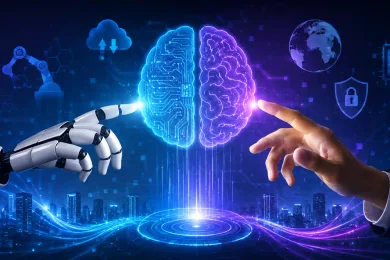
The most realistic future is one where AI works alongside humans, not against them.
AI’s Role: Handle repetitive, data-heavy work that requires speed and accuracy.
Human Role: Bring creativity, empathy, moral judgment, and strategic thinking.
Example: In healthcare, AI can analyze thousands of medical scans in minutes, but a doctor still decides the final diagnosis and treatment, considering the patient’s overall well-being.
When humans and AI collaborate, we can solve bigger problems — from climate change predictions to faster drug development — without losing human control.
Key Takeaway
In simple terms, AI is entirely created and programmed by humans, starting with code, rules, and clear objectives. While modern AI can improve its performance through machine learning, it can only do so within the limits of what it’s been trained for. It doesn’t think, feel, or have ambitions like humans do — which means the idea of AI “taking over the world” remains science fiction for now.
The real issues we should focus on are bias in decision-making, the potential misuse of AI, and how automation could disrupt jobs. Looking ahead, the most promising future is one where AI and humans work together — with AI handling fast, data-heavy tasks and humans providing creativity, ethical judgment, and strategic direction.
If you’re ready to explore how AI can safely and effectively enhance your business, connect with Vegavid AI Development Company today.

Yash Singh is the Chief Marketing Officer at Vegavid Technology, a leading AI-driven technology company specializing in AI agents, Generative AI, Blockchain, and intelligent automation solutions. With over a decade of experience in digital transformation and emerging technologies, Yash has played a key role in helping businesses adopt advanced AI solutions that enhance operational efficiency, automate workflows, and deliver personalized customer experiences across industries including fintech, healthcare, gaming, ecommerce, and enterprise technology. An alumnus of Indian Institute of Technology Bombay, Yash combines strong technical expertise with strategic marketing leadership to drive innovation in AI-powered applications, autonomous AI agents, Retrieval-Augmented Generation (RAG), Natural Language Processing (NLP), Large Language Models (LLMs), machine learning systems, conversational AI, and enterprise automation platforms. His expertise spans AI model integration, intelligent workflow automation, prompt engineering, smart data processing, and scalable AI infrastructure development, enabling organizations to accelerate digital transformation and business growth. Passionate about the future of intelligent systems, Yash actively shares insights on AI agents, Generative AI, LLM-powered applications, blockchain ecosystems, and next-generation digital strategies. He is committed to helping businesses embrace AI-first transformation while guiding teams to build impactful, industry-specific solutions that shape the future of innovation and intelligent technology.



Leave a Reply