

What Are the Pros and Cons of AI in Healthcare? Benefits, Risks, and Use Cases Explained
Introduction
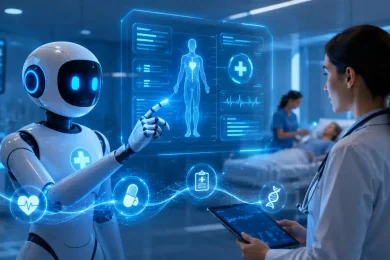
The healthcare industry is experiencing one of the most significant technological transformations in its history. From predictive diagnostics to robotic surgeries and virtual health assistants, artificial intelligence is redefining how care is delivered, managed, and optimized. While these innovations promise greater efficiency and improved patient outcomes, they also introduce new challenges that must be carefully addressed.
AI in Healthcare is no longer an experimental concept—it is actively shaping clinical decisions, administrative workflows, and patient engagement strategies. Hospitals, clinics, and healthcare organizations are increasingly adopting intelligent systems to reduce costs, improve accuracy, and streamline operations. However, with rapid adoption comes important questions about ethics, reliability, and long-term impact.
Understanding the pros and cons of AI in healthcare is essential for organizations looking to implement these technologies responsibly. Whether businesses choose to Hire AI Developers or partner with an AI Development Company, a balanced perspective is necessary to ensure successful integration.
This comprehensive guide explores the advantages, risks, and real-world applications of AI in healthcare, providing a clear and practical understanding of how it is transforming the industry.
Understanding AI in Healthcare
Artificial intelligence in healthcare refers to the use of Machine Learning, Natural Language Processing, and advanced analytics to improve medical processes and patient care.
How AI Works in Healthcare
AI system analyze large volumes of medical data, including patient records, imaging data, and clinical studies, to identify patterns and provide insights.
Key Technologies
Technologies such as Deep Learning, Predictive analytics, and computer vision enable AI applications in healthcare.
Evolution of AI in Medicine
AI has evolved from simple data analysis tools to advanced systems capable of assisting in diagnosis and treatment planning.
Companies like Vegavid have observed that AI-driven healthcare solutions are improving both clinical outcomes and operational efficiency.
Advantages of AI in Healthcare
The advantages of AI in healthcare are transforming how medical services are delivered and managed.
Improved Diagnostic Accuracy
AI systems can analyze medical images and data with high precision, helping doctors detect diseases earlier.
Faster Decision-Making
AI provides real-time insights, enabling quicker and more informed decisions.
Enhanced Patient Care
Personalized treatment plans improve patient outcomes.
Operational Efficiency
Automation reduces administrative workload.
Cost Reduction
AI helps lower operational costs by optimizing processes.
Organizations working with an AI Development Company often leverage these benefits to improve healthcare delivery.
Risks of AI in Healthcare
While AI offers numerous benefits, it also presents certain risks that must be addressed.
Data Privacy Concerns
Handling sensitive patient data requires strict security measures.
Algorithm Bias
Biased data can lead to inaccurate or unfair outcomes.
Lack of Transparency
AI systems can be difficult to interpret.
Dependence on Technology
Over-reliance on AI may reduce human oversight.
Regulatory Challenges
Compliance with healthcare regulations is essential.
Companies like Vegavid emphasize the importance of addressing these risks to ensure responsible AI implementation.
AI Healthcare Use Cases
AI healthcare use cases demonstrate the practical applications of Artificial Intelligence in the medical field.
Medical Imaging
AI analyzes images to detect diseases such as cancer.
Predictive Analytics
AI predicts patient outcomes and potential risks.
Virtual Assistants
AI-powered assistants provide patient support.
Drug Discovery
AI accelerates the development of new medications.
Administrative Automation
AI streamlines billing, scheduling, and documentation.
Organizations that Hire AI Developers often focus on these use cases to enhance their capabilities.
Impact of AI on Healthcare Industry
The impact of AI on healthcare industry is profound, influencing both clinical and operational aspects.
Improved Efficiency
AI automates repetitive tasks, improving productivity.
Better Patient Outcomes
Advanced analytics lead to more accurate treatments.
Innovation in Treatment
AI enables new approaches to diagnosis and therapy.
Workforce Transformation
AI changes the roles of healthcare professionals.
Increased Accessibility
AI makes healthcare services more accessible.
Companies like Vegavid have observed that AI is driving innovation across the healthcare ecosystem.
Key Benefits of AI in Healthcare
AI offers several key benefits that enhance healthcare systems.
Enhanced Data Analysis
AI processes large datasets efficiently.
Personalized Medicine
Treatment plans are tailored to individual patients.
Reduced Errors
Automation minimizes human errors.
Faster Processes
AI accelerates workflows.
Improved Resource Management
AI optimizes the use of resources.
Organizations working with an AI Development Companyy often prioritize these benefits.
Challenges in Implementing AI in Healthcare
Implementing AI in healthcare comes with challenges.
Data Quality
Poor data affects AI performance.
Integration Issues
Compatibility with existing systems can be difficult.
High Costs
Initial investment can be significant.
Skill Gaps
Expertise is required to manage AI systems.
Ethical Concerns
Ensuring ethical use of AI is critical.
Organizations that Hire AI Developers can overcome these challenges effectively.
Best Practices for AI Adoption in Healthcare
Successful AI implementation requires strategic planning.
Define Objectives
Clearly outline goals and expectations.
Ensure Data Security
Protect patient data.
Train Staff
Provide training for effective use.
Monitor Performance
Track outcomes and improve systems.
Collaborate with Experts
Work with professionals for better results.
Companies like Vegavid emphasize best practices for successful AI adoption.
Future Trends in AI Healthcare
The future of AI in healthcare is evolving rapidly, driven by technological advancements and the growing need for efficient, patient-centric care systems.
Advanced Diagnostics
AI will significantly enhance diagnostic accuracy by analyzing complex medical data and detecting diseases at earlier stages, enabling faster and more precise treatment decisions.
Personalized Treatment
Healthcare will move toward highly individualized care, where AI analyzes patient history, genetics, and lifestyle to recommend tailored treatment plans that improve outcomes.
Integration with Wearables
AI will integrate seamlessly with wearable devices, allowing continuous data collection and enabling proactive healthcare through real-time insights into patient health metrics.
Real-Time Monitoring
Continuous monitoring powered by AI will help detect health issues instantly, allowing healthcare providers to respond quickly and prevent complications before they escalate.
Wider Adoption
As AI technologies become more accessible and cost-effective, their adoption will expand across hospitals, clinics, and remote care systems, making advanced healthcare solutions more widely available.
Businesses that Hire AI Developers will be better positioned to leverage these trends.
Conclusion
Artificial intelligence is transforming healthcare by improving efficiency, accuracy, and patient outcomes. However, it also introduces challenges that require careful consideration.
By understanding both the benefits and risks, organizations can implement AI responsibly and effectively. Whether working with an AI Development Company or building in-house capabilities, adopting AI is essential for staying competitive in the healthcare industry.
Companies like Vegavid demonstrate how strategic implementation of AI can drive innovation and improve healthcare delivery.
Are you ready to transform your healthcare operations with AI-driven solutions?
FAQs
The pros and cons of AI in healthcare include improved diagnostic accuracy, faster decision-making, and enhanced efficiency on the positive side, while challenges such as data privacy concerns, algorithm bias, and high implementation costs remain. A balanced approach is necessary to maximize benefits while minimizing risks.
The advantages of AI in healthcare include better patient outcomes, reduced human errors, improved operational efficiency, and personalized treatment plans. AI also enables faster diagnosis and supports healthcare professionals in making more informed decisions.
The risks of AI in healthcare involve data security issues, lack of transparency in decision-making, potential bias in algorithms, and over-reliance on automated systems. These risks highlight the importance of ethical implementation and proper oversight.
AI healthcare use cases include medical imaging analysis, predictive analytics, virtual health assistants, drug discovery, and administrative automation. These applications help improve efficiency, accuracy, and patient care across the healthcare system.
The impact of AI on healthcare industry includes improved efficiency, better patient outcomes, and innovation in treatment methods. AI also transforms administrative processes and enhances accessibility to healthcare services.

Yash Singh is the Chief Marketing Officer at Vegavid Technology, a leading AI-driven technology company specializing in AI agents, Generative AI, Blockchain, and intelligent automation solutions. With over a decade of experience in digital transformation and emerging technologies, Yash has played a key role in helping businesses adopt advanced AI solutions that enhance operational efficiency, automate workflows, and deliver personalized customer experiences across industries including fintech, healthcare, gaming, ecommerce, and enterprise technology. An alumnus of Indian Institute of Technology Bombay, Yash combines strong technical expertise with strategic marketing leadership to drive innovation in AI-powered applications, autonomous AI agents, Retrieval-Augmented Generation (RAG), Natural Language Processing (NLP), Large Language Models (LLMs), machine learning systems, conversational AI, and enterprise automation platforms. His expertise spans AI model integration, intelligent workflow automation, prompt engineering, smart data processing, and scalable AI infrastructure development, enabling organizations to accelerate digital transformation and business growth. Passionate about the future of intelligent systems, Yash actively shares insights on AI agents, Generative AI, LLM-powered applications, blockchain ecosystems, and next-generation digital strategies. He is committed to helping businesses embrace AI-first transformation while guiding teams to build impactful, industry-specific solutions that shape the future of innovation and intelligent technology.






Leave a Reply