

Discover how Retrieval-Augmented Generation (RAG) is revolutionizing business efficiency by grounding AI in real-time enterprise data. Explore the top 10 applications today.
Top 8 RAG Applications for Business Efficiency
Retrieval-Augmented Generation (RAG) is the gold standard for enterprises looking to leverage Large Language Models (LLMs) without the risk of hallucinations or outdated information. By grounding AI responses in real-time, proprietary data, RAG ensures that business decisions are based on facts, not probabilities.
What is RAG? (The "Open-Book" AI)
To understand RAG, imagine two different students taking a test:
The Standard LLM: A student who studied incredibly hard months ago but isn't allowed to look at any notes during the exam. They might remember most things, but they might misremember specific dates or invent facts when their memory fails (hallucination).
The RAG-Enabled AI: A student who is allowed to bring a massive, perfectly indexed library into the exam. When asked a question, they first find the exact page in the right book, read it, and then summarize the answer.
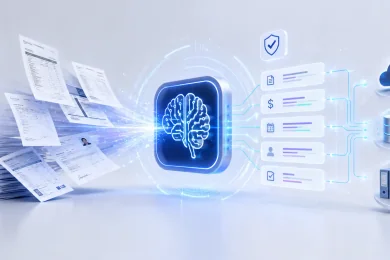
Technically, RAG works by connecting an LLM to a vector database containing your company’s private data—PDFs, spreadsheets, emails, and transcripts. When a user asks a question, the system retrieves relevant "snippets" from your data and feeds them to the AI as context, ensuring the response is grounded in fact.
Why Businesses Need RAG?
Traditional LLMs are limited by their training cutoff. RAG bridges this gap by fetching the most relevant documents from a company's internal knowledge base before generating a response. This makes AI 'context-aware' and significantly more reliable for professional use.
1. Absolute Data Freshness
Standard models have a "knowledge cutoff." If you ask a basic AI about your sales figures from yesterday or your new 2026 policy, it will simply guess or admit it doesn't know.
The RAG Advantage: RAG connects the AI to your live data streams. Whether it’s a new PDF uploaded ten minutes ago or a shifting price list, the AI "retrieves" the most current version before it speaks.
2. Elimination of Hallucinations
"Hallucination" (AI making things up) is the biggest barrier to AI adoption in professional settings. In industries like law, finance, or medicine, a single incorrect fact can be catastrophic.
The RAG Advantage: RAG forces the AI to be "grounded." It is instructed to only answer based on the retrieved documents. If the answer isn't in your data, the AI is programmed to say "I don't know" rather than inventing a plausible lie.
3. Verifiable Transparency (Citations)
In a business environment, "trust but verify" is the rule. You cannot rely on an AI's output if you don't know where the information came from.
The RAG Advantage: Most RAG systems provide source citations. When the AI gives an answer, it provides a link or a footnote to the exact document, page, and paragraph it used. This allows human employees to audit the AI’s work in seconds.
4. Cost-Effective Specialization
Traditionally, to make an AI "smart" about your business, you had to perform Fine-Tuning—an expensive, technical process of retraining the model on your data.
The RAG Advantage: RAG is significantly cheaper and faster. You don't need to retrain the model; you just update your "library" (vector database). It allows a single model to act as a legal expert, a technical support lead, and a HR specialist simultaneously just by switching the folder it looks at.
5. Security and Data Privacy
Sending sensitive corporate data to a public AI to "train" it is a massive security risk.
The RAG Advantage: RAG allows businesses to keep their data in private, secure "vaults." The AI only "glances" at the relevant snippets needed to answer a specific prompt; the data itself is never used to train the underlying public model.
Top 8 RAG Applications for Business Efficiency
Below are the most impactful RAG applications driving business efficiency today.
1. Advanced Knowledge Management (GraphRAG)
Traditional RAG retrieves text chunks based on keyword or semantic similarity. However, GraphRAG—which combines vector search with knowledge graphs—is the new gold standard for 2026.
The Application: Instead of just finding a document, the AI understands the relationships between entities (e.g., how a specific regulation in the EU impacts a supply chain node in Asia).
Efficiency Gain: Increases search precision to nearly 99% for high-stakes decisions in legal discovery and financial reporting, reducing human review cycles by over 40%.
2. Agentic RAG for Multi-Step Workflows
We have moved past simple Q&A. Agentic RAG allows AI systems to act as "Reasoning Engines" that can plan and execute multi-step tasks.
The Application: A Sales Intelligence Analyst agent doesn't just "find" lead data; it retrieves CRM records, looks up recent news on the prospect, compares it to historical "closed-won" patterns, and drafts a personalized pitch.
Efficiency Gain: Automates the "prep work" that usually consumes 60% of a salesperson's or analyst's day.
3. Real-Time Operational Intelligence
RAG is no longer limited to static PDFs. Modern platforms use API-based operational integration to fetch live data.
The Application: Supply chain managers use RAG to ask, "How will the current port strike affect our Q3 inventory?" The AI pulls live shipping data, current warehouse levels, and historical disruption protocols to give a grounded answer.
Efficiency Gain: Enables "zero-latency" decision-making, allowing businesses to pivot before a crisis fully manifests.
4. Hyper-Personalized HR & Onboarding
HR platforms are using RAG to transform the employee experience from "search and find" to "ask and receive."
The Application: Tools like Dora AI or TeamOhana integrate with HRIS (Human Resource Information Systems) to answer specific employee questions like, "How much PTO do I have left after my July trip?" or "Summarize the feedback from my last three 1-on-1s."
Efficiency Gain: Drastically reduces the volume of repetitive tickets sent to HR departments, letting them focus on strategic talent development.
5. Software Development Lifecycle (SDLC) Acceleration
In 2026, RAG has moved beyond simple "autocomplete" to become a Context-Aware Architect.
The Application: Engineering teams use RAG to index their entire codebase, documentation, and historical Jira tickets. Developers can ask, "How does our legacy authentication module interact with the new microservice?" The RAG system retrieves the specific code blocks and architectural diagrams to explain the dependency.
Efficiency Gain: Reduces "onboarding time" for new developers by 50% and prevents architectural drift by ensuring new code aligns with existing patterns.
6. Smart Manufacturing & Predictive Maintenance
RAG is bridging the gap between the factory floor and technical manuals.
The Application: Maintenance technicians use RAG-powered tablets to troubleshoot machinery. When an error code appears, the system retrieves the specific machine's historical maintenance logs, sensor data from the last 24 hours, and the original manufacturer's manual to provide a step-by-step repair guide.
Efficiency Gain: Minimizes "Mean Time to Repair" (MTTR) and reduces reliance on a few "senior experts" who traditionally held all the tribal knowledge.
7. Pharmaceutical & Medical Regulatory Compliance
In highly regulated sectors, the cost of a factual error can be millions in fines.
The Application: Pharma companies use Regulatory Copilots that utilize RAG to draft submissions for health authorities (like the FDA). The AI pulls the latest clinical trial data and matches it against specific regulatory templates and previous submission feedback.
Efficiency Gain: Speeds up the "Response to Health Authority" (RTQ) process from weeks to days while maintaining a strict audit trail of every fact used in the document.
8. Hyper-Personalized E-commerce & Marketing
Marketing is shifting from "segmentation" to "individualization" using live customer context.
The Application: RAG connects an LLM to a user’s CRM profile, past browsing behavior, and real-time inventory. Instead of a generic "Welcome Back" email, the system generates a message that says, "Since you liked the waterproof hiking boots you bought last month, here is how our new breathable jacket matches that same color palette and is currently in stock at your local store."
Efficiency Gain: Dramatically increases Conversion Rates (CVR) and Average Order Value (AOV) by providing recommendations that feel human and helpful rather than algorithmic.
2026 RAG Architecture Comparison
Architecture | Primary Strength | Best Use Case |
Hybrid RAG | Reliability | General Enterprise Search / Wikis |
GraphRAG | Relationship Awareness | R&D, Legal, Fraud Detection |
Agentic RAG | Autonomous Workflows | Investigative Sales & Marketing |
Adaptive RAG | Cost & Latency Control | High-volume Customer Service |
4 Ways RAG is Driving Business Efficiency in 2026
1. Eliminating "Information Silos"
In most companies, data is scattered across Slack, SharePoint, and Google Drive. Employees often waste hours searching for a specific contract clause or a technical spec. RAG-powered Enterprise Search acts as a unified brain, allowing any employee to ask, "What were the specific terms of the 2024 vendor agreement?" and get an instant, cited answer.
2. Hyper-Accurate Customer Support
Standard chatbots often frustrate customers with generic answers. RAG-integrated support bots can access real-time inventory, shipping status, and specific troubleshooting manuals. This reduces escalation rates to human agents and ensures that customers receive accurate, policy-compliant information 24/7.
3. Automated Compliance and Legal Review
For legal and finance teams, RAG is a force multiplier. Instead of manually reviewing hundreds of pages for regulatory changes, RAG systems can "read" new legislation and compare it against internal company policies, highlighting gaps and suggesting necessary updates in minutes rather than weeks.
4. Cost-Effective "Knowledge Refreshes"
Training a custom AI model from scratch (Fine-Tuning) is incredibly expensive and time-consuming. In 2026, businesses have realized that RAG is 20x cheaper than constant retraining. When your company's pricing or policies change, you don't need to retrain the AI; you simply update the document in your database, and the AI "knows" the new information instantly.
RAG vs. Standard LLM: A Quick Comparison
Feature | Standard LLM | RAG-Enabled AI |
Knowledge Base | Static (stops at training date) | Dynamic (updates in real-time) |
Accuracy | High risk of "hallucinations" | Grounded in your private data |
Transparency | No way to verify sources | Provides citations/links to source files |
Privacy | Data sent for training/prompting | Data stays in secure enterprise vaults |
Cost | High (for retraining) | Low (for database updates) |
The Road to Implementation
While RAG is a game-changer, it isn't "plug-and-play." Success in 2026 depends on Data Hygiene. A RAG system is only as good as the information it retrieves; if your internal documents are outdated or contradictory, the AI will be too.
The takeaway for leadership? Don't just "buy AI." Build a retrieval infrastructure that turns your company's collective knowledge into a competitive, real-time asset.
The Future of RAG
As AI continues to evolve, RAG will become the backbone of enterprise intelligence, enabling a truly data-driven culture.
Conclusion
Implementing RAG is no longer optional for businesses that want to stay competitive. It is the bridge to accurate, efficient, and scalable AI.
FAQs

Mohit Singh is a blockchain and AI technology expert specializing in Data Analytics, Image Processing, and Finance applications. He has extensive experience in building scalable distributed systems, cloud solutions, and blockchain-based platforms. Mohit is passionate about leveraging machine learning, smart contracts, NFTs, and decentralized technologies to deliver innovative, high-performance software solutions.




Leave a Reply