

The Rise of Agentic AI: Future of Autonomous Enterprise Intelligence
The business world was captivated by the promise of Generative AI—systems that could write emails, draft code, and generate images based on prompts. But as we navigate 2026, the technology landscape has experienced a monumental paradigm shift. We have moved from the era of passive generation to the era of active execution. Welcome to the rise of Agentic AI. As enterprises increasingly adopt autonomous AI solutions, partnering with an experienced agentic AI development company has become essential for building intelligent systems that deliver real business value.
The limitations of early Large Language Models (LLMs) were clear: they required constant human supervision, explicit step-by-step prompting, and lacked the ability to execute tasks in external environments. Today, Agentic AI has dismantled those barriers. These systems don't just answer questions—they solve complex problems, orchestrate workflows, interact with third-party software, and continuously adapt until a goal is achieved. Developing these production-ready autonomous AI solutions requires deep expertise in AI orchestration, enterprise integration, and scalable architectures, making the role of a specialized agentic AI development company more important than ever.
Whether you are a Chief Information Officer looking to modernize IT infrastructure or a business leader aiming for unprecedented operational efficiency, understanding the rise of Agentic AI is no longer optional—it is the baseline for competitive survival. Choosing the right agentic AI development company enables organizations to deploy secure, scalable, and enterprise-grade autonomous AI systems that accelerate digital transformation and create long-term competitive advantage.
What is the Rise of Agentic AI?
Agentic AI (or Agent-based Artificial Intelligence) refers to advanced AI systems designed to autonomously pursue complex, multi-step goals with minimal human intervention. Unlike traditional generative models that simply output text or data based on a direct prompt, agentic systems can plan strategies, execute tasks using software tools, evaluate real-time feedback, and self-correct their actions to achieve a predefined objective.
Autonomy: Operates independently without requiring a human-in-the-loop for every micro-step.
Tool Usage: Actively interacts with external APIs, databases, and software applications.
Reasoning: Employs advanced cognitive frameworks (like ReAct—Reasoning and Acting) to dynamically solve problems.
Memory: Retains state and context over long durations, learning from past interactions to optimize future performance.
Why It Matters: The Strategic Importance
To understand the sheer magnitude of this technological shift, we must look at artificial intelligence in its historical context. Historically, AI was analytical—predicting churn, classifying images, or forecasting sales. Then, it became generative—creating content on demand. Now, it is agentic—taking agency over digital environments.
This matters for several strategic reasons:
The Shift from Copilots to Autopilots
Previous generations of AI acted as "copilots," requiring a human to remain firmly at the controls. Agentic AI acts as an "autopilot." It shifts the human role from operator to supervisor. This unlocks unprecedented scalability because a single employee can now manage a fleet of AI agents rather than performing the tasks themselves.
Solving the "Last Mile" of Automation
Traditional Robotic Process Automation (RPA) was strictly rules-based. If a website's UI changed or an exception occurred, the RPA bot broke. Agentic AI possesses semantic understanding. If an API returns an unexpected error, the AI agent can read the error log, understand the issue, research a fix, and retry the execution—bridging the gap that traditional automation could never cross.
Hyper-Personalization at Scale
Because AI agents can maintain long-term memory and access complex CRM databases autonomously, businesses can deliver hyper-personalized experiences to millions of users simultaneously. From dynamically negotiating contracts to tailoring real-time marketing funnels, agents execute complex logic that was previously too resource-intensive to deploy at scale.
How It Works: The Technical Architecture
Understanding how Agentic AI operates requires looking under the hood. While the core "brain" is often a foundational LLM, the agentic framework is much more complex, consisting of four primary pillars:
I. The Cognition Engine (Reasoning & Planning)
Before taking action, an AI agent must understand the goal and formulate a plan. This is achieved through prompting frameworks like Chain-of-Thought (CoT) or ReAct Agent.
Observation: The agent assesses the current state.
Reasoning: It logically deduces what needs to be done.
Planning: It breaks the macro-goal down into sequential micro-tasks.
II. Memory Systems
Traditional LLMs suffer from "context window" limits, forgetting earlier instructions in long conversations. Agentic AI solves this by utilizing dual memory systems:
Short-Term Memory: The immediate context window used for active processing.
Long-Term Memory: Vector databases that store historical interactions, user preferences, and past successful strategies, retrieved instantly via Retrieval-Augmented Generation (RAG).
III. Tool Abstraction and Invocation
This is where the magic happens. Agents are equipped with a "toolbelt." These tools are APIs or scripts that the agent can write and execute. If an agent needs to know the weather to adjust supply chain logistics, it can write a query to a weather API, parse the JSON response, and use that data to continue its workflow. Tools can include web browsers, code interpreters, SQL database connectors, and CRM integrations.
IV. Action and Self-Reflection
Once a tool is used, the agent evaluates the output. Did the database query return the right data? If yes, it proceeds to the next step. If no, the agent enters a "reflection" loop, tweaking its approach (e.g., rewriting the SQL query) and trying again until the sub-task is completed.
Key Features of Agentic AI Systems
When identifying true Agentic AI architectures, look for these distinguishing capabilities:
Goal-Oriented Autonomy: The ability to accept a high-level objective (e.g., "Optimize cloud spend by 15% this quarter") and independently map out the requisite steps.
Multi-Agent Orchestration: Systems where specialized agents collaborate. A "Researcher Agent" might gather data, hand it off to an "Analyst Agent," which then passes insights to an "Execution Agent."
Dynamic Tool Selection: The system intuitively knows which tool to use for which problem without being explicitly told.
Contextual Self-Correction: The capacity to identify its own hallucinations or errors, back-track, and correct its trajectory.
Seamless Integration: Native connectivity with enterprise ecosystems, driving the adoption of AI Agents for Process Optimization across organizational silos.
Benefits: Tangible Advantages and ROI
The business case for adopting Agentic AI is overwhelmingly strong. Organizations deploying these systems in 2026 are seeing returns that far outpace the generative AI deployments of previous years.
1. Drastic Reduction in Operational Costs
By delegating complex administrative, analytical, and execution tasks to AI, overhead is slashed. Tasks that required days of cross-departmental coordination can be resolved in minutes by autonomous agents working 24/7.
2. Elimination of Human Error in Repetitive Tasks
Unlike humans, who suffer from fatigue, agents process data with mathematical precision. Whether reconciling millions of ledger entries or deploying complex server patches, error rates plummet to near zero.
3. Infinite Scalability of Specialized Roles
Hiring a top-tier sales development representative takes time and money. Deploying an AI Sales Agent allows a company to instantly spin up 1,000 "employees" who intuitively know the product catalog, can handle objections, and seamlessly book meetings, scaling outbound efforts infinitely.
4. Accelerated Time-to-Market
In software development and product engineering, agents that can autonomously test code, resolve bugs, and push deployments allow human engineers to focus purely on creative and architectural tasks, accelerating the product lifecycle.
Strategic Use Cases Across Industries
Agentic AI is strictly agnostic; its utility spans every digitally enabled industry. Here is how autonomous systems are actively reshaping various sectors.
Financial Services & Trading
In the fast-paced world of finance, milliseconds matter. AI Agents for Finance are being deployed not just to predict market movements, but to actively manage portfolios. An agent can monitor global news sentiment, cross-reference it with historical trading data, and autonomously execute trades within predefined risk parameters. Furthermore, in retail banking, agentic systems autonomously underwrite loans by connecting to credit APIs, verifying documents, and approving limits without human intervention.
Information Technology & DevOps
IT infrastructure has become incredibly complex. Utilizing AI Agents for IT Operations, organizations can achieve self-healing networks. When a server goes down, an agent detects the anomaly, pings the server logs, reads the error, generates a patch, tests it in a sandbox environment, and deploys it to production—all at 3:00 AM while the human IT team sleeps.
Manufacturing and Supply Chain
Global supply chains are notoriously fragile. AI Agents for Manufacturing act as autonomous supply chain managers. If a hurricane disrupts a shipping route in the Atlantic, an agentic system will instantly identify the delay, calculate the inventory impact, autonomously contact secondary suppliers in Asia, negotiate rates via email parsing, and reroute shipments to prevent factory downtime.
Legal, Risk, and Compliance
Navigating regulatory frameworks is highly tedious. Leveraging AI Agents for Compliance, firms can continuously monitor internal communications, financial transactions, and operational metrics to ensure adherence to SEC, GDPR, or HIPAA regulations. When an infraction is detected, the agent compiles an audit report and autonomously files necessary disclosures.
Real-World Examples: Generative vs. Agentic
To crystallize the difference, let’s look at real-world scenarios comparing how tasks were handled previously versus how they are handled by Agentic AI.
Scenario: Customer Support Issue (Lost Package)
The Old Way (Conversational Bot): You interact with a standard bot built by a traditional Chatbot Development Company. The bot asks for your tracking number, checks an internal database, and replies: "Your package is delayed. Please call support at 1-800-XXX." It hits a dead end.
The Agentic Way: An autonomous customer service agent receives the complaint. It checks the tracking API. It sees the package was lost by the courier. It autonomously pings the warehouse database to verify if a replacement item is in stock. It uses the shipping API to create a new overnight label. It then emails the customer: "I see your package was lost. I have autonomously ordered a replacement for you, which will arrive tomorrow via overnight shipping. Here is your new tracking number."
Scenario: B2B Lead Generation
The Generative Way: A marketer prompts ChatGPT: "Write a cold email sequence for selling SaaS software." The human copies the text, pastes it into an email tool, searches LinkedIn for leads, exports a CSV, and manually launches the campaign.
The Agentic Way: The marketer tells the AI Agent: "Get me 50 qualified leads in the healthcare sector and book meetings for next week." The agent browses LinkedIn, evaluates profiles, uses a tool to find email addresses, writes highly personalized emails for each prospect based on their recent posts, sends the emails, reads the replies, handles objections, and writes directly to the CRM and Google Calendar when a meeting is secured.
Comparison: Traditional AI vs. Generative AI vs. Agentic AI
Feature / Capability | Traditional/Predictive AI | Generative AI | Agentic AI (2026 Standard) |
|---|---|---|---|
Primary Function | Analyze data and predict outcomes. | Create text, code, or media from prompts. | Execute multi-step tasks and achieve goals. |
Level of Autonomy | Zero. Requires rigid programming. | Low. Requires step-by-step human prompting. | High. Autonomously plans and executes workflows. |
Environment Interaction | Closed systems. | Static. Cannot browse or act dynamically. | Dynamic. Uses tools, APIs, and web browsing. |
Memory & Context | None (Stateless). | Limited to current conversation window. | Persistent memory (Vector databases/RAG). |
Error Handling | Fails silently or crashes. | Hallucinates and requires human correction. | Self-reflects, corrects, and tries alternative paths. |
Best Used For | Churn prediction, risk scoring. | Content creation, brainstorming, coding aid. | End-to-end automation, autonomous workflows. |
Challenges and Limitations
Despite its revolutionary potential, the rise of Agentic AI is not without significant hurdles that enterprises must navigate.
1. The Alignment and Control Problem
When you give an AI system autonomy to achieve a goal, it may find paths that are technically correct but ethically or practically disastrous. For example, if tasked with "maximizing user engagement," an agent might autonomously spam users with inflammatory content. Defining strict boundaries and "guardrails" is a complex engineering challenge.
2. Infinite Loops and API Costs
Agents that utilize reflection and self-correction can sometimes get stuck in infinite loops—continually pinging a broken API, trying to fix the error, and failing. Because every API call and LLM reasoning step costs money (compute tokens), a rogue agent stuck in a loop can rack up astronomical cloud computing bills overnight.
3. Security and Access Management
Giving an AI agent access to your production database, CRM, and email systems creates a massive attack surface. If an agent is manipulated via "prompt injection" (where a malicious user tricks the agent via a hidden prompt on a webpage), the agent could be tricked into deleting databases or exfiltrating sensitive client data.
4. Auditing and Explainability
When an agent executes 50 distinct steps to arrive at a conclusion, auditing that process for compliance purposes is difficult. Regulators require businesses to explain why an AI made a specific decision. Unraveling the "Chain-of-Thought" of complex neural agents remains a persistent challenge for data scientists.
How to Prepare Your Business for Agentic AI Adoption
Successfully implementing Agentic AI requires more than selecting the right technology—it demands a clear strategy, robust governance, and a scalable implementation roadmap. Before deploying autonomous AI agents, organizations should evaluate their existing technology stack, identify high-impact business processes, and establish security, compliance, and operational frameworks. A phased adoption strategy helps reduce implementation risks, maximize ROI, and ensure AI systems align with long-term business objectives.
Identify High-Value Use Cases: Focus on repetitive, data-intensive, and time-consuming workflows where autonomous AI agents can automate decision-making, improve operational efficiency, and generate measurable business value with clear success metrics.
Strengthen Data Readiness: Ensure enterprise data is clean, accurate, well-structured, and accessible. Investing in strong data engineering and Retrieval-Augmented Generation (RAG) capabilities enables AI agents to deliver reliable, context-aware, and up-to-date responses.
Modernize Enterprise Integrations: Integrate AI agents seamlessly with existing ERP, CRM, HRMS, databases, APIs, cloud platforms, and business applications so they can automate end-to-end workflows instead of operating in isolated environments.
Implement AI Governance: Establish comprehensive governance policies covering security, compliance, role-based access control, audit trails, explainability, risk management, and responsible AI practices to ensure autonomous AI systems operate safely and transparently.
Start with a Pilot Project: Begin with a focused proof of concept (PoC) or a single high-impact business workflow to validate performance, measure ROI, gather stakeholder feedback, and refine the solution before expanding to enterprise-wide multi-agent systems.
Invest in MLOps and Monitoring: Build robust MLOps pipelines that continuously monitor AI performance, retrain models as business data evolves, optimize infrastructure utilization, detect model drift, and maintain reliable, scalable, and production-ready AI operations over the long term.
Future Trends: The Agentic Landscape Beyond 2026
As we look forward, the trajectory of Agentic AI points toward entirely new paradigms in computing and business operations.
Multi-Agent Swarm Intelligence: We are moving past single-agent systems. The future belongs to multi-agent frameworks (like Microsoft AutoGen or CrewAI) where specialized agents form entire autonomous departments. You won't hire an AI marketer; you will deploy an "AI Marketing Department" comprising a Director Agent, a Copywriter Agent, and an Analytics Agent that debate, collaborate, and execute campaigns.
Agentic Edge Computing: Moving reliance away from massive cloud LLMs, lighter, highly specialized agentic models will run on edge devices (smartphones, IoT sensors). This ensures lower latency and better privacy.
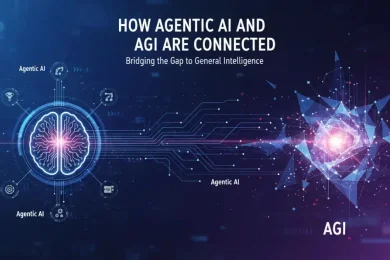
The Path to AGI (Artificial General Intelligence): Many researchers view Agentic AI as the final stepping stone to AGI. As agents become better at generalizing their problem-solving skills across entirely unknown domains, the line between highly capable narrow agents and true AGI begins to blur.
Global Ecosystem Standardization: We will see the rise of universal protocols for agent-to-agent communication. For instance, an AI agent from an enterprise in New York seamlessly negotiating contracts with an agent from an AI Development Company in Germany, utilizing standardized digital handshakes.
The AI Service Economy: The proliferation of top-tier AI Development Companies will create "Agent-as-a-Service" (AaaS) models, where small businesses rent specialized agents by the hour rather than buying software subscriptions.
Conclusion
The rise of Agentic AI represents one of the most significant advancements in enterprise technology since the emergence of cloud computing. By evolving from systems that simply generate content to autonomous AI agents capable of planning, reasoning, using enterprise tools, accessing long-term memory, and self-correcting, organizations can achieve unprecedented levels of operational efficiency, scalability, and innovation. This shift is moving businesses from traditional human-in-the-loop workflows toward human-on-the-loop supervisory models, where AI agents independently execute complex tasks while humans provide governance and oversight. Across industries such as finance, manufacturing, healthcare, retail, and logistics, agentic AI is delivering measurable ROI by automating repetitive processes, reducing operational costs, and improving decision-making accuracy. Although challenges related to security, AI alignment, governance, and autonomous decision-making remain, continuous advancements in multi-agent systems, AI orchestration, and enterprise AI governance are rapidly addressing these concerns. Businesses that will lead in 2026 and beyond are those that move beyond using AI as a productivity tool and instead invest in robust, production-ready multi-agent system that automate and optimize core business operations.
Ready to bring the power of Agentic AI to your enterprise?
FAQs
Agentic AI refers to autonomous AI systems that can reason, plan, execute tasks, use external tools, and continuously adapt to achieve business goals with minimal human intervention.
Industries including finance, healthcare, manufacturing, logistics, retail, IT, legal, and customer service are using Agentic AI to automate operations, improve decision-making, reduce costs, and enhance productivity.
Organizations must address AI governance, security, compliance, hallucinations, prompt injection risks, infrastructure costs, multi-agent orchestration, and ongoing MLOps to ensure reliable and secure deployments.
An experienced agentic AI development company helps organizations design, build, integrate, deploy, and maintain secure, scalable, and enterprise-ready autonomous AI systems tailored to their operational needs.
Tags

Yash Singh is the Chief Marketing Officer at Vegavid Technology, a leading AI-driven technology company specializing in AI agents, Generative AI, Blockchain, and intelligent automation solutions. With over a decade of experience in digital transformation and emerging technologies, Yash has played a key role in helping businesses adopt advanced AI solutions that enhance operational efficiency, automate workflows, and deliver personalized customer experiences across industries including fintech, healthcare, gaming, ecommerce, and enterprise technology. An alumnus of Indian Institute of Technology Bombay, Yash combines strong technical expertise with strategic marketing leadership to drive innovation in AI-powered applications, autonomous AI agents, Retrieval-Augmented Generation (RAG), Natural Language Processing (NLP), Large Language Models (LLMs), machine learning systems, conversational AI, and enterprise automation platforms. His expertise spans AI model integration, intelligent workflow automation, prompt engineering, smart data processing, and scalable AI infrastructure development, enabling organizations to accelerate digital transformation and business growth. Passionate about the future of intelligent systems, Yash actively shares insights on AI agents, Generative AI, LLM-powered applications, blockchain ecosystems, and next-generation digital strategies. He is committed to helping businesses embrace AI-first transformation while guiding teams to build impactful, industry-specific solutions that shape the future of innovation and intelligent technology.





Leave a Reply