

How to Integrate AI into Digital Workplace Solutions: A Practical Enterprise Guide
The modern workplace is undergoing a major transformation driven by Artificial Intelligence (AI). Organizations are moving beyond traditional software systems and adopting intelligent tools that automate workflows, enhance decision-making, and improve employee productivity.
A digital workplace combines collaboration tools, enterprise platforms, data systems, and cloud infrastructure to enable employees to work efficiently from anywhere. When AI is integrated into these systems, the workplace evolves from a static environment into an intelligent digital ecosystem that actively supports employees and automates complex tasks.
Understanding AI in the Digital Workplace
Artificial Intelligence refers to technologies that allow machines to simulate human intelligence such as learning, reasoning, pattern recognition, and decision-making.
According to Wikidata's definition of Artificial Intelligence, AI systems analyze large datasets, identify patterns, and automate cognitive tasks that traditionally required human effort. In the digital workplace, AI can power capabilities such as:
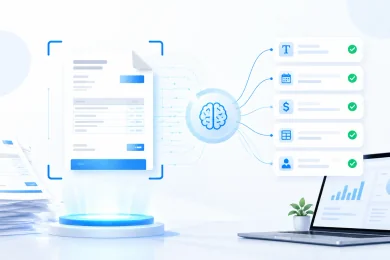
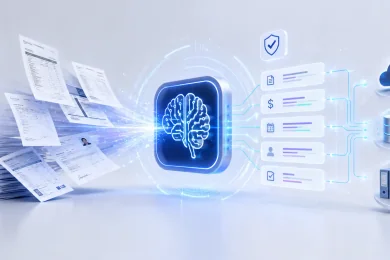
Intelligent document processing
Automated workflow management
AI-powered virtual assistants
Predictive analytics for business operations
Knowledge discovery across enterprise data
These capabilities enable employees to focus on strategic tasks while AI handles repetitive processes.
Why Businesses are Integrating AI into Workplace Platforms
Organizations are increasingly embedding AI into workplace systems to solve several operational challenges.
1. Improving Employee Productivity
AI-powered assistants can automate repetitive activities such as scheduling meetings, summarizing documents, and responding to routine queries. This significantly reduces administrative workload.
2. Enhancing Decision Making
Machine learning systems can analyze large operational datasets and generate insights that support strategic business decisions. Learn more about Machine Learning, a key branch of AI that enables systems to learn from data and improve over time.
3. Automating Business Processes
AI-driven workflow automation allows organizations to streamline operations such as approvals, reporting, and compliance monitoring.
4. Improving Knowledge Management
Large enterprises often struggle with fragmented knowledge across multiple systems. AI-powered search engines and knowledge assistants help employees quickly find relevant information.
Key Technologies Enabling AI-Powered Digital Workplaces
Large Language Models (LLMs)
Modern workplace AI systems are often powered by Large Language Models, which are capable of understanding and generating human-like text. These models support:
Document summarization
Enterprise chat assistants
Automated customer responses
Knowledge base generation
Natural Language Processing (NLP)
Another critical technology is Natural Language Processing (NLP), which allows machines to understand and interpret human language. NLP enables:
Voice assistants
Sentiment analysis
Automated email classification
Intelligent document search
AI Agents and Workflow Automation
Organizations are also deploying AI agents that can autonomously perform tasks such as monitoring workflows, retrieving information, or executing business processes.
Resource: Explore how AI Agents for Compliance and Risk Management are transforming automation. You can also learn how strategic AI board games inspire modern AI development in this guide on what is Go in AI
Step-by-Step Process to Integrate AI into Workplace Solutions
Successfully integrating AI into the digital workplace requires a structured implementation strategy.
1. Assess Digital Workplace Readiness
Before introducing AI, evaluate your current digital infrastructure, including collaboration tools, data accessibility, and cloud infrastructure. Companies often begin this process with an AI Agent Development Services partner to design scalable architectures.
2. Identify High-Impact Use Cases
Focus on areas where AI delivers measurable impact:
Employee Productivity: AI meeting assistants and report generation.
Customer Operations: Automated ticket classification.
HR & Finance: Resume screening and invoice processing automation.
3. Build a Strong Data Foundation
AI relies on data quality. Ensure enterprise data is centralized, structured, and secure. Implementing a data lake architecture is often necessary for large-scale deployments.
4. Integrate with Existing Platforms
The most successful AI deployments integrate directly with tools employees already use, such as:
Collaboration Tools: Automated meeting summaries.
Document Management: Intelligent classification and contract analysis.
Project Management: Predictive project timelines.
Benefits of AI-Powered Digital Workplaces
Benefit | Impact |
Operational Efficiency | Automates repetitive tasks, freeing up high-value human labor. |
Better Collaboration | Centralizes knowledge for instant cross-departmental access. |
Faster Decision-Making | Uses predictive analytics to inform leadership strategy. |
Employee Experience | Reduces digital friction and improves daily workflows. |
The Future of AI-Driven Workplaces
The next generation of workplace platforms will include:
Autonomous AI agents managing internal operations.
Enterprise copilots assisting employees across all departments.
Real-time organizational intelligence for immediate insights.
Businesses that integrate AI early will gain long-term competitive advantages in operational efficiency and innovation.
Organizational Readiness for AI-Powered Digital Workplaces
Before organizations can successfully integrate artificial intelligence into their digital workplace environment, they must evaluate their overall readiness. AI integration is not simply a technology upgrade; it requires transformation across processes, infrastructure, and organizational culture.
A common mistake companies make is adopting AI tools without first preparing their internal systems and teams. Without proper preparation, AI implementations often result in fragmented solutions that fail to scale across the organization.
Organizational readiness typically involves three key areas.
Technology readiness
The existing technology ecosystem must support data integration, automation, and cloud-based processing. Many traditional enterprise systems were designed for transactional workflows rather than intelligent automation. As a result, companies may need to modernize legacy systems before integrating AI.
Technology readiness includes evaluating:
enterprise software architecture
data storage and accessibility
API availability for system integration
cloud infrastructure capabilities
cybersecurity and data protection frameworks
Organizations with flexible and cloud-enabled infrastructures can integrate AI significantly faster than those relying on rigid legacy systems.
Data readiness
AI systems depend heavily on high-quality data. If an organization’s data is fragmented, inconsistent, or inaccessible, AI models will produce unreliable outputs.
To ensure data readiness, organizations should establish:
centralized data repositories
standardized data formats
data governance policies
automated data pipelines
Data preparation often accounts for a large portion of AI project timelines. Investing in a robust data foundation greatly increases the effectiveness of AI initiatives.
Workforce readiness
Employees play a critical role in the success of AI-driven workplaces. Rather than replacing human workers, AI technologies are designed to augment employee capabilities.
Organizations should focus on preparing their workforce through:
AI literacy training programs
cross-functional collaboration between business and technical teams
clear communication about the role of AI in the workplace
When employees understand how AI tools enhance their productivity, adoption rates increase significantly.
AI-Powered Collaboration Tools
Collaboration platforms are central to digital workplaces. These platforms allow employees to communicate, share knowledge, and coordinate tasks across teams and departments.
AI can significantly enhance collaboration tools by introducing intelligent features that automate communication workflows and provide contextual insights.
Intelligent meeting assistants
AI-powered meeting assistants can automatically record conversations, generate summaries, and extract key action items. This eliminates the need for manual note-taking and ensures important information is captured accurately.
Advanced meeting assistants can also analyze meeting patterns to identify inefficiencies, such as recurring meetings that produce little actionable output.
Smart knowledge search
One of the most common productivity challenges employees face is locating information across multiple systems. Documents, reports, presentations, and communication threads are often scattered across different platforms.
AI-powered enterprise search systems address this problem by indexing organizational knowledge and allowing employees to retrieve information through natural language queries.
Instead of manually searching through folders or email chains, employees can ask questions such as:
What were the key decisions from last quarter’s strategy meeting?
Where can I find the latest product development roadmap?
Which team member is responsible for a particular project?
AI-powered knowledge systems provide instant answers, dramatically reducing time spent searching for information.
Intelligent communication insights
AI systems can analyze communication patterns across digital workplace platforms to provide valuable insights into collaboration efficiency.
For example, AI can identify:
communication bottlenecks between departments
teams that are overloaded with meetings
collaboration gaps that affect project performance
These insights help organizations improve operational efficiency and foster better teamwork.
AI in Workflow and Process Automation
Workflow automation is one of the most powerful applications of AI in digital workplaces. Traditional workflow systems rely on predefined rules and manual triggers, which can limit flexibility and responsiveness.
AI-enhanced workflow systems introduce intelligence into process automation, enabling systems to make decisions, adapt to changing conditions, and optimize task execution.
Intelligent document processing
Organizations handle large volumes of documents such as invoices, contracts, reports, and compliance forms. Manually reviewing these documents is time-consuming and prone to errors.
AI-powered document processing systems can automatically:
extract relevant data from documents
classify documents by type
validate information against enterprise databases
route documents to the appropriate workflow stages
This automation significantly reduces administrative workloads and improves operational accuracy.
Automated decision support
AI systems can analyze historical data and operational patterns to support decision-making processes.
For example, in financial operations, AI can detect unusual transaction patterns and flag potential fraud risks. In procurement workflows, AI can analyze supplier performance data to recommend optimal purchasing decisions.
By integrating predictive analytics into workflow systems, organizations can make faster and more informed decisions.
Adaptive workflow management
Traditional workflows follow rigid process sequences that may not adapt well to changing conditions.
AI-enabled workflow platforms can dynamically adjust process flows based on real-time data. For example:
prioritizing urgent customer service tickets
reallocating tasks when team members are unavailable
adjusting project timelines based on progress metrics
Adaptive workflows increase organizational agility and responsiveness.
AI for Employee Experience and Workplace Productivity
Beyond operational efficiency, AI can significantly improve the overall employee experience within digital workplaces.
Employee experience has become a critical factor in organizational performance, influencing productivity, engagement, and talent retention.
Personalized productivity assistants
AI-powered productivity assistants can help employees manage daily tasks more effectively.
These assistants can provide capabilities such as:
task prioritization recommendations
automated scheduling coordination
reminders for upcoming deadlines
summarization of lengthy documents and communications
By reducing cognitive overload, AI assistants help employees focus on high-value activities.
Intelligent onboarding systems
Employee onboarding is often a complex and time-consuming process involving multiple departments and systems.
AI-driven onboarding platforms can guide new employees through the onboarding process by providing:
personalized training recommendations
automated document processing
interactive workplace assistants that answer common questions
This approach accelerates the onboarding process and helps new employees become productive more quickly.
Continuous learning and skill development
AI can also support employee development by recommending learning resources based on individual career goals and skill gaps.
Intelligent learning platforms analyze employee performance data and training histories to suggest courses, certifications, or mentorship opportunities.
This personalized learning approach encourages continuous professional growth and improves workforce capabilities.
Security and Privacy Considerations in AI-Driven Workplaces
As organizations integrate AI into workplace systems, security and privacy become critical considerations. AI technologies often require access to sensitive enterprise data, making it essential to implement strong protection mechanisms.
Data privacy protection
Organizations must ensure that AI systems comply with data privacy regulations and internal governance policies.
Key practices include:
encrypting sensitive data
implementing strict access controls
anonymizing personal information when possible
These measures protect both employee and customer data.
AI model transparency
Transparency is important for building trust in AI systems. Employees and stakeholders should understand how AI systems make decisions and what data sources they rely on.
Providing explainable AI models helps organizations maintain accountability and ensures that automated decisions can be audited if necessary.
Continuous monitoring and risk management
AI systems must be continuously monitored to detect potential risks such as model drift, data inconsistencies, or unexpected outputs.
Organizations should establish monitoring frameworks that track:
model performance metrics
data input quality
operational system reliability
Proactive monitoring ensures AI systems remain accurate and reliable over time.
Integration Challenges and How to Overcome Them
While AI offers tremendous benefits, organizations often encounter several challenges during integration.
Legacy system compatibility
Many enterprises rely on legacy systems that were not designed for modern AI integration. These systems may lack the APIs or data accessibility required for AI deployment.
Organizations can address this challenge by implementing middleware layers or gradually modernizing legacy infrastructure.
Change management
Introducing AI into workplace systems often changes how employees perform their tasks. Without proper change management, employees may resist adopting new technologies.
Successful organizations address this challenge by:
involving employees in AI implementation planning
providing clear training and support
emphasizing how AI enhances rather than replaces human work
Skill shortages
AI implementation requires specialized skills in areas such as data engineering, machine learning, and system integration.
Organizations can overcome skill shortages through a combination of internal training programs, strategic hiring, and partnerships with experienced technology providers.
Build Your Intelligent Workplace with Vegavid
Integrating AI into digital workplace solutions requires expertise in data architecture, machine learning, and enterprise workflow integration. At Vegavid Technology, we help organizations design and deploy intelligent platforms.
Our services include:
Enterprise AI Consulting
Generative AI Development
AI Agent Implementation
Intelligent Workflow Automation
Explore more:
Visit Vegavid Technology
Read more insights on our Vegavid AI & Technology Blogs
Ready to unlock the full potential of Go AI for your development ecosystem?
Frequently Asked Questions (FAQs)
An AI-powered digital workplace is a modern work environment where artificial intelligence technologies are integrated into collaboration tools, enterprise systems, and workflow platforms to improve productivity, automate tasks, and enhance decision-making. These workplaces use AI to assist employees with tasks such as document analysis, communication management, workflow automation, and knowledge retrieval.
Organizations integrate AI into digital workplace platforms to increase efficiency, reduce manual work, and improve collaboration across teams. AI helps automate repetitive tasks, provides real-time insights from enterprise data, and enables employees to access information faster, ultimately improving overall business productivity.
Organizations typically begin AI integration by evaluating their existing digital infrastructure and identifying areas where automation or intelligence can improve workflows. After assessing readiness, companies can prioritize high-impact use cases, build a strong data foundation, and gradually integrate AI into existing workplace tools.
Common challenges include legacy systems that are difficult to integrate with AI technologies, fragmented enterprise data, lack of internal AI expertise, and employee resistance to new technologies. Organizations must address these issues through infrastructure modernization, data management strategies, and employee training programs.

Yash Singh is the Chief Marketing Officer at Vegavid Technology, a leading AI-driven technology company specializing in AI agents, Generative AI, Blockchain, and intelligent automation solutions. With over a decade of experience in digital transformation and emerging technologies, Yash has played a key role in helping businesses adopt advanced AI solutions that enhance operational efficiency, automate workflows, and deliver personalized customer experiences across industries including fintech, healthcare, gaming, ecommerce, and enterprise technology. An alumnus of Indian Institute of Technology Bombay, Yash combines strong technical expertise with strategic marketing leadership to drive innovation in AI-powered applications, autonomous AI agents, Retrieval-Augmented Generation (RAG), Natural Language Processing (NLP), Large Language Models (LLMs), machine learning systems, conversational AI, and enterprise automation platforms. His expertise spans AI model integration, intelligent workflow automation, prompt engineering, smart data processing, and scalable AI infrastructure development, enabling organizations to accelerate digital transformation and business growth. Passionate about the future of intelligent systems, Yash actively shares insights on AI agents, Generative AI, LLM-powered applications, blockchain ecosystems, and next-generation digital strategies. He is committed to helping businesses embrace AI-first transformation while guiding teams to build impactful, industry-specific solutions that shape the future of innovation and intelligent technology.




Leave a Reply