

10 Job Roles Most at Risk of AI-Driven Displacement
The rise of Generative AI and advanced automation tools has fundamentally changed the conversation around job security. No longer are only manual, assembly-line roles at risk; today, highly repetitive white-collar jobs involving data processing, content generation, and routine analysis are the first to experience dramatic transformation—and, in many cases, displacement.
For business leaders, employees, and career planners, understanding which roles are most susceptible to automation is crucial for strategic planning and upskilling. While few jobs will vanish completely, the nature of work in these roles will change rapidly, requiring a shift from execution to oversight.
Drawing on recent studies from institutions like MIT, the ILO, and industry reports, here are 10 job roles currently facing the highest risk of AI-driven job displacement.
High-Risk Category 1: The Automation of Administrative & Data Handling
These roles are the "low-hanging fruit" for AI because they involve highly structured, codified, and predictable digital tasks. AI can perform these tasks faster, 24/7, and with near-perfect accuracy.
1. Data Entry Clerks and Processors
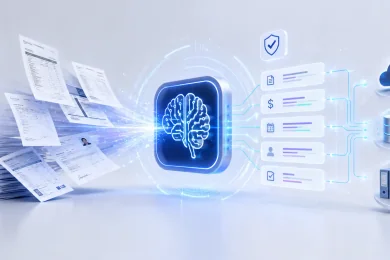
The AI Threat: Data entry clerks are consistently ranked among the most vulnerable jobs. AI tools leveraging Optical Character Recognition (OCR) and Machine Learning (ML) can automatically extract, clean, and validate massive datasets from invoices, forms, and documents.
The Impact: Companies are implementing automated data pipelines, drastically reducing the need for human input. This job is becoming almost entirely obsolete in its traditional form.
The Future Focus: Data Management, Data Analysis, and developing the AI skills required to oversee automated workflows.
2. Basic Customer Service Representatives and Telemarketers
The AI Threat: This risk covers basic-level Customer Service Representatives handling scripted or transactional queries (billing, password resets, tracking orders) and Telemarketers. AI-powered chatbots and voice agents use advanced Natural Language Processing (NLP) to handle these requests instantly, reducing call volume by 50% to 80%.
The Impact: AI is replacing the entry-level roles that historically served as training grounds.
The Future Focus: Specializing in complex technical troubleshooting, high-touch customer success, sales strategy, or product training—roles that require high empathy and nuanced judgment.
3. Bookkeepers and Basic Accountants
The AI Threat: The foundational tasks of Bookkeepers—invoicing, reconciliations, expense tracking, and payroll processing—are easily automated by modern accounting software powered by AI (e.g., QuickBooks, Xero).
The Impact: AI performs the repetitive data collection and classification, shifting the remaining human work toward high-level tax strategy, complex compliance, and advisory services.
The Future Focus: Becoming a Financial Analyst or a strategic advisor who interprets the AI-generated reports rather than generating them manually.
High-Risk Category 2: The Automation of Analytical and Research Roles
AI's strength in processing, summarizing, and reasoning across massive documents makes it a direct competitor for entry-level roles in finance, legal, and market analysis.
4. Financial and Data Analysts (Entry-Level)
The AI Threat: AI can read thousands of financial reports, market trends, and economic indicators in minutes. It instantly generates forecasting models, due diligence reports, and routine market analyses.
The Impact: Junior Financial Analysts who traditionally "cut their teeth" on document review and basic spreadsheet modeling are finding their tasks being fully subsumed by AI tools.
The Future Focus: Developing skills in algorithmic trading, building specialized machine learning algorithum models, or focusing on high-level mergers and acquisitions (M&A) strategy, where human negotiation is key.
5. Paralegals and Legal Research Staff
The AI Threat: Legal research is a prime target. AI platforms can scan decades of case law, summarize precedents, perform contract review, and draft first-pass legal documents much faster and cheaper than human Paralegals or junior associates.
The Impact: Law firms are reducing the size of their entry-level research teams, shifting the required skill from research stamina to prompt engineering and legal strategy.
The Future Focus: Litigation strategy, client-facing consulting, and regulatory compliance expertise that requires synthesizing AI data with human ethical judgment.
6. Market Research Analysts
The AI Threat: Market Research Analysts rely heavily on data collection, survey analysis, and trend spotting. AI analytics tools can process raw consumer data, social media sentiment, and competitor reports instantly, generating deep insights and predictive behavior models faster than any human team.
The Impact: The manual grunt work of data tabulation and report drafting is gone. The value moves to interpreting the data and presenting actionable, creative strategies.
The Future Focus: Focusing on qualitative research, ethnographic studies, and developing high-level marketing campaign strategies based on the AI's data.
High-Risk Category 3: The Automation of Content and Creative Production
With the rise of large Generative AI models like DALL-E, Midjourney, and advanced text generators, creative and technical production roles are seeing massive displacement pressure.
7. Content Writers, Copywriters, and Proofreaders
The AI Threat: Generative AI can produce high-quality blog posts, social media copy, emails, and product descriptions in seconds. It excels at proofreading, translation, and basic rewriting tasks.
The Impact: The market for "good enough" content—especially SEO boilerplate and basic corporate copy—is being flooded by AI. Only writers who are masters of strategy, brand voice, and complex storytelling will survive.
The Future Focus: Prompt engineering, content strategy, developing unique brand narratives, and using AI as a tool for rapid ideation rather than final output generation.
8. Basic Software Developers and Coders (Entry-Level)
The AI Threat: Tools like GitHub Copilot can write, debug, and complete functions, generating millions of lines of code daily. Microsoft, Google, and other major tech firms have reported that large percentages of their code are now AI-written.
The Impact: The demand for junior programmers to handle repetitive coding tasks and bug fixes is declining sharply, making the traditional entry-level route into tech much harder.
The Future Focus: Specializing in AI development and machine learning engineering, systems architecture, ethical AI deployment, or complex platform design where human oversight and large-scale integration skills are vital.
9. Graphic Designers (Template-Based Work)
The AI Threat: AI image generation tools can create logos, social media graphics, ad banners, and visual layouts in seconds from a simple text prompt.
The Impact: Designers whose work consists mainly of template-based projects or simple revisions are being replaced by high-speed, low-cost AI alternatives.
The Future Focus: Focusing on high-end creative direction, conceptual art, complex brand identity development, and interactive user experience (UX) design that requires deep psychological understanding and human-centric testing.
High-Risk Category 4: The Automation of Physical and Logistical Coordination
While the physical work itself (like welding or plumbing) is currently safe, the digital and coordination aspects of these industries are highly vulnerable.
10. Logistics Coordinators and Scheduling Roles
The AI Threat: Logistics Coordinators and administrative staff focused on complex scheduling, route optimization, and inventory management are seeing their core tasks automated. AI can manage warehouse automation, optimize shipping routes across vast networks, and predict inventory needs more efficiently than any human.
The Impact: The role shifts from manually building schedules and routes to managing and troubleshooting the sophisticated AI systems that do the forecasting.
The Future Focus: Supply Chain Management, robotics maintenance and integration, and advanced data-driven process optimization.
The Path Forward: Augmentation Over Automation
The consistent message from experts is that transformation, not total job loss, is the most likely outcome. AI won't fire you; a person who knows how to use AI to be 10x more productive might.
The key to job security lies in cultivating skills that AI cannot replicate:
Complex Problem Solving: Handling unique, never-before-seen issues.
Emotional Intelligence: Empathy, negotiation, and leadership.
Creativity and Strategy: Generating novel concepts and defining the why behind the what.
Prompt Engineering: Prompt Engineering is a technique of learning to communicate with AI development systems to yield high-quality results.
The current labor market demands a workforce capable of augmentation, where AI is a powerful co-pilot, not a replacement.
Don't Just Adapt—Define the Future of Work
The jobs that are safest from AI displacement are those that are building, integrating, and managing the AI itself. If your business is ready to move beyond basic software and build proprietary, defensible AI solutions that streamline your unique operations—whether it's automating your logistics or creating a custom financial analysis engine—you need an expert partner.
Is Your Business Seeking Custom AI Solutions to Gain a Competitive Edge?
Consult with the Experts at Vegavid AI Development Company
FAQs
These FAQs address the most critical questions readers will have about the impact of AI on their careers and the future job market.
It means that Artificial Intelligence (AI) and automation tools are taking over specific, repetitive tasks within a job role. It rarely means the entire job vanishes overnight. Instead, the role is transformed: tasks like data entry and basic analysis are automated, requiring the human worker to upskill and focus on higher-level duties like strategic planning, oversight, and complex problem-solving.
No. While manual and administrative tasks were initially targeted, the current wave of Generative AI primarily affects white-collar jobs that involve routine digital work, such as entry-level coding, basic copywriting, legal research, and financial analysis. AI's core strength is processing and reasoning across large datasets, putting many knowledge-worker roles at risk.
The timeline varies by industry. For highly repetitive roles like Data Entry or basic Telemarketing, significant automation is happening now. For other roles, like high-level Software Developers or Logistics Coordinators, AI is currently an augmenting tool (a co-pilot). The most immediate career risk is often being less productive than a colleague who effectively uses AI.
Augmentation is the concept of using AI tools to enhance human capabilities and productivity, rather than trying to compete with them. Job security lies in learning to effectively wield AI—using it to automate 80% of your work so you can focus your time on the 20% that requires complex problem-solving, emotional intelligence, and strategic thinking.

Yash Singh is the Chief Marketing Officer at Vegavid Technology, a leading AI-driven technology company specializing in AI agents, Generative AI, Blockchain, and intelligent automation solutions. With over a decade of experience in digital transformation and emerging technologies, Yash has played a key role in helping businesses adopt advanced AI solutions that enhance operational efficiency, automate workflows, and deliver personalized customer experiences across industries including fintech, healthcare, gaming, ecommerce, and enterprise technology. An alumnus of Indian Institute of Technology Bombay, Yash combines strong technical expertise with strategic marketing leadership to drive innovation in AI-powered applications, autonomous AI agents, Retrieval-Augmented Generation (RAG), Natural Language Processing (NLP), Large Language Models (LLMs), machine learning systems, conversational AI, and enterprise automation platforms. His expertise spans AI model integration, intelligent workflow automation, prompt engineering, smart data processing, and scalable AI infrastructure development, enabling organizations to accelerate digital transformation and business growth. Passionate about the future of intelligent systems, Yash actively shares insights on AI agents, Generative AI, LLM-powered applications, blockchain ecosystems, and next-generation digital strategies. He is committed to helping businesses embrace AI-first transformation while guiding teams to build impactful, industry-specific solutions that shape the future of innovation and intelligent technology.




Leave a Reply