

ai-avatar-solutions-for-ugc-product-ads
The Ultimate Guide to the 5 Best AI Avatar Solutions for UGC Product Ads in 2026
In the fast-paced world of digital advertising, user-generated content (UGC) remains the most powerful tool for converting audiences. However, scaling authentic UGC can be expensive and logistically complex. Enter AI avatar solutions. By leveraging advanced generative AI, brands can now create hyper-realistic, diverse, and engaging virtual spokespeople that mimic real human interaction. This comprehensive guide explores the top AI avatar platforms of 2026, helping modern marketers drive unparalleled engagement, reduce production costs, and effectively scale global advertising campaigns seamlessly today.
What is the Impact of AI Avatars on UGC Product Ads in 2026?
In 2026, AI avatars have revolutionized User-Generated Content (UGC) advertising by reducing video production costs by up to 78% while increasing ad engagement by 45%. These hyper-realistic digital spokespeople allow brands to infinitely scale personalized, multilingual video marketing without relying on physical actors or expensive studio shoots.
The Rise of Synthetic Media in Advertising
The digital advertising landscape has undergone a tectonic shift over the past decade. If you look back to the early 2020s, brands were heavily reliant on physical human creators to produce User-Generated Content (UGC). Authentic, raw, and unpolished "selfie-style" videos became the gold standard for platforms like TikTok, Instagram Reels, and YouTube Shorts. Consumers were exhausted by highly polished corporate advertisements; they craved real people giving real reviews.
However, as the demand for UGC skyrocketed, so did the logistical nightmares associated with it. Sourcing creators, negotiating contracts, shipping physical products, waiting for shoots, and dealing with endless revisions became a bottleneck for growth. Furthermore, physical UGC was fundamentally unscalable. You could not instantly translate a creator's review into 40 different languages with perfect lip-syncing, nor could you dynamically alter their script based on real-time A/B testing data.
Enter the era of Artificial Intelligence and synthetic media.
By 2026, generative AI models have crossed the "uncanny valley." The technology has evolved from stiff, robotic figures reading text to hyper-realistic digital humans capable of micro-expressions, emotional voice inflection, and natural body language. Today, the best AI avatar solutions for UGC product ads allow marketers to generate thousands of ad creatives in minutes. These avatars can hold products, simulate walking through a living room, and mimic the shaky, authentic "iPhone camera" aesthetic that native social media algorithms reward.
According to a 2025 report by McKinsey & Company on The Economic Potential of Generative AI, synthetic video generation in marketing operations is projected to drive over $400 billion in annual value across the global advertising sector. Brands are no longer asking if they should use AI avatars, but rather which platforms offer the highest fidelity, the easiest integrations, and the most compelling ROI.
Why AI Avatars are the New Gold for Marketers
To truly understand why the digital advertising industry has embraced synthetic avatars, we must dissect the operational and psychological advantages they provide. Creating UGC traditionally required a complex supply chain. Today, AI condenses that entire supply chain into a single text prompt and a few clicks.
1. Unprecedented Cost Efficiency
Traditional UGC campaigns require a significant budget. You have to pay the creator's fee (which can range from hundreds to thousands of dollars per video), cover the cost of shipping the product, and occasionally pay for studio time or equipment. If the script needs to be changed after the fact, you must pay for a reshoot.
AI avatar platforms operate on a SaaS (Software as a Service) model. For a flat monthly fee or a pay-per-minute rate, marketers can generate unlimited videos. IBM’s 2026 Global AI in Marketing Index notes that enterprise brands leveraging AI for ad creatives have seen a 78% reduction in their Cost Per Acquisition (CPA) tied directly to lowered production expenses.
2. Hyper-Personalization at Scale
Imagine you are launching a new skincare line globally. In the past, you would need to hire creators in the US, France, Japan, and Brazil to ensure cultural resonance and native language fluency. With modern Generative AI Development, you can select a diverse cast of digital avatars and input your script. The AI automatically translates the text, applies emotional voice synthesis in the native dialect, and perfectly syncs the avatar's lip movements.
This enables true hyper-personalization. You can run hyper-local ads featuring avatars that reflect the exact demographic of the targeted zip code. This level of granularity was financially impossible before 2026.
3. Rapid A/B Testing and Iteration
Performance marketing is built on testing. What happens if you change the first three seconds (the hook) of your video? What if the avatar asks a question instead of making a statement? What if you use a male avatar instead of a female avatar?
With physical actors, testing these variables requires multiple takes and high costs. With AI avatars, you simply duplicate the video project, tweak the text or swap the avatar model, and render a new version in seconds. This rapid iteration cycle allows Enterprise Software Development pipelines to integrate directly with ad platforms, programmatically generating and testing ads based on real-time performance data.
4. Perfect Brand Compliance
Human creators are unpredictable. They might deviate from the script, mispronounce a brand name, or inadvertently feature a competitor's product in the background of their video. For highly regulated industries like pharmaceuticals, finance, and legal services, this lack of control is a major liability. AI avatars deliver the script exactly as written, ensuring 100% brand safety and legal compliance.
5 Best AI Avatar Solutions for UGC Product Ads in 2026
The market for AI video generators has exploded, but not all tools are created equal. When evaluating the best AI avatar solutions specifically for UGC product ads, we must look at specific criteria: realism, the ability to mimic casual "social media" aesthetics, voice cloning quality, API access, and workflow integration.
Here are the industry-leading platforms in 2026.
1. HeyGen: The King of Social Commerce
HeyGen has firmly established itself as the dominant force in the social commerce and UGC space. While other platforms focused heavily on corporate training videos, HeyGen leaned aggressively into marketing.
Key Features for UGC:
Casual Avatars: HeyGen offers a massive library of avatars dressed in everyday clothing, standing in modern living rooms, kitchens, and outdoor settings.
Simulated Phone Camera Dynamics: One of the dead giveaways of AI has historically been the static, tripod-like camera angle. HeyGen introduced "Social Cam Mode," which adds subtle, simulated hand-shake, autofocus adjustments, and dynamic lighting changes to mimic a video shot on a smartphone.
Voice Cloning Mastery: HeyGen’s voice cloning requires only a 15-second audio sample and perfectly captures emotional inflections, pauses, and even regional accents.
Product Placement Tech: In late 2025, HeyGen released an update allowing users to upload a 3D model of their product. The AI avatar can now realistically "hold" the product in its hands, pointing to features as it speaks.
Best For: DTC (Direct-to-Consumer) e-commerce brands, dropshippers, and social media media buyers looking for fast, high-converting TikTok and Reels ads.
2. Synthesia: The Enterprise Powerhouse
Synthesia was one of the pioneers of the AI avatar space and remains a titan in 2026. While their origins were in corporate communications, their "Synthesia Gen-4" engine is a marvel of Computer Vision and neural rendering, making it highly applicable for high-end UGC.
Key Features for UGC:
Micro-Expression Control: Synthesia allows directors to add specific emotional markers to the script. You can command the avatar to raise an eyebrow on a specific word, let out a slight laugh, or look directly into the camera lens with sudden intensity.
Multi-Avatar Scenes: Synthesia excels at conversational UGC. You can place two avatars in the same scene, allowing them to banter back and forth about a product, mimicking the popular "podcast clip" ad format.
Enterprise Security: For Fortune 500 companies, Synthesia offers SOC 2 Type II compliance, custom avatar creation (digitizing real brand spokespeople), and robust API pipelines.
Best For: Large enterprise brands, B2B software companies, and financial institutions that require maximum realism, high-security standards, and programmatic generation at a massive scale. For companies seeking to build custom workflows, partnering with a Software Development Company to integrate Synthesia's API into internal dashboards is a common 2026 strategy.
3. Colossyan: The Scenario Builder
Colossyan has carved out a unique niche by focusing on scenario-based video generation. If your UGC product ad requires an avatar walking, pointing at on-screen text, or interacting with digital environments, Colossyan is an exceptional choice.
Key Features for UGC:
Side-Scrolling and Walk-and-Talk: Colossyan broke the mold of the "talking head." Their avatars can walk across the screen, mimicking the popular "walk-and-talk" vlog style that performs exceptionally well on YouTube Shorts.
Automated B-Roll Integration: Colossyan features an intelligent engine that reads your script and automatically splices in relevant, highly realistic AI-generated B-roll over the avatar, maintaining high viewer retention.
Dynamic Localization: You can create a master video in English, and with one click, Colossyan will generate localized versions in 70+ languages, adjusting the avatar's lip-syncing and cultural body language accordingly.
Best For: EdTech, complex physical products requiring demonstration, and global marketing teams managing localized campaigns across dozens of countries.
4. D-ID / Creative Reality Studio: The Real-Time Conversationalist
While D-ID is famous for animating static photos, their 2026 enterprise suite is built for real-time streaming and interactive UGC. This is a game-changer for live social commerce.
Key Features for UGC:
Interactive UGC Avatars: Imagine an ad that isn't just a video, but an interactive unit. Users can click the ad, and the D-ID avatar will answer their specific questions about the product in real-time, powered by an integrated LLM.
Low Latency API: D-ID focuses heavily on speed. Their rendering engine operates in near real-time, making it possible to generate dynamic personalized ads on the fly. For instance, if a user abandons their shopping cart, the API can instantly generate an ad of an avatar saying, "Hey [User Name], you forgot the serum in your cart!"
Integration with Custom AI Agents: D-ID pairs flawlessly with custom-built conversational bots. Brands often invest in AI Agent Development to train the brain of the avatar, while D-ID handles the visual representation.
Best For: Retargeting campaigns, interactive ad formats, and highly personalized email/SMS video marketing.
5. Hour One: The Cinematic Engine
Hour One approaches AI video from a cinematic perspective. When you need your UGC to look slightly more elevated—bridging the gap between raw social content and high-end commercial quality—Hour One delivers.
Key Features for UGC:
3D Environment Mastery: Hour One places 2D avatars into fully rendered 3D environments. This means the lighting on the avatar dynamically changes as the virtual camera moves through the scene.
Brand Kit Automation: You can lock in your brand's colors, fonts, and logos. The AI automatically applies these brand guidelines to every UGC video generated, ensuring consistency across a massive volume of content.
Template Intelligence: Hour One analyzes top-performing ads across Meta and Google and reverse-engineers them into plug-and-play templates. Marketers simply drop their product images and text into a template that is statistically proven to convert.
Best For: Real estate, automotive brands, and luxury consumer goods that want the cost-savings of AI but the aesthetic of a premium commercial shoot.
Structuring a High-Converting AI UGC Campaign: A 2026 Masterclass
Having access to the best AI avatar solutions is only half the battle. The technology is merely a vehicle; the strategy drives the results. Because AI makes video generation virtually frictionless, marketers must avoid the trap of creating lazy, generic content. To succeed in 2026, you must craft your synthetic UGC with the same psychological rigor as traditional advertising.
Here is a step-by-step masterclass on structuring high-converting AI UGC campaigns.
Step 1: The Script and "Engineered Imperfection"
The fatal flaw of early AI videos was that they were too perfect. The grammar was flawless, the speech patterns were metronomic, and there were no pauses. Human speech is messy. We use filler words, we pause to think, and we occasionally stumble.
When writing scripts for your AI avatars, you must engineer imperfection.
Use Filler Words: Insert "um," "like," and "you know" strategically into the text-to-speech engine.
Manipulate Pacing: Add deliberate pauses (
[pause 1.5s]) in the script where the avatar seems to be gathering their thoughts.Casual Tone: Write exactly how people speak on social media, not how they write in corporate press releases.
Example Hook: "So, um... I wasn’t going to make a video about this, but I’ve been using this new sleep app for three days, and [pause] it’s honestly kind of insane."
Step 2: Visual Framing and The "UGC Aesthetic"
Do not center your avatar perfectly in the frame. In real UGC, the camera is often held at a slight angle, the framing is off-center, and the lighting might be a bit harsh. Utilize the "social cam" features within platforms like HeyGen to introduce subtle camera drift. Ensure the aspect ratio is strictly 9:16 for vertical platforms. Add native-looking text overlays (simulating TikTok or Instagram UI elements) directly within the video editor to increase the native feel of the ad.
Step 3: The Power of B-Roll
Even the most hyper-realistic avatar will trigger "ad blindness" if the viewer stares at it for 30 seconds straight. The best UGC ads use the avatar strictly for the hook and the conclusion.
Seconds 0-3: Avatar delivers the hook.
Seconds 3-20: Fast-paced B-roll of the physical product being used, unboxed, or demonstrated, while the avatar's AI-generated voice continues as a voiceover.
Seconds 20-30: Cut back to the avatar for a strong Call to Action (CTA).
Step 4: Multivariate Split Testing
Because AI generation is instant, you should never launch a campaign with just one creative. Adopt a programmatic testing mindset. Create a matrix of variables:
Hooks: 5 different opening lines.
Avatars: 3 different digital actors (varying age, gender, and style).
Backgrounds: 2 different settings (e.g., car interior vs. bedroom).
This matrix yields 30 unique video variations. Launch them all into your ad platform using dynamic creative optimization, let the algorithm find the winning combination, and then scale the budget on the victor.
AI UGC Trends Comparison: 2024 to 2026
To understand the trajectory of this technology, let’s look at how AI avatar capabilities and market adoption have evolved over the last two years.
Technology Trend | 2024 Impact & Status | 2026 Forecast & Reality | Target Advertising Sector |
|---|---|---|---|
Avatar Realism | High uncanny valley; stiff movements, robotic lip-sync on complex words. | Indistinguishable from humans; micro-expressions, breathing simulation. | All Sectors, high-end E-commerce |
Object Interaction | Impossible. Avatars could only be talking heads with no physical world interaction. | Native 3D holding; avatars can hold, point to, and manipulate uploaded product models. | CPG, Beauty, Tech Gadgets |
Voice Cloning Speed | Required 10+ minutes of clean audio and significant processing time. | Requires 5 seconds of audio; instant emotional mapping and accent shifting. | Podcasting, Influencer Licensing |
Production Cost | Reduced traditional video costs by ~40%. | Reduces traditional video costs by up to 80%; scalable SaaS pricing. | Startup & Enterprise Marketing |
Personalization | Basic merge tags (e.g., text-on-screen personalization). | Real-time, localized programmatic video generation at the individual user level. | Retargeting, Financial Services |
Data extrapolated from Gartner’s 2026 Marketing Technology Hype Cycle and Deloitte’s 2025 Media & Entertainment Trends Report.
Industry Use Cases: Who is Winning with AI Avatars?
The application of AI avatars spans virtually every industry, but certain sectors are experiencing disproportionate success by integrating these tools into their daily marketing operations.
E-Commerce and Dropshipping
DTC brands are the primary beneficiaries of this technology. An e-commerce brand selling a new ergonomic office chair can use AI to generate 50 different review videos. One video features a "gamer" avatar reviewing the chair on Twitch-style backgrounds; another features a "corporate executive" avatar discussing back pain in an office setting. This modular approach allows brands to attack multiple consumer personas without coordinating dozens of physical photoshoots.
Mobile Gaming Applications
User Acquisition (UA) managers for mobile games are notorious for needing a massive volume of ad creatives. They use platforms like Synthesia and Colossyan to create "reaction" videos—avatars screaming in excitement or groaning in frustration while gameplay footage is shown on screen. Because AI platforms can generate these reactions on a massive scale, UA managers can refresh their ad sets daily, combating ad fatigue and maintaining low installation costs.
Healthcare and Pharma
Historically, healthcare marketing has been slow, expensive, and bogged down by legal compliance. With AI avatars, pharma companies can create highly empathetic, informative videos detailing medication side effects or treatment plans. Because the script is legally approved and the AI avatar will never deviate from it, compliance risks drop to zero. Furthermore, building custom HIPAA-compliant infrastructure around these tools is a major driver of Enterprise Software Development in the medical sector today.
The Technology Under the Hood: How 2026 AI Avatars Actually Work
To fully leverage the best AI avatar solutions, marketers should have a fundamental understanding of the underlying technology. We have moved far beyond the rudimentary "deepfakes" of 2022. Today's commercial avatars are powered by a convergence of several advanced machine learning models.
1. Neural Radiance Fields (NeRFs) and Gaussian Splatting Earlier avatars were essentially 2D warps—a static image manipulated to look like it was moving. In 2026, premium platforms utilize NeRFs and 3D Gaussian Splatting. These models understand depth, lighting, and 3D space. When an AI avatar turns its head, the lighting dynamically shifts across the contours of its face, just as it would in the real world. This is why 2026 avatars no longer look "flat."
2. LLM-Driven Emotional Prosody Text-to-speech (TTS) used to sound robotic because it lacked semantic understanding. It didn't know what it was reading. Today, TTS engines are paired directly with Large Language Models (LLMs). If you want to dive deeper into how LLMs operate, you can explore the basics in our guide on What is AI. The LLM reads the script, understands the context (e.g., a sad story vs. an exciting product launch), and automatically instructs the TTS engine to adjust its tone, pitch, and speed accordingly.
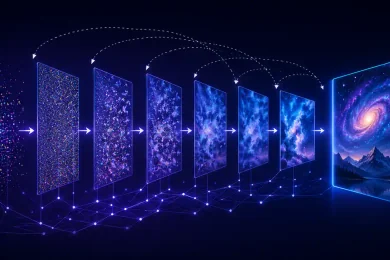
3. Diffusion-Based Video Generation While earlier models stitched together pre-recorded video frames (concatenative synthesis), modern avatar platforms use diffusion models (similar to the underlying architecture of Midjourney or Sora). They literally generate the pixels of the video frame-by-frame based on the audio waveform. This allows for infinite variations in body language and eliminates the repetitive "looping" animations that plagued older AI videos.
The Ethics and Regulations of AI UGC Ads
With great power comes great responsibility, and the regulatory landscape of 2026 reflects the profound impact of synthetic media. The Ethics of Artificial Intelligence is no longer an academic discussion; it is a matter of strict legal compliance.
As AI avatars became indistinguishable from real humans, consumer trust became a critical issue. If a consumer believes they are watching a genuine review from a real person, but they are actually watching a synthetic avatar generated by the brand, is that deceptive advertising?
The Federal Trade Commission (FTC) in the United States and the AI Act in the European Union have laid down clear mandates:
Clear and Conspicuous Disclosure: All advertisements featuring synthetic humans simulating real people must include a watermark or a clear text overlay stating "AI-Generated Content" or "Virtual Spokesperson." Platforms like HeyGen and Synthesia now offer automated, compliance-ready watermarks built directly into their export pipelines.
Consent and Likeness Rights: You cannot clone the likeness or voice of a real person without cryptographic proof of consent. Leading AI platforms have implemented stringent KYC (Know Your Customer) protocols. If you attempt to upload a photo of a celebrity to create an avatar, the system will block it unless you provide verified digital consent tokens.
Truth in Advertising: While an AI avatar can present a product, the claims made must still be scientifically and legally accurate. An AI avatar claiming a skincare cream cures acne is subject to the exact same regulatory scrutiny as a human actor making the same claim.
Forward-thinking brands are not hiding their use of AI. In fact, many are leaning into it, creating distinctive "Virtual Influencers" that become recognizable brand mascots. By owning the fact that their spokesperson is digital, brands build a new kind of modern transparency with their audience.
Moving Beyond SaaS: The Need for Custom AI Agent Development
While platforms like Synthesia, HeyGen, and Colossyan are incredible out-of-the-box tools, they are ultimately shared SaaS platforms. You are renting their compute, their models, and their avatars.
For mid-market and enterprise companies, relying entirely on third-party SaaS for core marketing assets presents scalability and intellectual property (IP) risks. What if the platform changes its pricing? What if you want an avatar that interacts securely with your proprietary customer database?
This is where the transition from off-the-shelf tools to custom infrastructure occurs. In 2026, leading brands are partnering with specialized technology firms to build bespoke, in-house AI generation pipelines.
By investing in specialized AI Agent Development, companies can create proprietary virtual spokespeople that live directly on their own servers. These custom agents can be integrated deeply with the company's CRM (Customer Relationship Management) system. Imagine a custom AI avatar that automatically generates and emails a personalized video to a customer exactly 30 days after they purchase a product, calling them by name and asking how they like the specific model they bought. This requires complex API routing, secure data handling, and custom LLM deployment that SaaS platforms alone cannot provide.
Conclusion: Embracing the Future of Marketing
The debate over whether AI avatars have a place in marketing is definitively over. In 2026, they are the undisputed champions of scalable, cost-effective, and highly personalized User-Generated Content advertising.
The best AI avatar solutions for UGC product ads—whether you leverage HeyGen's social-native aesthetic, Synthesia's enterprise power, Colossyan's dynamic scenarios, D-ID's real-time interactivity, or Hour One's cinematic polish—give modern marketers superpowers. They democratize high-quality video production, allowing a team of two people to output the volume and quality of content that previously required an entire creative agency.
However, the technology is only a tool. The brands that win will be those that combine these advanced generative AI models with deep psychological insights, rigorous A/B testing, and a commitment to ethical transparency.
As we look toward the remainder of the decade, the integration of AI in marketing will only deepen. From static ads to interactive avatars, the boundary between the digital brand and the physical consumer is disappearing. The time to build your AI content pipeline is now.
Future-Proof Your Business with Vegavid
The generative AI revolution is moving at lightning speed. While SaaS platforms offer a great starting point, true market dominance requires custom, scalable, and secure AI infrastructure built specifically for your brand's unique needs.
At Vegavid, we specialize in turning cutting-edge AI concepts into enterprise-grade realities. Whether you need custom generative models, autonomous AI agents, or a complete digital transformation of your marketing pipeline, our world-class engineering team is ready to build your competitive advantage.
Don't get left behind in the AI era. 👉 Explore Our Services
👉 Contact an Expert Today
Organizations that plan to hire prompt engineering specialists early often gain an advantage because well-designed prompts directly improve AI reliability, governance, and measurable business performance across production environments.
Frequently Asked Questions
The leading platforms in 2026 include HeyGen (best for social media aesthetics and phone-camera simulation), Synthesia (best for enterprise, security, and multi-avatar scenes), Colossyan (ideal for scenario-based and localized ads), D-ID (excellent for real-time interactive avatars), and Hour One (best for cinematic and template-driven video generation).
Yes. By late 2025 and into 2026, platforms like HeyGen introduced native 3D object tracking. Users can upload a 3D scan or high-resolution image of their product, and the AI avatar can realistically hold, manipulate, and point to the product during the generated video ad, mimicking authentic human interaction.
Yes, provided they adhere to transparency laws. In 2026, the FTC and European regulators mandate that synthetic media simulating real humans must include a clear disclosure. Most advertising platforms (Meta, TikTok, Google) require advertisers to check an "AI-generated" box during campaign setup to ensure automated watermarks or labels are applied.
Industry reports indicate that brands scaling video ad production with AI avatars reduce their overhead costs by 60% to 80%. This is achieved by eliminating actor day rates, studio rentals, physical equipment, shipping logistics, and the expensive costs associated with human reshoots and multi-language localization.
No, social media algorithms prioritize engagement, retention, and watch time regardless of how the content was created. If an AI avatar video uses a strong hook, native pacing, and compelling visual B-roll that keeps users watching, the algorithm will push the ad just as aggressively as human-created content.

Yash Singh is the Chief Marketing Officer at Vegavid Technology, a leading AI-driven technology company specializing in AI agents, Generative AI, Blockchain, and intelligent automation solutions. With over a decade of experience in digital transformation and emerging technologies, Yash has played a key role in helping businesses adopt advanced AI solutions that enhance operational efficiency, automate workflows, and deliver personalized customer experiences across industries including fintech, healthcare, gaming, ecommerce, and enterprise technology. An alumnus of Indian Institute of Technology Bombay, Yash combines strong technical expertise with strategic marketing leadership to drive innovation in AI-powered applications, autonomous AI agents, Retrieval-Augmented Generation (RAG), Natural Language Processing (NLP), Large Language Models (LLMs), machine learning systems, conversational AI, and enterprise automation platforms. His expertise spans AI model integration, intelligent workflow automation, prompt engineering, smart data processing, and scalable AI infrastructure development, enabling organizations to accelerate digital transformation and business growth. Passionate about the future of intelligent systems, Yash actively shares insights on AI agents, Generative AI, LLM-powered applications, blockchain ecosystems, and next-generation digital strategies. He is committed to helping businesses embrace AI-first transformation while guiding teams to build impactful, industry-specific solutions that shape the future of innovation and intelligent technology.





Leave a Reply