

What Is an Agent in Artificial Intelligence: Types, Functions, and Examples Explained
Introduction
Artificial Intelligence has introduced a wide range of concepts that define how machines interact with their environment and make decisions. One of the most fundamental and important concepts in AI is the idea of an agent. Agents serve as the building blocks of intelligent systems, enabling machines to perceive, decide, and act in a structured manner.
Understanding the concept of an Agent in Artificial Intelligence is essential for anyone exploring how AI systems operate. Whether it is a chatbot responding to user queries, a recommendation engine suggesting products, or a self-driving car navigating roads, all these systems rely on agents to function effectively.
As businesses increasingly adopt AI technologies, many evaluate whether to Hire AI Developers or collaborate with an AI Development Company to design intelligent agents tailored to their needs. This growing demand highlights the importance of understanding how AI agents work, their types, and their real-world applications.
Understanding the Concept of AI Agents
At its core, an AI agent is an entity that perceives its environment through sensors and acts upon that environment using actuators. The goal of an agent is to achieve specific objectives by making decisions based on available data.
To fully grasp what is agent in artificial intelligence, it is important to understand that agents are not limited to physical systems like robots. They can also exist as software programs that operate in digital environments.
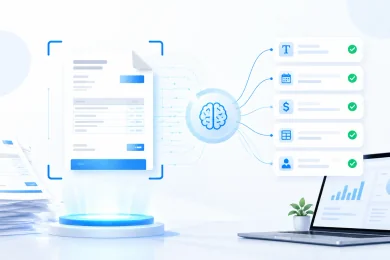
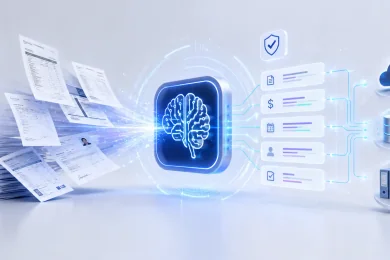
An agent follows a simple cycle: it observes the environment, processes the information, and takes action. This cycle continues as the agent learns and adapts over time.
The intelligent agent in AI explained concept emphasizes the ability of agents to make decisions autonomously. These agents use algorithms and data to optimize their actions and achieve desired outcomes.
Organizations like Vegavid play a key role in developing intelligent agent systems that enhance business operations and user experiences.
Key Characteristics of AI Agents
AI agents possess several characteristics that define their behavior and capabilities.
Autonomy
AI agents operate independently without constant human intervention. They make decisions based on predefined rules or learned patterns.
Reactivity
Agents respond to changes in their environment in real time. This allows them to adapt to dynamic conditions.
Proactiveness
Agents not only react but also take initiative to achieve their goals. They anticipate future scenarios and act accordingly.
Learning Ability
Many agents are capable of learning from data and improving their performance over time.
These characteristics enable AI agents to function effectively in complex environments and deliver intelligent outcomes.
Types of Agents in AI
Understanding the types of agents in AI is crucial for designing effective systems.
Simple Reflex Agents
These agents operate based on predefined rules and respond directly to specific inputs. They do not consider past experiences.
Model-Based Agents
Model-based agents maintain an internal representation of the environment. This allows them to make more informed decisions.
Goal-Based Agents
These agents act to achieve specific goals. They evaluate different actions and choose the one that leads to the desired outcome.
Utility-Based Agents
Utility-based agents consider multiple factors and choose actions that maximize overall satisfaction or utility.
Learning Agents
Learning agents improve their performance over time by analyzing data and experiences.
Each type of agent serves a specific purpose and is used in different applications.
Functions of AI Agents
The functions of AI agents define how they operate and interact with their environment.
Perception
Agents collect data from their environment using sensors or input mechanisms.
Decision-Making
Based on the data, agents analyze information and determine the best course of action.
Action Execution
Agents perform actions using actuators or output systems.
Learning and Adaptation
Agents continuously learn from their experiences to improve future performance.
These functions work together to enable intelligent behavior in AI system.
Architecture of AI Agents
The architecture of AI agents determines how they process information and make decisions.
Sensor Mechanism
Sensors collect data from the environment, providing input for the agent.
Processing Unit
The processing unit analyzes data and applies algorithms to make decisions.
Actuator Mechanism
Actuators execute actions based on decisions made by the agent.
Knowledge Base
The knowledge base stores information that helps the agent make informed decisions.
Developers often use tools like TensorFlow and PyTorch to build intelligent agent systems.
Real-World AI Agent Examples
AI agent examples can be found in various industries and applications.
Virtual Assistants
Assistants like Siri and Alexa act as agents that interact with users and perform tasks.
Recommendation Systems
Platforms like Netflix and Amazon use agents to suggest content and products.
Autonomous Vehicles
Self-driving cars use agents to navigate and make decisions in real time.
Chatbots
Customer service chatbots act as agents that respond to user queries.
These examples demonstrate how AI agents are integrated into everyday technologies.
Role of AI Agents in Business
AI agents play a significant role in modern business operations.
Automation
Agents automate repetitive tasks, improving efficiency and reducing costs.
Customer Support
Chatbots and virtual assistants enhance customer service experiences.
Data Analysis
Agents analyze data to provide insights and support decision-making.
Personalization
AI agents deliver personalized experiences to customers.
Businesses often choose to Hire AI Developers to build custom agent solutions that align with their goals.
Advantages of AI Agents
AI agents offer numerous benefits that make them valuable for businesses.
Increased Efficiency
AI agents perform tasks faster and more accurately than humans, reducing delays and minimizing operational errors. This leads to improved productivity and consistent performance across workflows.
Cost Savings
Automation through AI agents reduces operational costs by minimizing manual effort and resource usage. It also allows businesses to allocate resources more effectively toward strategic initiatives.
Scalability
AI systems can handle large volumes of data and tasks without compromising performance or accuracy. This makes them ideal for businesses looking to scale operations efficiently.
Improved Decision-Making
AI agents provide data-driven insights that help businesses make informed and strategic decisions. These insights reduce risks and enhance overall business performance.
Companies like Vegavid help organizations leverage these advantages effectively by delivering tailored AI-driven solutions.
Challenges of AI Agents
Despite their benefits, AI agents face several challenges.
Data Dependency
AI agents require large amounts of high-quality data to function effectively and deliver accurate results. Insufficient or poor data can lead to unreliable outputs and reduced performance.
Complexity
Developing intelligent agents involves advanced algorithms, infrastructure, and technical expertise. This complexity often requires skilled professionals and significant investment.
Ethical Concerns
AI systems raise concerns related to privacy, bias, and transparency in decision-making. Businesses must ensure ethical practices to maintain trust and compliance.
Maintenance
AI systems require regular updates, monitoring, and optimization to maintain performance. Continuous maintenance ensures reliability and long-term effectiveness of AI solutions.
Understanding these challenges helps businesses implement AI solutions responsibly.
Future Trends in AI Agents
The future of AI agents is evolving rapidly with continuous advancements in technology and data capabilities, making them smarter, more adaptive, and increasingly efficient across industries. These developments are enabling businesses to automate complex workflows while improving decision-making accuracy.
Increased Autonomy
AI agents will become more independent, reducing the need for constant human supervision while efficiently handling complex and dynamic tasks. Their ability to operate autonomously will significantly enhance productivity and operational efficiency.
Improved Learning
Advancements in Machine Learning will allow AI agents to learn faster from large datasets and continuously improve their performance over time. This will enable them to adapt quickly to new environments and deliver more accurate outcomes.
Human-AI Collaboration
AI agents will increasingly collaborate with humans to enhance productivity by combining human intuition with machine intelligence. This partnership will lead to better decision-making and more efficient workflows across industries.
Integration with Emerging Technologies
AI agents will integrate with technologies like IoT and blockchain to create smarter, interconnected ecosystems. This integration will improve security, automation, and real-time data processing capabilities.
These trends indicate a strong and promising future for AI agents as they continue to transform industries and business operations.
How Businesses Can Leverage AI Agents
Businesses can use AI agents to improve operations, enhance decision-making, and gain a competitive advantage in an increasingly digital landscape. These intelligent systems enable organizations to optimize processes and deliver better customer experiences.
Process Optimization
AI agents streamline workflows by automating repetitive and time-consuming tasks, leading to increased efficiency and reduced operational costs. This allows businesses to focus on strategic activities and innovation.
Customer Engagement
AI agents enhance customer interactions by providing personalized and real-time responses, improving overall user experience and satisfaction. This helps businesses build stronger relationships and increase customer retention.
Data-Driven Strategies
AI agents analyze large volumes of data to generate actionable insights that support informed decision-making. These insights enable businesses to optimize strategies and improve performance outcomes.
Innovation
AI agents enable businesses to develop new products, services, and business models by identifying opportunities and accelerating development processes. This fosters continuous innovation and long-term growth.
Organizations often collaborate with an AI Development Company to implement these solutions effectively.
Conclusion
AI agents are a fundamental component of Artificial Intelligence, enabling systems to perceive, decide, and act intelligently. From simple reflex agents to advanced learning agents, these systems play a crucial role in modern technology.
Understanding the concept of an Agent in Artificial Intelligence provides valuable insights into how AI systems operate and how they can be applied in real-world scenarios. As businesses continue to adopt AI, the importance of intelligent agents will only grow.
Whether you choose to Hire AI Developers or partner with an AI Development Company, implementing AI agents can transform your operations and drive innovation.
Are you ready to explore how AI agents can revolutionize your business?
Empower your workforce with autonomous AI agents that handle complex workflows and data analysis with ease. Deploy intelligent solutions with our AI Agent Development Company today.
FAQs
An agent in Artificial Intelligence is an entity that perceives its environment through inputs and takes actions to achieve specific goals. It can be a software program or a physical system like a robot, designed to make decisions and act intelligently based on data and predefined rules.
The types of agents in AI include simple reflex agents, model-based agents, goal-based agents, utility-based agents, and learning agents. Each type differs in how it processes information and makes decisions, depending on the complexity of the environment and the task.
AI agents work by continuously following a cycle of perception, decision-making, and action. They collect data from their environment, process it using algorithms, and then execute actions that help achieve their objectives while improving over time.
AI agent examples include virtual assistants like Siri and Alexa, recommendation systems on platforms like Netflix, chatbots for customer support, and autonomous vehicles. These systems demonstrate how AI agents operate in both digital and physical environments.
The functions of AI agents include perception, decision-making, action execution, and learning. These functions allow agents to analyze data, make informed decisions, and continuously improve their performance based on experience.

Yash Singh is the Chief Marketing Officer at Vegavid Technology, a leading AI-driven technology company specializing in AI agents, Generative AI, Blockchain, and intelligent automation solutions. With over a decade of experience in digital transformation and emerging technologies, Yash has played a key role in helping businesses adopt advanced AI solutions that enhance operational efficiency, automate workflows, and deliver personalized customer experiences across industries including fintech, healthcare, gaming, ecommerce, and enterprise technology. An alumnus of Indian Institute of Technology Bombay, Yash combines strong technical expertise with strategic marketing leadership to drive innovation in AI-powered applications, autonomous AI agents, Retrieval-Augmented Generation (RAG), Natural Language Processing (NLP), Large Language Models (LLMs), machine learning systems, conversational AI, and enterprise automation platforms. His expertise spans AI model integration, intelligent workflow automation, prompt engineering, smart data processing, and scalable AI infrastructure development, enabling organizations to accelerate digital transformation and business growth. Passionate about the future of intelligent systems, Yash actively shares insights on AI agents, Generative AI, LLM-powered applications, blockchain ecosystems, and next-generation digital strategies. He is committed to helping businesses embrace AI-first transformation while guiding teams to build impactful, industry-specific solutions that shape the future of innovation and intelligent technology.






Leave a Reply