

Agentic AI in Autonomous Workflow Execution: A Complete Guide
The era of rule-based automation is giving way to a more intelligent, adaptable, and self-governing paradigm. In 2026, the artificial intelligence landscape has evolved drastically from the conversational chatbots of the early 2020s. Today, one of the most significant enterprise transformations is the integration of Agentic AI in autonomous workflow execution.
While traditional AI models required human prompts to generate a single output, Agentic AI systems are designed to operate independently. They can understand high-level objectives, break them down into actionable steps, utilize external software tools, and iteratively solve problems without constant human intervention. As enterprises accelerate this shift, many are partnering with an Agentic AI development company to design, deploy, and manage autonomous AI agents that integrate seamlessly with enterprise applications while ensuring scalability, security, and governance. This leap from "generative" to "agentic" is fundamentally rewriting the playbook for digital transformation.
For Chief Information Officers (CIOs), operations managers, and automation engineers, understanding how to harness these AI agents is no longer an experimental luxury—it is a critical requirement for maintaining a competitive edge. This comprehensive guide explores the architecture, strategic value, implementation best practices, real-world applications, and future trajectory of Agentic AI in automating complex enterprise workflows.
What is Agentic AI in Autonomous Workflow Execution?
Agentic AI in autonomous workflow execution refers to the use of goal-oriented artificial intelligence systems—known as AI agents—that can autonomously plan, reason, make decisions, and execute multi-step business processes. Unlike standard automation that follows rigid, pre-programmed rules, agentic workflows adapt to dynamic environments, independently interact with APIs, databases, and third-party software, and self-correct errors to achieve a specified outcome with minimal human oversight.
Why Agentic AI Is Transforming Enterprise Workflows
The strategic importance of Agentic AI cannot be overstated. As businesses scale, process complexity grows exponentially. Traditional Robotic Process Automation (RPA) requires highly structured environments; if a single variable changes, the bot breaks. Agentic AI solves this fragility.
Bridging the Gap Between Intent and Execution
Historically, humans had to translate business intent into rigid code. Agentic AI understands the intent directly. If a manager requests, "Audit last quarter's software licenses and flag redundancies," an agentic system will autonomously log into the ERP, cross-reference HR databases, compile the data, analyze usage metrics, and present a finalized report.
Exponential Scalability
By empowering AI to manage complex sequences, organizations can scale operations without a proportional increase in human headcount. This is especially vital in data-heavy environments where human cognitive load is easily overwhelmed.
Transition to Intelligent Operations
We are witnessing a shift toward autonomous, AI-driven enterprise operations where software no longer simply supports employees—it actively performs complex business tasks. By leveraging AI agent development services, organizations can build intelligent AI agents that reason, plan, collaborate, and execute workflows across enterprise systems with minimal human intervention. These autonomous agents transform traditional business applications into proactive decision-making engines, enabling continuous optimization, faster execution, and unprecedented levels of operational efficiency, scalability, and innovation.
How Agentic AI Powers Autonomous Workflow Execution
To understand how Agentic AI drives autonomous workflow execution, we must look under the hood at its technical architecture. Modern AI agents operate on a continuous loop of perception, reasoning, action, and reflection.
Step 1: Perception and Contextualization
The workflow begins with a natural language objective. The core Large Language Models (LLM)—acting as the agent’s "brain"—parses this request. Using advanced techniques like Retrieval-Augmented Generation (RAG) and long-term vector memory, the agent contextualizes the request against the company’s internal data, historical precedents, and operational guidelines.
Step 2: Planning and Reasoning (ReAct)
Before taking action, the agentic system generates a dynamic blueprint. Using Agentic AI frameworks like Reason and Act (ReAct), the AI breaks the overarching goal into sequential, manageable sub-tasks. For example, if the goal is to resolve a customer's billing dispute, the plan might look like:
Fetch customer transaction history.
Verify policy parameters.
Calculate refund eligibility.
Issue API call to payment gateway.
Step 3: Tool Use and Execution
This is where agentic workflows diverge from standard conversational AI. Agents are equipped with "tools"—scripts that allow them to make API calls, run SQL queries, execute code, or browse the web. If you want to understand the foundational algorithms powering this capability, a deeper look at Machine Learning can provide context on how these models are trained to interact with distinct digital environments.
Step 4: Feedback and Self-Correction
Crucially, Agentic AI features a feedback loop. If an API call fails because of an expired token, traditional RPA would crash. An AI agent, however, receives the error message, reasons about the cause, searches for a way to refresh the token, and re-attempts the action automatically.
Key Features of Agentic AI for Workflow Automation
Agentic AI systems possess several defining characteristics that separate them from legacy automation tools:
Dynamic Planning: The ability to decompose complex goals into granular, logical steps on the fly.
Tool Utilization: Seamless integration with external APIs, enterprise software (CRMs, ERPs), and command-line interfaces.
Contextual Memory: Utilization of short-term memory (for the current task) and long-term memory (vector databases) to recall past interactions and standard operating procedures.
Multi-Agent Orchestration: Complex workflows often involve specialized "worker" agents managed by a "manager" agent, operating similarly to a human organizational chart.
Self-Reflection and Error Correction: The capacity to evaluate the outcome of an action, recognize hallucinations or errors, and try an alternative approach.
Semantic Understanding: Capability to process unstructured data (emails, PDFs, images) and convert it into structured, actionable insights.
Benefits of Autonomous Workflow Execution with Agentic AI
Deploying Agentic AI in autonomous workflow execution delivers massive return on investment (ROI) across multiple enterprise vectors:
1. Unmatched Operational Resilience
Because AI agents can adapt to changes in UI, API structures, or data formats, businesses spend significantly less time and money maintaining broken automation scripts. This durability translates to higher uptime for critical workflows.
2. Radical Cost Efficiency
By automating complex, multi-layered tasks rather than just simple, repetitive ones, enterprises can drastically reduce overhead. It optimizes resource allocation by freeing up human workers to focus on high-level strategy, relationship management, and creative problem-solving.
3. Hyper-Personalization at Scale
In customer-facing workflows, AI agents can dynamically tailor their actions based on massive datasets in real-time, delivering bespoke solutions to clients without human bottlenecks.
4. 24/7 Continuous Execution
Unlike human employees, AI agents operate relentlessly across time zones. Complex data migrations, financial reconciliations, and system audits can be executed overnight, ensuring immediate readiness for the start of the human workday.
5. Accelerated Decision-Making
By synthesizing data, consulting regulatory frameworks, and executing preliminary actions instantly, Agentic AI compresses the time from problem identification to resolution from days down to minutes.
Real-World Use Cases of Agentic AI
The versatility of Agentic AI makes it applicable across virtually every industry. Here are the most prominent use cases in 2026:
Financial Services & Auditing
In the financial sector, agentic workflows are used for real-time fraud detection, automated tax reconciliation, and continuous auditing. Agents can autonomously pull ledger data, cross-reference it against transaction receipts, and highlight anomalies. Organizations are increasingly relying on AI Agents for Finance to execute complex quantitative analysis and portfolio rebalancing autonomously.
Intelligent Robotic Process Automation (RPA)
Traditional RPA is being upgraded. Legacy bots that required strict structured data are being replaced by AI Agents for Intelligent RPA. These agents can read unstructured emails from vendors, extract invoice details, verify them against purchase orders, and input the data into SAP or Oracle systems—handling exceptions on their own.
Compliance and Risk Management
Regulatory landscapes change rapidly. AI agents continuously monitor global regulatory databases and company operations. When a new compliance rule is enacted, the agent can autonomously audit internal processes, flag non-compliant workflows, and draft remediation plans. Explore more on how enterprises use AI Agents for Compliance to minimize legal risks.
IT Operations & DevOps
Agentic workflows are heavily utilized in software development, DevOps, and IT infrastructure management. Autonomous AI agents can continuously monitor server health, detect anomalies, diagnose the root cause of network outages, generate and test patch scripts in secure sandbox environments, and deploy validated fixes to production with minimal human intervention. In DevOps environments, AI agents also automate CI/CD pipelines, optimize cloud resource allocation, monitor application performance, coordinate container orchestration, manage infrastructure as code (IaC), and proactively resolve deployment issues. This enables organizations to accelerate software releases, improve system reliability, reduce operational downtime, and maintain highly resilient, self-healing IT environments.
Examples of Agentic AI in Action
Let’s look at specific, practical scenarios of Agentic AI in autonomous workflow execution:
Scenario A: Automated Employee Onboarding
The Trigger: HR approves a new hire in the ATS (Applicant Tracking System).
The Agentic Workflow: An orchestration agent receives the alert. It assigns a sub-agent to provision IT accounts (email, Slack, CRM access). Another sub-agent reads the employee's role and curates a customized training schedule. A third agent drafts and sends a welcome email to the employee and schedules an intro meeting with their manager. If the IT software provisioning API times out, the agent waits, retries, and notifies HR only if the secondary attempt fails.
Scenario B: Supply Chain Disruption Management
The Trigger: A severe weather event delays a major shipment of manufacturing components.
The Agentic Workflow: The logistics agent detects the delay via news feeds and shipping APIs. It autonomously calculates the impact on the production line. It then searches the supplier database for alternative vendors, requests automated quotes, selects the optimal alternative based on pre-set budget constraints, and drafts a purchase order for a human manager’s one-click approval.
Scenario C: B2B Lead Generation and Outreach
The Trigger: Marketing sets a goal to target SaaS companies in the healthcare sector.
The Agentic Workflow: Utilizing AI Agents for Business, the system scours LinkedIn and industry databases to build a lead list. It researches each company's recent news to craft highly personalized emails. It sends the emails, reads the replies, categorizes the sentiment, and autonomously schedules calendar appointments for human sales reps when a lead shows positive intent.
Comparison: Agentic AI vs. Traditional RPA vs. Generative AI
To fully grasp the paradigm shift, it is essential to compare Agentic AI with preceding technologies.
Feature / Capability | Traditional RPA (Pre-2023) | Generative AI (2023-2024) | Agentic AI (2026) |
|---|---|---|---|
Primary Function | Follows strict rule-based scripts (If/Then). | Generates text, code, or images based on prompts. | Autonomously plans and executes multi-step workflows. |
Adaptability | None. Breaks if UI or data structure changes. | High for text, but requires manual human prompting. | Extremely high. Self-corrects and adapts to errors. |
Tool Usage | Hardcoded API integrations only. | None or limited to basic web search. | Native integration with APIs, databases, and software. |
Data Handling | Structured data only (CSV, rigid databases). | Unstructured data (text, images). | Seamlessly bridges unstructured and structured data. |
Human Intervention | Requires developer to fix breaks. | Requires human to prompt and validate output. | Operates autonomously; human involved only for final approvals. |
Challenges and Limitations of Agentic AI
Despite the incredible advancements in 2026, deploying Agentic AI in autonomous workflow execution is not without its hurdles.
Hallucinations in Execution
While LLMs have become highly accurate, the risk of "hallucinations"—where the AI invents facts or logic—remains. In a purely conversational AI, a hallucination is just bad text. In an agentic workflow, a hallucinated API call or a fabricated financial figure can trigger disastrous automated actions.
Security and Access Control
To be effective, AI agents require extensive permissions to read databases, write code, and send emails. Giving autonomous systems "write" access poses significant cybersecurity risks. Enterprises must implement strict Role-Based Access Control (RBAC), "human-in-the-loop" approval gates for high-stakes actions, and rigorous audit trails.
Infrastructure Costs
Running continuous, loop-based AI agents consumes substantial computational power. Executing a 50-step autonomous workflow requires dozens of API calls to powerful LLMs, which can lead to high token costs. Enterprises must balance the ROI of automation against the compute expenses.
Integration with Legacy Systems
While modern SaaS applications have robust APIs designed for AI integration, many massive enterprises still rely on legacy on-premise mainframes. Creating secure, reliable bridges between cutting-edge AI agents and 20-year-old software architecture remains a technical bottleneck.
Best Practices for Implementing Agentic AI in Autonomous Workflow Execution
Successfully implementing Agentic AI requires more than deploying autonomous AI agents. Organizations should establish a strong technical foundation, governance framework, and integration strategy to ensure AI-driven workflows remain secure, scalable, and aligned with business objectives.
Start with High-Value Workflows: Begin by automating complex, repetitive processes such as customer support, financial operations, IT incident management, or supply chain coordination where Agentic AI can deliver immediate business value.
Build an API-First Architecture: Ensure enterprise applications, databases, and cloud platforms expose secure APIs so AI agents can seamlessly interact with business systems and execute workflows autonomously.
Maintain Human-in-the-Loop (HITL): Reserve human approvals for high-risk decisions involving finance, legal, compliance, or customer-sensitive actions while allowing AI agents to independently manage routine operational tasks.
Implement Robust AI Governance: Establish role-based access controls, audit trails, policy enforcement, and continuous monitoring to ensure responsible AI usage and regulatory compliance.
Continuously Optimize AI Agents: Regularly evaluate workflow performance, retrain models using operational feedback, and refine orchestration strategies to improve decision-making and execution accuracy over time.
By combining intelligent automation with strong governance and continuous optimization, organizations can maximize the long-term value of autonomous workflow execution while minimizing operational risks.
Measuring the Success of Autonomous Workflow Execution
After deploying Agentic AI, organizations should monitor measurable performance indicators to evaluate business impact and continuously improve workflow execution. Well-defined metrics help ensure AI agents remain reliable, efficient, and aligned with enterprise objectives.
Workflow Completion Rate: Measure the percentage of workflows completed successfully without requiring manual intervention.
Execution Time: Compare how quickly autonomous AI agents complete business processes compared to manual operations or traditional automation.
Decision Accuracy: Evaluate the quality and consistency of AI-generated decisions across different workflow scenarios.
Exception Resolution Rate: Monitor how effectively AI agents detect, diagnose, and resolve workflow disruptions without human assistance.
Operational Cost Savings: Track reductions in labor costs, administrative effort, infrastructure expenses, and operational overhead resulting from AI-driven automation.
Employee Productivity: Assess how much time employees save by delegating repetitive and cognitive tasks to autonomous AI agents.
Compliance and Security Performance: Review audit logs, policy adherence, access controls, and governance metrics to ensure secure and compliant AI operations.
Return on Investment (ROI): Compare implementation costs with productivity gains, revenue improvements, customer satisfaction, and long-term operational efficiency.
Regularly measuring these KPIs enables organizations to refine AI workflow automation, improve automation performance, and maximize the business value of Agentic AI investments.
Preparing Your Enterprise for Autonomous AI Workflows
Adopting Agentic AI is not only a technology initiative but also an organizational transformation. Enterprises should prepare their infrastructure, workforce, and governance models to support intelligent autonomous operations at scale.
Modernize Enterprise Infrastructure: Upgrade legacy systems with secure API connectivity to enable seamless interaction between AI agents and enterprise applications.
Strengthen Data Quality: Ensure AI agents have access to accurate, consistent, and real-time enterprise data to improve decision-making and workflow execution.
Train Teams to Collaborate with AI: Equip employees with the skills to supervise AI agents, manage exceptions, and focus on strategic, high-value work rather than repetitive operational tasks.
Develop Responsible AI Policies: Define clear standards for transparency, accountability, privacy, security, and ethical AI usage throughout the organization.
Launch Pilot Deployments: Start with a limited autonomous workflow, measure business outcomes, gather feedback, and gradually expand AI adoption across additional departments.
Plan for Continuous Evolution: Treat Agentic AI as a continuously improving capability by updating models, integrating new data sources, and refining workflows as business requirements evolve.
Future Trends in Agentic AI
As we navigate 2026, the trajectory of Agentic AI points toward even more profound transformations in how work is accomplished.
The Rise of Multi-Agent Swarms
We are moving beyond single, monolithic agents. The future lies in "Multi-Agent System" (MAS) or agent swarms. Similar to a corporate hierarchy, a "CEO agent" will delegate tasks to a "marketing agent," an "accounting agent," and an "IT agent." These agents will communicate with each other, debate solutions, and collaborate to execute complex, company-wide workflows seamlessly.
Cross-Platform Standardization
Currently, agentic tools vary by vendor. We will see the emergence of standardized protocols for agent-to-agent communication, allowing an AI agent built by Microsoft to securely negotiate a contract with an AI agent built by Salesforce.
Towards Artificial General Intelligence (AGI)
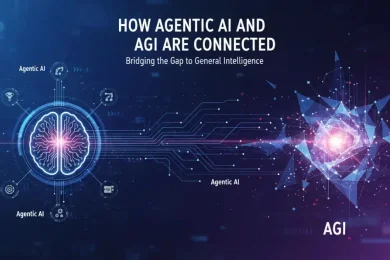
Agentic workflows are the foundational stepping stones toward AGI. As agents improve their reasoning, enhance their long-term memory, and expand their ability to act across digital and physical domains (via robotics), the line between specialized automation and generalized intelligence will blur. To keep up with these cutting-edge innovations, leading organizations partner with top-tier AI Development Companies to prototype and deploy next-generation architectures.
Conclusion
The integration of Agentic AI in autonomous workflow execution represents one of the most significant productivity advancements of the decade. By evolving from passive generative AI models to proactive, goal-driven autonomous agents, organizations can eliminate operational bottlenecks, reduce costs, and achieve new levels of scalability and business agility. Unlike traditional Robotic Process Automation (RPA), which relies on rigid rules and often fails when workflows change, Agentic AI continuously reasons through problems, adapts to dynamic environments, and autonomously identifies the most effective path to complete complex tasks. Although implementing enterprise-grade AI infrastructure requires investment, the long-term return is substantial, as autonomous AI agents automate sophisticated cognitive workflows that improve efficiency and productivity across departments.
Successful adoption also depends on robust AI governance, including secure access controls, comprehensive monitoring, sandbox testing, and Human-in-the-Loop (HITL) oversight for high-risk decisions. Looking ahead, enterprises will increasingly rely on collaborative Multi-Agent Systems (MAS), where specialized AI agents work together to execute business processes intelligently and continuously. Organizations that embrace Agentic AI today are not simply modernizing their software—they are fundamentally expanding their operational capacity, enabling faster innovation, greater resilience, and a sustainable competitive advantage in an increasingly autonomous digital economy.
Ready to transform your business?
FAQs
Agentic AI uses autonomous AI agents to plan, execute, monitor, and optimize complex business workflows with minimal human intervention.
It automates multi-step processes, adapts to changing conditions, integrates with enterprise systems, and self-corrects workflow errors in real time.
Finance, healthcare, manufacturing, retail, logistics, IT operations, customer support, and enterprise software organizations benefit significantly from Agentic AI.
Traditional RPA follows predefined rules, while Agentic AI reasons, plans, adapts, and autonomously executes dynamic workflows across multiple systems.
Yes. With proper governance, security, and AI oversight, Agentic AI helps enterprises achieve scalable automation, improved productivity, and intelligent decision-making.
Tags

Yash Singh is the Chief Marketing Officer at Vegavid Technology, a leading AI-driven technology company specializing in AI agents, Generative AI, Blockchain, and intelligent automation solutions. With over a decade of experience in digital transformation and emerging technologies, Yash has played a key role in helping businesses adopt advanced AI solutions that enhance operational efficiency, automate workflows, and deliver personalized customer experiences across industries including fintech, healthcare, gaming, ecommerce, and enterprise technology. An alumnus of Indian Institute of Technology Bombay, Yash combines strong technical expertise with strategic marketing leadership to drive innovation in AI-powered applications, autonomous AI agents, Retrieval-Augmented Generation (RAG), Natural Language Processing (NLP), Large Language Models (LLMs), machine learning systems, conversational AI, and enterprise automation platforms. His expertise spans AI model integration, intelligent workflow automation, prompt engineering, smart data processing, and scalable AI infrastructure development, enabling organizations to accelerate digital transformation and business growth. Passionate about the future of intelligent systems, Yash actively shares insights on AI agents, Generative AI, LLM-powered applications, blockchain ecosystems, and next-generation digital strategies. He is committed to helping businesses embrace AI-first transformation while guiding teams to build impactful, industry-specific solutions that shape the future of innovation and intelligent technology.







Leave a Reply