

Difference Between Fine-Tuning and Retrieval-Augmented Generation (RAG)
The era of generic Large Language Models (LLMs) is behind us. As organizations mature in their AI capabilities, the mandate has shifted from simply experimenting with ChatGPT to deploying highly specialized, secure, and context-aware AI systems. However, base models lack your company’s proprietary data, internal guidelines, and specific industry context.
To bridge this gap, AI engineers and business leaders face a critical architectural fork in the road: Should you train the model on your data, or should you give the model the ability to search your data?
This brings us to the most debated topic in modern enterprise AI: the Difference Between Fine-Tuning and Retrieval-Augmented Generation (RAG). Choosing the wrong path can lead to exorbitant compute costs, rampant AI hallucinations, and compromised data security. In this comprehensive guide, we will dissect the fundamental mechanics, advantages, and ideal deployment scenarios for both methodologies, empowering you to build AI systems that are both intelligent and reliable.
What is the Difference Between Fine-Tuning and Retrieval-Augmented Generation (RAG)?
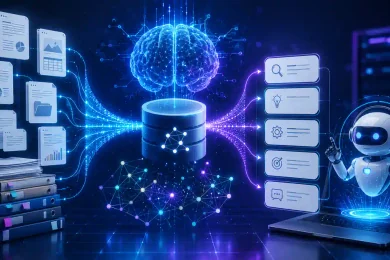
The primary difference lies in how they integrate knowledge into an LLM. Fine-tuning permanently alters the internal neural weights of a model by training it on a specific, curated dataset, effectively changing the model's behavior, tone, and intrinsic knowledge. Conversely, Retrieval-Augmented Generation (RAG) leaves the model's weights completely untouched. Instead, it connects the LLM to an external database (like a vector database), retrieving relevant, real-time information and feeding it into the model's prompt to generate a factually grounded response.
In simple terms:
Fine-tuning is like sending an employee to medical school to fundamentally learn a new profession.
RAG is like giving an employee an open-book exam and a highly organized filing cabinet to look up the exact answers they need on the fly.
Why It Matters
Understanding the difference between these two paradigms is not just a technical exercise; it is a foundational business strategy. As enterprises integrate generative AI into their core operations, the stakes are high.
Cost and Resource Allocation: Training a model (even with Parameter-Efficient Fine-Tuning) requires specialized hardware, deep technical expertise, and extensive data preparation. RAG bypasses heavy training costs, relying instead on sophisticated data pipelines and storage solutions.
Mitigating Hallucinations: A base model will confidently invent facts if it doesn't know the answer. RAG strictly anchors the AI to ground truth documents, which is essential for compliance-heavy sectors.
Data Privacy and Access Control: With fine-tuning, knowledge is baked into the model. If a user queries the model, it is nearly impossible to restrict access to specific facts based on user permissions. RAG allows for document-level access control, ensuring users only retrieve information they are authorized to see.
Information Currency: In fast-moving industries, data changes daily. Re-fine-tuning a model every day is impractical. RAG allows for real-time knowledge updates simply by adding or deleting files in a database. Developing a robust LLM Policy around these updates is crucial for enterprise governance.
How It Works
To truly grasp the difference between Fine-Tuning and Retrieval-Augmented Generation (RAG), we must look under the hood at their respective architectures.
The Fine-Tuning Process
Fine-tuning adjusts a pre-trained base model to perform a specific task or adopt a specific persona.
Data Collection: You gather thousands of high-quality input-output pairs (e.g., specific customer support queries and their ideal resolutions).
Training Loop: The model processes this data, calculating the difference between its current output and the desired output.
Weight Updating: Using techniques like LoRA (Low-Rank Adaptation) or QLoRA, the model mathematically updates its internal parameters (weights and biases) to minimize errors.
Result: A new, specialized version of the model that intrinsically "knows" how to speak or act in a certain way without needing external instructions.
The RAG Process
RAG operates entirely at the inference (query) stage, combining database search with natural language generation. Often, companies utilize AI Agents for Data Engineering to build and maintain these pipelines.
Embedding and Indexing: Your enterprise documents (PDFs, wikis, databases) are broken down into smaller "chunks." These chunks are converted into mathematical vectors (embeddings) and stored in a Vector Database.
Query Retrieval: When a user asks a question, the system converts the query into a vector and performs a "semantic search" to find the most relevant document chunks.
Prompt Augmentation: The retrieved data is injected into the LLM’s system prompt alongside the user's original question. (This is where you might decide to Hire Prompt Engineers to optimize the system instructions).
Generation: The LLM reads the retrieved context and synthesizes a coherent, highly accurate answer based only on the provided data.
Key Features
Here is a scannable breakdown of the core features of each approach:
Fine-Tuning Features
Behavior Modification: Excellent at teaching the model new formats (e.g., outputting strict JSON, writing in a specific coding language).
Tone and Persona Customization: Can perfectly mimic a brand's unique voice.
Static Knowledge: The model’s knowledge is frozen at the exact moment the training process concludes.
Shorter Prompts: Because the model intrinsically knows what to do, you save tokens on lengthy system prompts.
RAG Features
Dynamic Knowledge Base: Information can be updated, modified, or deleted in real-time without retraining.
Source Citations: RAG can point exactly to the paragraph and document where it sourced its answer, ensuring auditability.
Factual Grounding: Drastically reduces hallucinations by forcing the model to rely on external context rather than internal memory.
Modular Architecture: You can swap out the underlying LLM at any time without losing your specialized knowledge base.
Benefits
Both methodologies offer profound return on investment (ROI) when applied to the correct business problem.
Benefits of Fine-Tuning: Fine-tuning shines when the style of the output matters more than the facts of the output. By teaching a model the syntax of a proprietary coding language or the specific phrasing required in medical diagnoses, companies reduce latency and token costs. Fine-tuned models respond faster because they don't have to wait for an external database search to complete.
Benefits of RAG: RAG is the undisputed champion for enterprise knowledge management. The immediate benefit is zero retraining costs for new data. If an HR policy changes today, the RAG system knows about it instantly once the new document is uploaded. Furthermore, RAG naturally supports enterprise security protocols. You can design systems where the vector database checks the user's Active Directory permissions before retrieving a document, guaranteeing that sensitive financial data is never leaked to unauthorized personnel.
Use Cases
Applying the right technology to the right problem dictates the success of your AI implementation.
Ideal Use Cases for Fine-Tuning
Brand Voice Optimization: Marketing tools that generate copy matching a highly specific corporate tone.
Domain-Specific Syntax: Training a model to write code in a legacy programming language or proprietary framework.
Format Adherence: Ensuring a model always outputs responses in strict XML, JSON, or SQL formats for downstream software automation.
Ideal Use Cases for RAG
Intelligent Customer Support: Bots that can instantly search thousands of product manuals to troubleshoot user issues. An advanced Ai Chatbot Solution Will Revolutionize Customer Service by leveraging RAG to provide exact, verified answers.
Enterprise Search: Internal tools for employees to query company wikis, Jira tickets, and Slack histories.
Regulatory Compliance: AI assistants in finance or law that must cite specific clauses in compliance frameworks. For instance, AI Agents for Legal heavily rely on RAG to parse complex case law.
Examples in Action
Let’s look at realistic, real-world examples to highlight the difference.
Example 1: The Healthcare Software Provider (Fine-Tuning) A company specializing in Healthcare Software Development in Germany wants an AI to help doctors write patient discharge summaries. The facts (patient name, diagnosis) are provided in the prompt, but the style of the summary must adhere to strict, complex clinical guidelines. By fine-tuning the model on thousands of past summaries, the AI learns the exact phrasing, structure, and medical terminology required, producing highly professional medical documents instantly.
Example 2: The Corporate HR Department (RAG) A multinational corporation wants an AI to answer employee questions about benefits, leave policies, and IT protocols. Because these policies vary by region and change frequently, fine-tuning is impossible. Instead, they use RAG. When an employee asks, "What is the maternity leave policy?", the system searches the database, retrieves the policy specific to the employee's country, and generates a precise answer with a link to the original HR document. This is a classic deployment of AI Agents for Human Resources.
Comparison: Fine-Tuning vs RAG
To simplify the decision-making process, here is a structured comparison:
Feature | Fine-Tuning | Retrieval-Augmented Generation (RAG) |
|---|---|---|
Primary Purpose | Altering model behavior, tone, and format. | Expanding knowledge, factual grounding. |
Knowledge Updates | Static. Requires complete retraining to update. | Dynamic. Instant updates by modifying the database. |
Hallucination Risk | High. The model may blend facts seamlessly. | Low. The model relies strictly on retrieved context. |
Compute Cost | High (Requires GPU instances for training). | Low to Medium (Relies on database storage & querying). |
Access Control | None. Knowledge is baked into the model. | High. Document-level permissions can be applied. |
Source Citation | Impossible. | Native feature (can link to exact source documents). |
Challenges & Limitations
While both technologies are transformative, neither is a silver bullet.
Challenges of Fine-Tuning: The most significant hurdle in fine-tuning is "catastrophic forgetting." When you train a model heavily on new, narrow data, it can suddenly forget general knowledge or lose its foundational reasoning capabilities. Furthermore, data preparation is incredibly labor-intensive. Curating thousands of perfect training examples requires immense human capital. Lastly, once trained, the model's knowledge degrades as the world moves forward, creating a constant maintenance burden.
Challenges of RAG: RAG introduces complex infrastructure. You are no longer just managing an LLM; you must Choose Right Digital Asset Management System to organize unstructured data, manage vector databases, and configure data pipelines. Retrieval latency is also a challenge; semantic searches take milliseconds, but when combined with the LLM's generation time, it can cause lag in real-time applications. Finally, the AI's answer is only as good as the retrieved chunk. If the document chunking strategy is poor (e.g., cutting a sentence in half), the model will fail to answer correctly.
Future Trends (Looking from 2026)
As we navigate 2026, the binary choice between Fine-Tuning and RAG has evolved into synergistic architectures.
RAFT (Retrieval-Augmented Fine-Tuning): Enterprises no longer choose just one. Models are now routinely fine-tuned specifically to be better at RAG. They are trained to know when to ignore bad retrieval data, how to better cite sources, and how to format retrieved information perfectly.
Autonomous Multi-Agent Systems: AI systems are now managed by autonomous agents that route queries dynamically. If a query requires deep behavioral emulation, the agent routes it to a fine-tuned model. If it requires factual data, the agent triggers a RAG pipeline. Partnering with a top-tier AI Agent Development Company in UAE or globally is now standard practice for building these dynamic architectures.
Commoditized Vector Infrastructure: The complex chunking and embedding pipelines of the early 2020s are now largely abstracted. Native, multimodal databases handle text, images, and audio natively, making RAG plug-and-play for enterprise data lakes.
Conclusion & Key Takeaways
Understanding the Difference Between Fine-Tuning and Retrieval-Augmented Generation (RAG) is the foundation of a successful AI strategy.
Key Takeaways:
Use Fine-Tuning when you need to change how the model speaks, acts, or formats its output. It is about teaching a skill or a persona.
Use RAG when you need to change what the model knows. It is about providing a factual, updatable, and secure knowledge base.
Cost and Scale: RAG is generally much more cost-effective and safer for enterprises dealing with proprietary, rapidly changing data.
The Hybrid Approach: The ultimate enterprise architecture utilizes both—fine-tuning models to understand industry-specific jargon, while leveraging RAG to pull up-to-the-minute internal documents.
By aligning your technical architecture with your business goals, you can deploy generative AI that is not only highly intelligent but verifiably accurate and securely governed.
Ready to Build Your Enterprise AI Strategy?
Navigating the complexities of Large Language Models doesn't have to be overwhelming. Whether you need to implement a highly secure RAG pipeline for your proprietary data, fine-tune models for custom industry applications, or develop autonomous AI agents, our experts at Vegavid are ready to guide you. Discover how our tailored AI and blockchain solutions can future-proof your business today. Contact us to schedule a strategic consultation.
Frequently Asked Questions (FAQs)
Yes. This is an emerging best practice known as RAFT (Retrieval-Augmented Fine-Tuning). You can fine-tune a model to understand the specific terminology of your industry and then use RAG to supply it with the most current, factual documents to answer specific queries.
Generally, fine-tuning is more expensive upfront due to the massive compute power (GPUs) and human labor required to curate training datasets. RAG has lower upfront costs but carries ongoing operational costs related to vector database hosting and embedding models.
While RAG drastically reduces hallucinations by grounding the model in factual data, it does not eliminate them 100%. If the retrieval system pulls the wrong document, or if the prompt is poorly engineered, the model may still generate an inaccurate response.
If you are fine-tuning for knowledge, you must retrain it every time your data changes significantly—which is why it is not recommended for knowledge updates. If you are fine-tuning for behavior or tone, you only need to retrain when your operational requirements or brand guidelines change.
Yes, RAG is highly secure when architected correctly. Because data remains in your secure vector database rather than being baked into the LLM's weights, you can apply strict access control mechanisms to ensure users only retrieve documents they are authorized to view.
Yes. A vector database is the core infrastructure for RAG. It stores the mathematical representations (embeddings) of your documents, allowing the system to perform high-speed semantic searches to find the exact context needed for the AI's prompt.

Yash Singh is the Chief Marketing Officer at Vegavid Technology, a leading AI-driven technology company specializing in AI agents, Generative AI, Blockchain, and intelligent automation solutions. With over a decade of experience in digital transformation and emerging technologies, Yash has played a key role in helping businesses adopt advanced AI solutions that enhance operational efficiency, automate workflows, and deliver personalized customer experiences across industries including fintech, healthcare, gaming, ecommerce, and enterprise technology. An alumnus of Indian Institute of Technology Bombay, Yash combines strong technical expertise with strategic marketing leadership to drive innovation in AI-powered applications, autonomous AI agents, Retrieval-Augmented Generation (RAG), Natural Language Processing (NLP), Large Language Models (LLMs), machine learning systems, conversational AI, and enterprise automation platforms. His expertise spans AI model integration, intelligent workflow automation, prompt engineering, smart data processing, and scalable AI infrastructure development, enabling organizations to accelerate digital transformation and business growth. Passionate about the future of intelligent systems, Yash actively shares insights on AI agents, Generative AI, LLM-powered applications, blockchain ecosystems, and next-generation digital strategies. He is committed to helping businesses embrace AI-first transformation while guiding teams to build impactful, industry-specific solutions that shape the future of innovation and intelligent technology.




Leave a Reply