

Real-Time AI Use Cases Across Industries
Introduction
Real-time AI has moved from experimental deployments into operational infrastructure because modern enterprises increasingly depend on decisions that cannot wait for delayed analytics cycles. In practical business environments, milliseconds often determine whether a fraud attempt is blocked, whether a patient receives urgent intervention, whether inventory is repositioned before stockouts occur, or whether a production anomaly is prevented before costly downtime begins.
Unlike traditional batch intelligence systems that process historical datasets at scheduled intervals, real-time AI continuously evaluates live signals as they arrive. This operational capability combines streaming data pipelines, event-driven architectures, low-latency model inference, and decision orchestration layers that can trigger immediate actions across enterprise systems.
Organizations studying artificial intelligence adoption increasingly recognize that deployment value depends less on model novelty and more on execution speed, integration maturity, and governance discipline. That is why many practical deployments now align closely with enterprise systems discussed in artificial intelligence real world applications, where operational intelligence must work directly inside active workflows rather than reporting environments.
Across healthcare, finance, retail, manufacturing, and enterprise operations, real-time AI is becoming a layer of operational intelligence that influences live decisions without interrupting business continuity. This article explores how these deployments work, where they create measurable value, what technical barriers organizations face, and how future architectures are evolving.
What Are Real-Time AI Use Cases
Real-time AI use cases refer to situations where artificial intelligence models process incoming data immediately and generate outputs within operational time limits required by the business process.
These systems differ from offline AI because the output is not stored for later review; it directly affects an active process.
Fraud scoring during a payment authorization
Equipment anomaly detection during live machine operation
Clinical alert generation while patient vitals stream continuously
Inventory repricing while digital demand fluctuates
Customer intent routing during live support conversations
In practical architecture, this usually involves live event ingestion, feature transformation, inference serving, and downstream action execution. Many organizations combine this with machine learning models that are retrained periodically but executed continuously in production.
Because live systems must respond under strict latency limits, model complexity often gets balanced against inference speed. Enterprises therefore prioritize stable prediction pipelines over experimental model depth.
Businesses exploring intelligent deployment models often pair such systems with machine learning development services to ensure inference layers remain production-safe under variable workloads.
Why Real-Time AI Matters in Practical Deployment
Many AI projects fail not because predictions are inaccurate, but because outputs arrive too late to influence outcomes.
Real-time deployment solves this by inserting intelligence directly into decision windows where action is still possible.
For example, fraud detection after payment settlement has limited commercial value compared with scoring a transaction before authorization approval.
Similarly, identifying production vibration anomalies after a machine shutdown offers less benefit than detecting micro-patterns before equipment damage escalates.
Streaming systems often rely on data processing layers that preserve event order, state consistency, and response predictability.
Operational importance usually appears in three measurable categories:
Reduced operational loss
Improved response speed
Higher system resilience
Companies modernizing digital operations often combine these capabilities with enterprise software development so intelligence layers align with business-critical systems rather than isolated AI pilots.
Real-Time AI Use Cases in Healthcare
Healthcare environments create some of the strongest justification for live inference because delayed interpretation can directly affect clinical outcomes.
Hospitals increasingly use AI models to evaluate patient telemetry streams from ICU monitors, ventilators, infusion systems, and connected diagnostic equipment.
When heart rhythm irregularities emerge, AI can identify risk patterns before visible deterioration appears in conventional alert systems.
Clinical imaging pipelines also increasingly rely on medical imaging assistance where scans are triaged immediately for urgent review.
Critical Care Monitoring
AI continuously evaluates respiratory variability, oxygen saturation trends, and blood pressure instability.
This reduces alert fatigue by prioritizing clinically relevant patterns instead of simple threshold alarms.
Emergency Triage Systems
Emergency departments use triage scoring models that classify incoming cases dynamically as new symptoms arrive.
This improves bed allocation during surge conditions.
Diagnostic Assistance
Radiology systems increasingly route suspicious findings for priority review when AI identifies abnormal structures.
Organizations extending this capability often align with AI development company in healthcare programs where compliance, latency, and auditability must coexist.
Related healthcare intelligence patterns are also discussed in use cases of AI in healthcare industry, especially where live decision support becomes clinically operational rather than analytical.
Real-Time AI Use Cases in Finance
Financial systems require some of the strictest inference timing because fraud, pricing, and compliance decisions happen inside live transaction windows.
Modern transaction engines often score behavioral deviations before authorization completes.
Fraud Detection
Payment events are evaluated against device history, velocity behavior, merchant context, and location anomalies.
Fraud models often run under extremely tight latency budgets because payment approval windows are measured in milliseconds.
Dynamic Credit Risk
Some lending systems now update borrower confidence scores using streaming transactional behavior instead of periodic bureau-only reviews.
Market Monitoring
Trading systems evaluate abnormal liquidity movement using algorithmic trading techniques that depend on immediate event interpretation.
Fintech organizations building these systems frequently combine intelligence layers with fintech software development company frameworks to ensure regulatory controls remain intact.
Operational financial AI also overlaps with architecture patterns discussed in fintech software development company operations.
Real-Time AI Use Cases in Retail
Retail environments increasingly depend on live intelligence because customer intent shifts rapidly across digital and physical channels.
Dynamic Pricing
Retail systems adjust prices based on inventory exposure, competitor movement, and demand velocity.
Live Recommendation Engines
Recommendation systems update while users browse rather than relying only on historical purchase profiles.
These systems often rely on e-commerce event streams that capture click order, dwell time, and abandonment patterns.
Store Analytics
Computer vision systems identify queue formation, shelf gaps, and shopper movement using edge-connected inference pipelines.
Retailers deploying visual intelligence often integrate with video analytics company solutions for live store operations.
Real-Time AI Use Cases in Manufacturing
Manufacturing is one of the strongest industrial examples because operational interruption creates direct cost exposure.
Predictive Maintenance
Sensor streams from motors, pumps, conveyors, and turbines are scored continuously.
Small vibration shifts often predict future bearing failure.
Quality Inspection
Production lines use vision models to inspect products while moving at full speed.
Image pipelines increasingly rely on computer vision to classify defects without slowing throughput.
Production Flow Optimization
AI models adjust line sequencing when downstream congestion emerges.
Manufacturers often combine this with image processing solution frameworks where low-latency inference must operate reliably under industrial load.
Real-Time AI Use Cases in Enterprise Operations
Beyond industry-specific deployment, enterprise operations increasingly rely on live intelligence for internal efficiency.
Support Routing
AI classifies customer urgency during conversation intake.
Workflow Escalation
Operational tickets are reprioritized dynamically when downstream dependencies change.
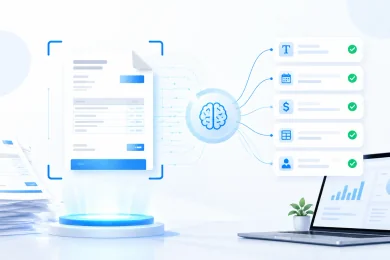
Document Intelligence
Live extraction engines classify incoming contracts, invoices, and exceptions using natural language processing.
Organizations often combine this with chatbot development company deployments where conversational systems must react instantly to user context.
Practical conversational deployment also aligns with best AI chatbots for business.
Real-Time AI vs Traditional AI in Operational Systems
Traditional AI usually analyzes stored historical data and returns reports or periodic recommendations.
Real-time AI instead becomes part of active operational control.
Traditional AI tolerates delay
Real-time AI depends on immediate execution
Traditional AI often serves analysts
Real-time AI serves systems directly
Infrastructure differences are equally important because streaming architectures often require distributed computing rather than simple batch storage pipelines.
Challenges in Scaling Real-Time AI Use Cases
Although enterprise leaders often focus heavily on model accuracy during AI program planning, the most difficult scaling barriers usually emerge outside the model itself. In production environments, many real-time AI systems perform well during pilot stages but begin to fail when exposed to enterprise traffic, unpredictable user behavior, distributed infrastructure dependencies, and strict operational reliability requirements.
Scaling real-time AI means maintaining prediction quality while preserving response speed, operational trust, and infrastructure resilience. This becomes especially difficult because every live decision depends not only on inference quality but also on data movement, feature availability, orchestration discipline, and downstream business system coordination.
Latency Constraints
Latency remains the first major scaling challenge because every additional feature transformation, lookup dependency, validation rule, and orchestration layer increases total inference time. Even when models themselves execute quickly, surrounding system overhead often becomes the real bottleneck.
For example, a payment fraud engine may complete inference in milliseconds, but external feature retrieval, identity enrichment, location matching, and transaction graph checks can introduce enough delay to affect approval windows. In healthcare monitoring, even a short delay in alert generation can reduce intervention effectiveness when patient conditions change rapidly.
Many organizations initially underestimate how difficult latency control becomes when multiple enterprise systems must contribute live context before a decision can be finalized. This is why production teams increasingly redesign architecture around lightweight inference endpoints, streaming feature stores, and event-prioritized pipelines rather than relying on conventional request chains.
Latency engineering also affects model design itself. In many deployments, slightly simpler models outperform highly complex ones because they preserve response guarantees under peak operational load.
Data Freshness
Real-time AI systems depend on live data quality far more than traditional AI systems because decisions lose reliability when feature states become stale even for short periods.
Feature drift appears quickly when live business behavior changes. Consumer purchasing behavior may shift within hours, fraud signatures may evolve within minutes, and production conditions may change continuously across industrial systems.
A recommendation engine trained on historical click behavior can lose relevance if active browsing intent changes faster than feature pipelines update. Similarly, manufacturing anomaly detection can become unreliable when equipment conditions drift after maintenance cycles but historical thresholds remain unchanged.
This creates a major challenge: model retraining alone does not solve freshness problems if streaming features are inconsistent, delayed, or incomplete.
Modern systems therefore increasingly rely on live feature validation, drift monitoring, event timestamp auditing, and controlled fallback logic so inference can remain reliable even when data pipelines degrade.
Governance
Governance becomes significantly harder when AI decisions occur instantly because organizations must still explain why decisions happened, even when no human directly intervened.
In fraud prevention, customer service teams may need to justify why a transaction was blocked. In healthcare, clinical teams may need to review why an alert was escalated. In enterprise operations, automated prioritization decisions must remain explainable for audit and compliance review.
This means explainability cannot be treated as an optional reporting layer after deployment. It must exist inside production architecture itself.
Live systems increasingly require data governance discipline because operational decisions must remain auditable across model inputs, feature states, confidence thresholds, and triggered business actions.
Without governance maturity, organizations often hesitate to expand real-time AI into critical workflows because trust collapses when outputs cannot be traced clearly.
Infrastructure Coordination
Real-time AI rarely fails because of a single model. It usually fails because distributed systems do not coordinate consistently under load.
Streaming pipelines, message brokers, inference services, cache layers, fallback systems, and downstream APIs all influence whether predictions remain operationally useful.
For example, if an upstream event arrives late, the model may still infer correctly but trigger the wrong downstream action because business context has already changed.
This is why mature organizations treat real-time AI as infrastructure engineering first and model engineering second.
Engineering Maturity Over Model Sophistication
Engineering maturity often becomes more important than model sophistication because reliable deployment depends on disciplined version control, rollback capability, feature lineage tracking, and production observability.
Teams that over-invest in model experimentation but under-invest in operational controls usually struggle when deployment expands beyond controlled pilot environments.
This is why many enterprises combine scaling efforts with data analytics services that strengthen feature reliability, monitoring discipline, and operational data consistency before expanding model complexity.
Future of Real-Time AI Applications
Future real-time AI deployments will increasingly move beyond single-model prediction systems toward multi-layer operational intelligence where event interpretation, reasoning, policy evaluation, and action orchestration occur together.
Instead of one model generating one output, production systems will combine prediction layers with decision agents, policy controls, and dynamic response selection.
This means future enterprise AI will not simply classify events. It will decide how systems should react based on changing operational priorities.
Multi-Model Decision Chains
Many future deployments will involve chained intelligence systems where one model detects an event, another evaluates context, and a third applies operational policy.
For example, a supply chain disruption system may first detect delay probability, then estimate downstream impact, and finally recommend operational rerouting.
This layered design improves decision quality because no single model carries the full burden of operational judgment.
Autonomous Orchestration
Autonomous orchestration will become central to enterprise adoption. AI systems will increasingly trigger workflow changes automatically rather than merely generating alerts.
Customer service systems may reroute tickets, manufacturing systems may rebalance production flows, and finance systems may temporarily alter authorization thresholds during anomaly surges.
These systems depend on strong operational trust because autonomous execution introduces direct business consequences.
Edge Expansion
Edge environments will also expand because many decisions must occur physically close to where events happen.
Cloud-only inference introduces delay when industrial systems, medical devices, vehicles, or surveillance systems require immediate response.
This is especially visible in systems linked to Internet of things infrastructure where sensor-to-decision timing becomes critical.
Factories, logistics hubs, and connected infrastructure increasingly require edge inference because sending all events to centralized systems creates avoidable latency.
AI Agents as Operational Layers
Organizations building forward-looking systems increasingly align with AI agent development company models because autonomous orchestration is becoming the next operational layer for enterprise intelligence.
AI agents allow enterprises to combine event interpretation with action sequencing, enabling systems to coordinate multiple operational responses instead of returning isolated predictions.
Broader enterprise examples also connect with AI use cases that change the business.
Conclusion
Real-time AI is no longer limited to advanced digital-native organizations. It is becoming a practical operational requirement wherever live decisions influence cost, safety, customer trust, service continuity, or business responsiveness.
The strongest deployments are not necessarily built around the most mathematically complex models. They are the systems where architecture, governance, feature reliability, and business logic align tightly enough for intelligence to operate safely under production conditions.
As enterprises move from experimentation toward operational maturity, the ability to deploy AI inside live workflows will increasingly define competitive advantage across sectors.
Organizations that treat real-time AI purely as model deployment often struggle. Those that treat it as infrastructure strategy usually create durable business advantage.
If your organization is evaluating production-grade real-time intelligence, exploring implementation paths with generative AI development company expertise can help translate model potential into measurable operational outcomes.
Frequently Asked Questions

Yash Singh is the Chief Marketing Officer at Vegavid Technology, a leading AI-driven technology company specializing in AI agents, Generative AI, Blockchain, and intelligent automation solutions. With over a decade of experience in digital transformation and emerging technologies, Yash has played a key role in helping businesses adopt advanced AI solutions that enhance operational efficiency, automate workflows, and deliver personalized customer experiences across industries including fintech, healthcare, gaming, ecommerce, and enterprise technology. An alumnus of Indian Institute of Technology Bombay, Yash combines strong technical expertise with strategic marketing leadership to drive innovation in AI-powered applications, autonomous AI agents, Retrieval-Augmented Generation (RAG), Natural Language Processing (NLP), Large Language Models (LLMs), machine learning systems, conversational AI, and enterprise automation platforms. His expertise spans AI model integration, intelligent workflow automation, prompt engineering, smart data processing, and scalable AI infrastructure development, enabling organizations to accelerate digital transformation and business growth. Passionate about the future of intelligent systems, Yash actively shares insights on AI agents, Generative AI, LLM-powered applications, blockchain ecosystems, and next-generation digital strategies. He is committed to helping businesses embrace AI-first transformation while guiding teams to build impactful, industry-specific solutions that shape the future of innovation and intelligent technology.







Leave a Reply